
Anomalous Coronary Artery
 September 17, 2021
An anomalous coronary artery wasn’t formed correctly in the uterus. This rare problem means your coronary artery is in the wrong spot or it started in the wrong spot. This can cause problems with how your blood circulates through your heart. When your heart muscle doesn’t get the oxygen it needs, tissues can die.
Overview
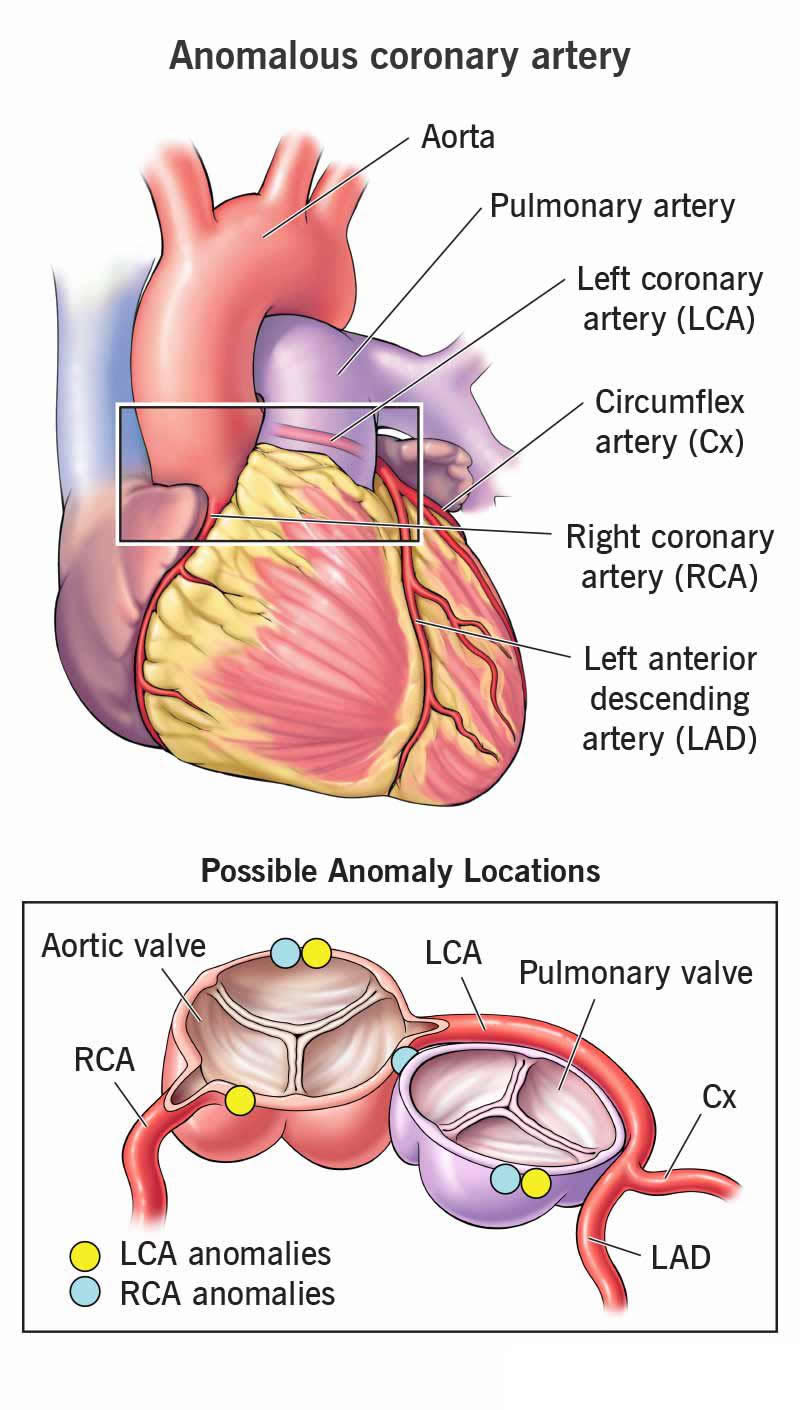
What is an anomalous coronary artery?
An anomalous coronary artery is one that didn’t form correctly before birth. In many cases, the coronary artery is in the wrong place or is coming from the wrong place. This problem can affect your child’s:
- Right coronary artery
- Left main coronary artery
- Left circumflex artery
- Left anterior descending artery
The problem with anomalous coronary arteries is that they aren’t where they’re supposed to be. They may start in:
- The wrong part of your child’s aorta (most common)
- Part of a different coronary artery
- Your child’s pulmonary artery
- Another artery
When one of your child’s coronary arteries is in the wrong place, it disrupts the normal way blood flows through their heart. This can keep oxygen-rich blood from getting to their heart muscle.
Up to 1% of the population has an anomalous coronary artery. Most cases aren’t dangerous. But occasionally, anomalous coronary arteries can lead to insufficient (not enough) blood flow to your heart muscle.
Types of anomalous coronary arteries
Types of anomalous coronary arteries include:
- Absent left main coronary artery (most common coronary artery anomaly). The left anterior descending artery and the left circumflex artery connect directly to your left sinus of Valsalva.
- A coronary artery that comes out of the opposite aortic sinus of Valsalva. Usually, each coronary artery comes out of the aortic sinus of Valsalva located on the same side (left coronary artery from left sinus of Valsalva; right coronary artery from right sinus of Valsalva).
- A coronary artery that starts from the pulmonary artery instead of the aorta. This can affect the left or right coronary artery or (rarely) both.
- A rare form involves an extra artery coming from the pulmonary artery.
In some cases, the normal coronary artery can make up for what the abnormal coronary artery can’t do. This is why some people don’t have symptoms until they’re adults.
Symptoms and Causes
What are the symptoms?
Anomalous coronary artery symptoms may differ based on the type of issue.
Anomalous aortic origin of a coronary artery (AAOCA) from opposite sinus of Valsalva
Many children with this type don’t have symptoms. Sudden cardiac arrest or sudden cardiac death during exertion may be the first sign of it. This may happen between ages 10 and 30. The risk of problems also depends on which specific coronary artery is anomalous.
Symptoms for this type include:
- Chest pain with physical activity
- Fainting during physical activity
- Shortness of breath (dyspnea) during physical activity
- Murmur
Anomalous origin of the right coronary artery from the pulmonary artery (ARCAPA)
Symptoms for this type may show up at birth or between ages 40 to 60. Symptoms may include:
- Angina
- Shortness of breath
- Heart failure
- Murmur
- Sudden cardiac death
Anomalous origin of the left coronary artery from the pulmonary artery (ALCAPA)
Symptoms often show up in a baby’s first year. They include:
- Signs of pain or irritability
- Crying while feeding
- Acute coronary syndrome
- Heart failure
- Murmur
Children or adults with ALCAPA can have:
- Shortness of breath
- Abnormal heart rhythm (arrhythmia)
- Heart palpitations
- Angina
- Sudden cardiac arrest
- Heart attack
- Heart failure
What causes an anomalous coronary artery?
Anomalous coronary artery causes are unknown. An anomalous coronary artery is a congenital (present at birth) problem. This happens to a fetus during its first month or so in the uterus when the coronary arteries are forming.
Researchers haven’t found evidence that an anomalous coronary artery is hereditary.
What are the complications?
Complications of an anomalous coronary artery may include:
- Arrhythmia (abnormal heart rhythm)
- Heart failure
- Myocardial ischemia (not enough blood going to your heart muscle)
- Heart attack
Diagnosis and Tests
How is an anomalous coronary artery diagnosed?
Making an anomalous coronary artery diagnosis can be difficult because someone with the condition can have a normal physical exam. Also, some people don’t have symptoms.
What tests will be done to diagnose this condition?
Tests for anomalous coronary artery include:
- Computed tomography (CT) angiogram
- Chest X-ray
- Transthoracic echocardiogram
- Electrocardiogram (EKG)
- Heart MRI
- Cardiac catheterization
- Stress test
Management and Treatment
How is it treated?
Providers recommend surgery for certain people (with or without symptoms) with anomalous origin of the left coronary artery. But they only suggest it for some of those who have an anomalous origin of the right coronary artery with symptoms. Most adults with anomalous origin of the right coronary artery don’t need surgery.
If surgery isn’t a good option, a provider may recommend limiting your child’s physical activity. They also may prescribe medicines like diuretics or beta-blockers to ease their heart’s workload. Your child will only need to limit their physical activity if their anomaly puts them at risk of cardiac arrest.
What treatments are used?
Many people without symptoms, especially young and healthy people, choose to have surgery to prevent possible problems with their coronary arteries.
Surgeries for an anomalous coronary artery include:
- Moving your artery and attaching it to your aorta or the correct sinus
- Coronary unroofing (opening the top of a coronary artery coming from the wrong sinus)
- Pulmonary artery translocation (moving the pulmonary artery)
- Using a patch of tissue to make part of your anomalous coronary artery larger
- Coronary artery bypass grafting
- Percutaneous coronary intervention with stent placement
Complications/side effects of the treatment
Complications of surgery may include:
- Bleeding
- Blood clots
- Injury to a coronary artery
- Aortic regurgitation (leaky aortic valve)
Surgery has a small risk of death.
How long does it take to recover from this treatment?
Your child may be in the hospital for several days after surgery and may need to take aspirin for three months. They should be able to go back to sports activities three months after surgery.
Outlook / Prognosis
What can I expect if my child has an anomalous coronary artery?
Since an anomalous coronary artery is present at birth, that won’t change unless your child has surgery. They’ll need to get regular medical checkups throughout their life. Their provider will repeat the tests they used when they diagnosed your child.
Outlook for an anomalous coronary artery
If your baby has ALCAPA and doesn’t receive treatment, there’s a 90% chance it will be fatal. In a small number of cases, people grow to be adults with or without symptoms. The outlook is good if a provider treats ALCAPA before problems happen.
For AAOCA, surgery gets rid of symptoms and protects your child from sudden death. Limiting physical activity also may prevent sudden death. The risk of problems depends on whether the anomalous artery is the right coronary artery or one of the left-sided coronary arteries.
Prevention
Can this be prevented?
Unfortunately, you can’t prevent an anomalous coronary artery because it’s a condition that’s present at birth.
Living With
How do I take care of my child?
If your child is waiting to have surgery or if surgery isn’t a good option for them, their provider may ask you to limit their exercise. If they’re considered low-risk, they may not need surgery and can be as physically active as they want to be.
If your child is at risk for cardiac arrest, consider learning CPR and getting an automated external defibrillator (AED) for home use. Knowing how to respond to a cardiac arrest can provide peace of mind for your family.
When should I see my healthcare provider?
Contact your provider when your baby:
- Cries often
- Is too pale
- Is breathing too quickly
If you’re an adult, you should go to the ER when you’re having chest pain and shortness of breath.
What questions should I ask my healthcare provider?
Questions to consider asking your provider may include:
- Which type of anomalous coronary artery does my child have?
- What’s the best treatment for them?
- How often do they need checkups?
A note from Wockr
Finding out that your child has a heart issue can bring on a range of emotions. The good news is that an anomalous coronary artery usually isn’t harmful. Talk about your child’s situation with their provider. They can recommend what your child needs. Be sure to keep taking your child for regular checkups and tests as needed.