
Leukemia vs. Lymphoma: Understanding the Difference
 June 16, 2025
Both leukemia and lymphoma are blood cancers — but one is found in your bone marrow, while the other is found in your lymph nodes
Leukemia and lymphoma are two of the most recognized and feared names in cancer. They’re both cancers that arise in your blood cells. But they aren’t the same.
The names are easy to confuse, and the ways they affect you can be similar. But understanding which is which can help you make sense of a diagnosis and know what to expect next.
Here’s what to know about leukemia vs. lymphoma.
Leukemia vs. lymphoma
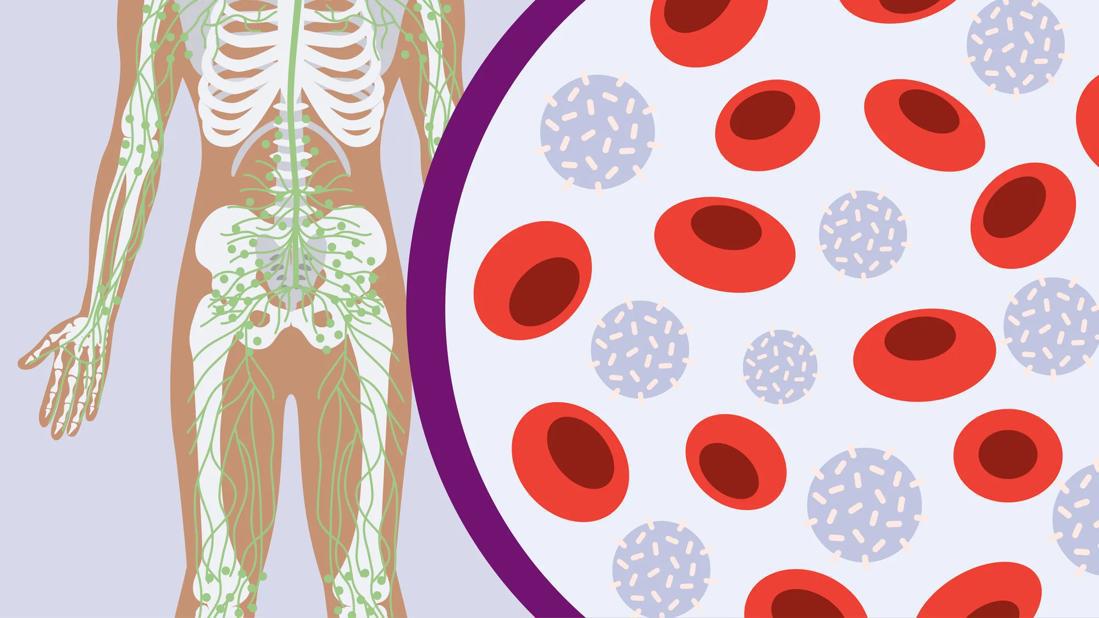
Both leukemia and lymphoma are forms of blood cancer that affect your white blood cells — but leukemia is found in your bloodstream, while lymphoma is often found in your lymph nodes and lymphatic system. That’s the network of organs and tissues in your body that protects you against infection and gets rid of waste and toxins.
“Leukemia and lymphoma are related, kind of like cousins,” explains hematologist Aaron Gerds, MD. “They share some similarities, and several have some resemblance, but there are a lot of differences, too.”
Here’s a quick look at each before we go into more detail:
| Leukemia | Lymphoma | |
|---|---|---|
| Location | Blood | Lymphatic system |
| Tumors | Rarely | Commonly |
| Where it starts | Bone marrow | Lymph nodes |
| Effect on white blood cells | Creates faulty white blood cells, growing out of control | Creates faulty white blood cells, growing out of control |
| Location | ||
| Leukemia | ||
| Blood | ||
| Lymphoma | ||
| Lymphatic system | ||
| Tumors | ||
| Leukemia | ||
| Rarely | ||
| Lymphoma | ||
| Commonly | ||
| Where it starts | ||
| Leukemia | ||
| Bone marrow | ||
| Lymphoma | ||
| Lymph nodes | ||
| Effect on white blood cells | ||
| Leukemia | ||
| Creates faulty white blood cells, growing out of control | ||
| Lymphoma | ||
| Creates faulty white blood cells, growing out of control |
What’s the difference between leukemia and lymphoma?
Here’s one simple way to think about it: Leukemia is a liquid kind of cancer that’s pumped around your body in your blood. It doesn’t cause tumors. Lymphoma, on the other hand, is solid, is most often found in your lymph nodes and causes tumors.
Why the difference? Let’s look at how each leukemia and lymphoma starts out.
How leukemia begins
The blood in your body starts in bone marrow — the spongy stuff inside your bones. From there, your blood travels around your body.
Leukemia happens when certain white blood cells in your bone marrow stop maturing and start growing out of control. They take up space and crowd your bone marrow. That overwhelms your body’s blood production system. And it keeps you from making enough healthy white blood cells and other blood components, like plasma, platelets and red blood cells.
“Those white cells are damaged, so they can’t effectively fight infections like healthy white blood cells do. And because they prevent your body from making healthy red blood cells, you can feel weak and tired,” Dr. Gerd reports.
Where lymphoma starts
Lymphoma, on the other hand, doesn’t start in your bone marrow. It happens in your lymphatic system.
When you have lymphoma, specific white blood cells, called lymphocytes, multiply much too fast. Lymphocytes live in your lymph nodes — bean-shaped tissue that filters fluid in your body to help remove germs and other invaders.
You have between 400 and 800 lymph nodes all over your body. They can be found:
- At the base of the back of your head
- Around the sides of your neck
- In your armpits and groin
- In your belly
Lymphoma can also form in your spleen or thymus gland. The thymus is a small gland in your upper chest behind your breastbone that creates special lymphocytes called T cells.
“Anywhere you have lymphocytes, you can develop lymphoma,” Dr. Gerds states. “One of the most common early symptoms of lymphoma is swollen lymph nodes or masses in the armpit, belly or groin area. But not everyone has symptoms.”
Like in leukemia, lymphoma interferes with your body’s ability to fight off invading bacteria and viruses.
Leukemia and lymphoma treatments
Treating leukemia and lymphoma depends on the type (cell origin), disease risk (how aggressive it is) and the stage (where it has spread).
Treatments may include:
- Chemotherapy
- Targeted therapy
- Radiation
- Immunotherapy
- CAR T-cell therapy
- Bone marrow stem cell transplant
Advancements have been made in managing both leukemia and lymphoma. Survival rates and quality of life for people with these cancers are improving.
If you or a loved one has been diagnosed with leukemia or lymphoma, it can be scary. And confusing. Don’t hesitate to ask your provider any questions you have about your diagnosis and next steps.