
Is an At-Home Colon Cancer Test Worth Trying?
 February 28, 2024
At-home screening options can be good detection tools, but a colonoscopy remains the gold standard
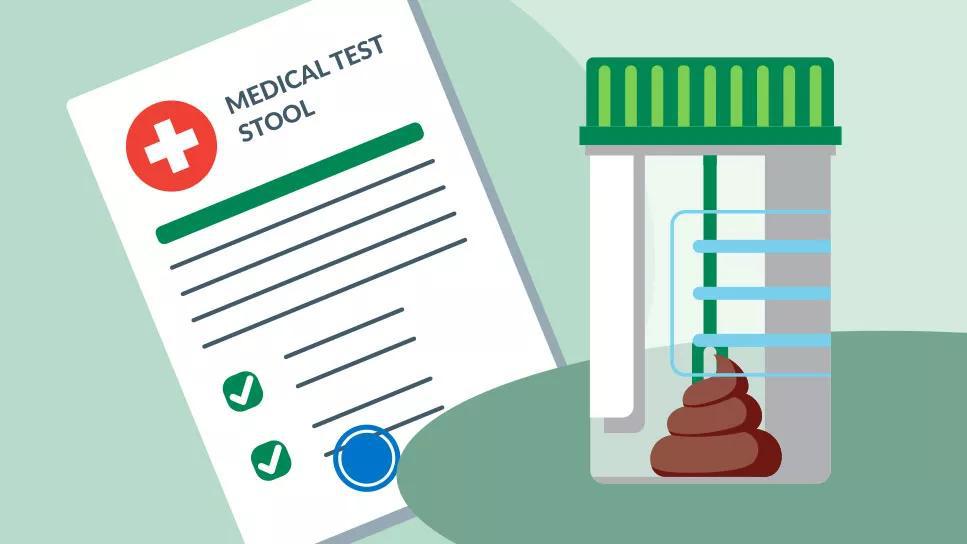
Can a colon cancer screening really be as simple as mailing a sample of your poo to a lab for analysis? The answer may be yes — but don’t cancel that colonoscopy just yet.
At-home stool tests can be an effective tool for detecting colon cancer. But the tests aren’t as accurate as a colonoscopy and they offer no way to find and remove polyps that could turn cancerous.
So, are these poop-in-a-box tests worth trying? Colorectal surgeon Arielle Kanters, MD, explains the benefits and shortcomings.
How at-home colon cancer tests work
As the name implies, an at-home colon cancer test takes place in the comfort of your home without a doctor present. The test looks for abnormal cells or blood present in a sample of your stool.
To get that sample … well, it’s going to require you to collect your own poop and send it off to a lab for analysis. It’s a hands-on task and not for the squeamish.
At-home colon cancer testing options
Three main stool tests are offered, each with a different focus for folks in the lab.
- Fecal immunochemical test (FIT). This test checks for hidden blood in your stool that could be coming from colon cancer. It’s recommended that this test be done annually.
- Guaiac-based fecal occult blood test (gFOBT). This annual test is similar to the FIT in that it checks for the presence of blood. It does require dietary changes (such as avoiding red meat for a few days) before collecting a sample.
- Stool DNA testing. This test examines DNA in your stool for evidence of cells shed by colorectal cancer. “When you have cancer in your colon or anywhere in your intestines, some of these cells end up passing in your poop,” explains Dr. Kanters. This test should be done once every three years.
(Want to know more about each test? Watch as Dr. Kanters explains different colorectal cancer screening options in this video.)
How accurate are stool tests?
At-home stool tests can be effective at finding colon cancer. Research shows that:
- The DNA test is 92% effective at detecting cancers. (DNA tests, however, do return more false positives than FITs.
- FITs can be nearly 80% accurate.
- gFOBTs are about 71% accurate.
What happens if a stool test is positive?
It typically takes about two weeks to get results from an at-home colon cancer test. If the lab flags something as potentially worrisome, don’t panic. False positives are not uncommon with these tests.
Talk to your doctor about what the next steps are in terms of figuring out what’s going on if you get a concerning result.
“If you’re having blood in your poop, your test results are going to be positive and you’re going to need a colonoscopy,” Dr. Kanters explains. “If the test is abnormal, you do still need a colonoscopy to follow up and better understand why.”
Is a stool test as good as a colonoscopy?
Stool tests are an easy, at-home way to check for potential signs of colorectal cancer. They’re also far less invasive, intense and uncomfortable than a colonoscopy.
But it’s important to note the limitations of stool tests compared to a colonoscopy when it comes to detecting anything precancerous — which is a pretty big deal, emphasizes Dr. Kanters.
“Relying on these fecal tests means that you’re potentially missing out on finding an early pre-cancer that could be eliminated and never turn into something scarier,” she says.
Colorectal cancers typically begin as growths called polyps, which form on the inner lining of your colon or rectum. Finding and removing polyps before they become cancerous is the most effective way to prevent colon cancer.
Given that, a colonoscopy remains the gold standard for cancer screening. In one single procedure, it allows for the detection and removal of polyps to help prevent cancer from developing.
“One of the benefits of a colonoscopy is that we can not only treat and identify cancers, but we can treat pre-cancer,” shares Dr. Kanters. “In other words, the pre-cancerous polyps we might find and remove never reach the point of turning into cancer in the first place.”
A colonoscopy also is about 99% accurate in finding colon cancer that has developed.
So, bottom line? “In my mind, a colonoscopy is always the way to go,” recommends Dr. Kanters.
Should you consider an at-home colon cancer test?
If you’re interested in an at-home stool test for colon cancer, talk to your healthcare provider. “It’s important that you have a conversation and figure out if this is the right test for you,” says Dr. Kanter.
An at-home colon cancer test can be a good choice if having anesthesia or sedation during a colonoscopy puts you at higher risk for complications.
Your health insurance or access to medical care also may make at-home tests a better option.
“With an at-home test, we can at least screen to learn if you’re at risk,” notes Dr. Kanters. "These tests can provide information that can help you seek out additional testing so you know what you’re dealing with.”
But at-home tests aren’t recommended if you have:
- A family history of colorectal cancer.
- Medical conditions that increase colorectal cancer risk.
- Bloody stool.
- Unexplained health issues such as sudden weight loss or anemia (low red blood cell counts).
“These are all reasons for a full evaluation being performed,” she adds.
When should you start testing for colon cancer?
If you’re at average risk for colorectal cancer — that is, you have no existing symptoms, family history or risk factors — your first at-home test or colonoscopy should happen at the age of 45, says Dr. Kanters.
Final thoughts
Screening for colon cancer is vital because symptoms often don’t appear in the disease’s early and more treatable stages. “It’s the best way to identify issues ahead of any problems,” says Dr. Kanters.
Early detection of colorectal cancer before it has a chance to spread outside the colon or rectum increases your odds of successful treatment, according to the American Cancer Society.
The five-year relative survival rate for colorectal cancer is about 90% when the disease is found early. Here’s the concern, though: Only about 4 of 10 colorectal cancers are detected at this stage.
So, whether you choose to get a colonoscopy or take an at-home stool test, just get one done.
“Ultimately, if an at-home test is what gets you screened for cancer, absolutely do it,” encourages Dr. Kanters. “They’re a great way to determine if something else needs to be done and better understand your risk for possibly having cancer.”