
Blueberry Muffin Rash
 April 10, 2024
Blueberry muffin rash is a sign that your baby needs medical help. It involves blue or purple marks or bumps in their skin that are usually widespread. The rash has several possible causes, including infections, cancers and tumors, and certain blood disorders.
Overview
What is a blueberry muffin rash?
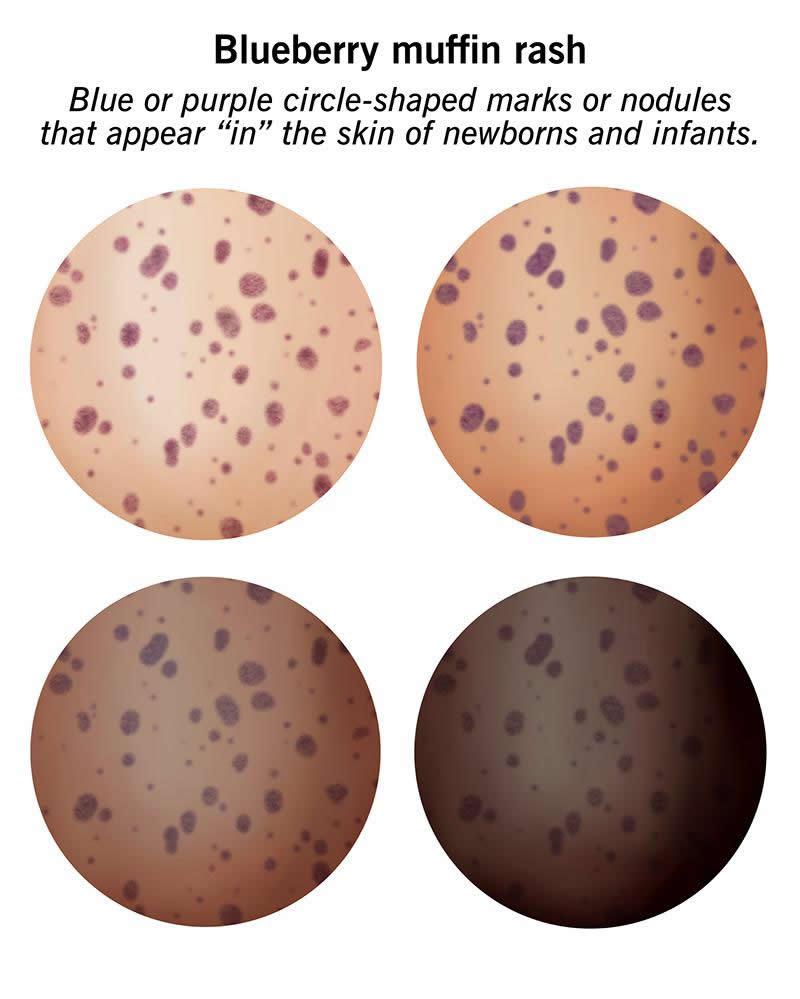
A blueberry muffin rash can affect newborns and infants. It’s blue or purple and looks like multiple circle-shaped marks or raised bumps (nodules) in their skin. The rash appears to be “in” their skin rather than on top of their skin.
These marks happen due to:
- Clusters of blood-producing cells in their skin (extramedullary hematopoiesis).
- Bleeding into their skin (purpura).
- Spreading cancer (metastases).
Several conditions can cause each of these three issues — most of them are rare. Your baby will likely have other symptoms as well. A blueberry muffin rash is a sign that your baby needs medical attention. It won’t go away on its own.
Other names for blueberry muffin rash include:
- Blueberry muffin syndrome.
- Blueberry muffin baby.
Possible Causes
What are the possible causes of a blueberry muffin rash?
A blueberry muffin rash can have several possible causes, including:
- TORCH infections.
- Certain tumors and cancers.
- Extramedullary hematopoiesis.
TORCH infections
TORCH infections (or TORCH syndrome) are a group of infectious diseases that affect a fetus or newborn baby. If you get a TORCH infection, you can pass it to your baby during pregnancy, during delivery or after birth.
TORCH is an acronym for a group of infections, including:
- Toxoplasmosis.
- Other (syphilis, chickenpox, parvovirus B19).
- Rubella.
- Cytomegalovirus (CMV).
- Herpes simplex virus (HSV).
Symptoms of TORCH infections include:
- Fever, sluggishness and trouble feeding.
- Jaundice.
- Low birth weight.
- Hearing impairment.
- A heart abnormality called patent ductus arteriosus (PDA).
- Hepatosplenomegaly (enlarged liver and spleen).
- Cataracts.
- Microcephaly (a small head).
Preventing TORCH infections
Since you can pass TORCH infections to the fetus or baby, it’s important to see a healthcare provider regularly while you’re pregnant. Your provider will do blood tests to check for certain infections.
They’ll also order blood tests to see if you have immunity to infections. For example, if a test reveals that you’re immune to rubella during pregnancy, it’s much less likely to pass to the fetus or baby.
Tumors and cancers
Tumors and cancers that can cause a blueberry muffin rash in infants include:
- Histiocytosis.
- Leukemia.
- Mastocytosis.
- Neuroblastoma.
- Rhabdomyosarcoma.
- Transient myeloproliferative disorder. This condition mainly affects babies with Down syndrome.
Other symptoms of these conditions include:
- Lethargy and fatigue.
- Fever.
- Weight loss, issues with gaining weight or feeding issues.
- Pale skin, which is a sign of anemia.
- Enlarged liver and spleen.
- Swollen lymph nodes.
- Difficulty breathing (dyspnea).
Extramedullary hematopoiesis
Extramedullary hematopoiesis happens when abnormal blood cell production happens outside your bone marrow. Extramedullary means “outside of the bone marrow.” Hematopoiesis means “blood cell production.”
Extramedullary hematopoiesis causes that can result in a blueberry muffin rash include:
- Hemolytic disease of the newborn (ABO blood type incompatibility).
- Hereditary spherocytosis.
- Twin-to-twin transfusion syndrome.
Other symptoms of these conditions may include:
- Hyperbilirubinemia and jaundice.
- Enlarged liver and spleen.
- Difficulty breathing.
Care and Treatment
How do healthcare providers diagnose the cause of a blueberry muffin rash?
Your baby’s healthcare provider will do a physical exam and assess your baby for other symptoms. They may recommend a variety of tests to diagnose the underlying cause, including:
- Blood tests: Your child’s provider may order several blood tests, like a complete blood count (CBC) and tests that screen for infections.
- Urinalysis: A urine (pee) test can look for certain infections and other signs of conditions.
- Spinal tap: This test allows a pathologist to examine cerebrospinal fluid (CSF) for signs of infection.
- Skin biopsy: This test can look for signs of leukemia or tumors.
- Bone marrow biopsy: This test can look for signs of leukemia, blood abnormalities, infection and tumors.
- Abdominal ultrasound: This test can look for hepatosplenomegaly and neuroblastoma.
If providers suspect a TORCH infection is the cause, they may recommend screening tests for the birth mother, as well.
What is the treatment for a blueberry muffin rash?
The treatment for blueberry muffin rash involves treating the underlying cause.
For example, treatment for TORCH infections may include antibiotics, antiparasitics or antiviral medications. Treatment for neuroblastoma may include surgery, chemotherapy, immunotherapy and/or radiation therapy.
Your baby’s healthcare team will go over their treatment plan with you. Don’t hesitate to ask questions or raise any concerns.
When To Call the Doctor
When should my baby see a healthcare provider about blueberry muffin rash?
If your baby has a blueberry muffin rash, it’s important to get them professional medical help right away. Go to the emergency room or alert your baby’s healthcare provider if they’re already in the hospital.
A note from Wockr
Although it’s rare, a blueberry muffin rash is a sign that something isn’t working as it should in your baby’s body. While this can be alarming, know that their healthcare team will get to the bottom of the cause and offer a thorough treatment plan for your baby. Thorough prenatal care can help catch or prevent TORCH infections that can lead to blueberry muffin rash.