
How To Check Yourself for Testicular Cancer
 April 06, 2022
A self-exam takes only two minutes once a month
Setting aside two minutes a month could save your life. That’s how little time it takes to do a self-exam to check for testicular cancer.
Here’s the reality, though: You just may not be reaching down there to “check your berries” on a regular basis. In fact, only 4 in 10 men surveyed by Wockr reported doing a regular self-exam of their testicles.
That’s a missed chance to get ahead of a health issue, says urologist Samuel Haywood, MD. “Testicular cancer is very treatable, with a cure rate of 95%,” says Dr. Haywood. “But you have to know it’s there to treat it.”
How to check for testicular cancer
This is a hands-on activity best done after a warm bath or shower. The warmth relaxes the skin of your scrotum, which makes it easier for you to feel for anything unusual. (As an added perk, you’re already naked, too.)
Now, let’s walk through the process.
- Use both hands to check each testicle. Place your index and middle fingers underneath your testicles and your thumb on top. Then, gently roll each testicle between your thumb and fingers.
- As you’re feeling your testicles, pay attention for any hard lumps on or in your testicles. These lumps could be pea-sized or larger and seem like a little stone.
- If you find a lump, contact your doctor to get it checked out.
Your left and right testicles may be different sizes. That’s OK, says Dr. Haywood. As you check month to month, though, note if your testicles seem to change in size, shape or firmness. A change is worth a call to your doctor’s office.
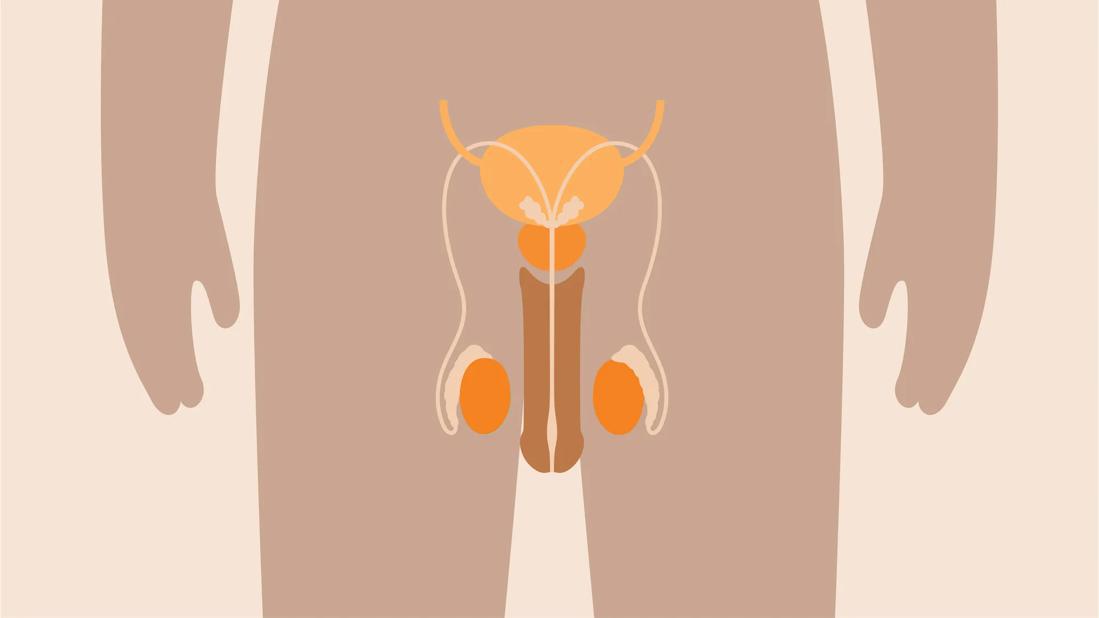
One last note: As you do the self-exam, you’ll come across a cord-like item on top and in back of each testicle. This is called the epididymis, and it’s supposed to be there. The tubular structure stores and transports sperm.
Do testicular lumps hurt?
The lumps that come with testicular cancer are often painless, meaning they’re not likely to draw attention and announce their presence in a typical something-is-wrong sort of way, notes Dr. Haywood.
So, it’s usually up to you to find them, which is why self-exams are recommended once a month after puberty.
Do some people have higher risk factors?
Testicular cancer happens most often between the ages of 20 and 35. A few factors may increase your chances of developing testicular cancer and make self-exams even more critical, including:
- Being born with an undescended testicle
- Family history of testicular cancer
There’s also an association between infertility and testicular cancer. In addition, testicular cancer is more common among people who are white.
Why it’s important to check your testicles
Overall, testicular cancer is relatively uncommon. Deaths do happen but are somewhat rare.
It's typically curable, even at later stages, with an overall cure rate is 95%. If it's detected early, that success rate climbs to 98%.
“The key is early identification,” stresses Dr. Haywood. “So, take the two minutes a month to do a self-exam.”