
How To Make a Healthy Smoothie Bowl
 February 16, 2025
Opt for nutrient-dense, fiber-filled and protein-rich ingredients to reap the benefits of these healthy bowls
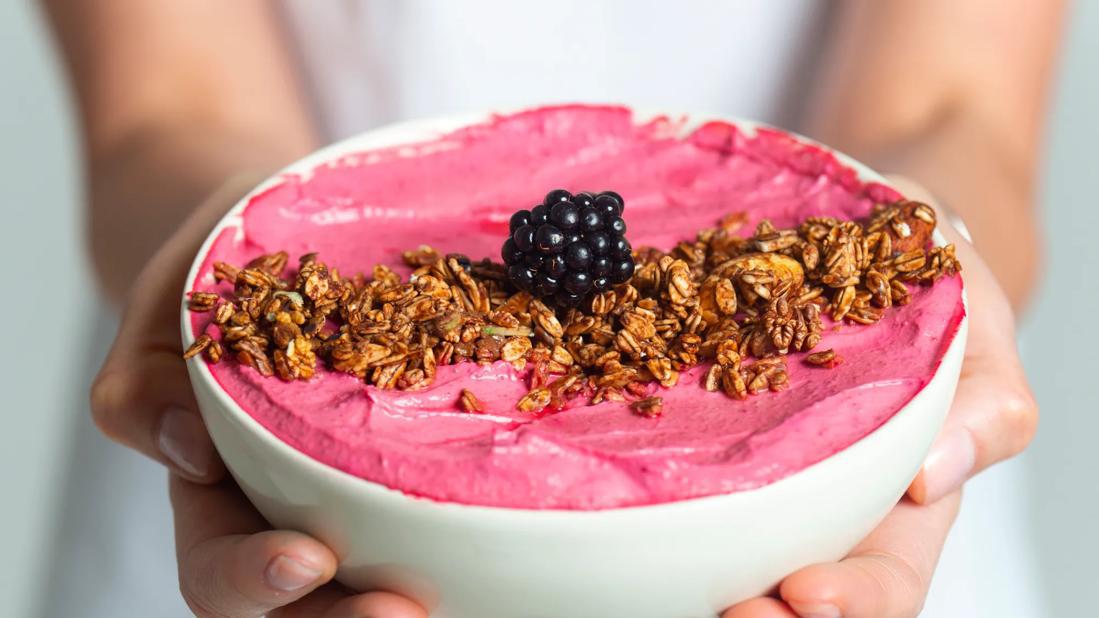
For on-the-go meals, smoothies have been an option for years. From the franchises you see around town to the make-at-home versions you’ve tried in your own blender, these thick drinks — when made properly and enjoyed in appropriate portions — provide a healthy meal alternative.
But lately, the trend is shifting from portable glasses to hearty bowls — and from “grab-and-go” to sit and enjoy. The smoothie bowls you’ve seen on social media take basic components of a smoothie, add less liquid and more thickening ingredients, and are topped with nutrient-dense, fiber-filled superfoods. Swap the straw for a spoon, and you’ve got a hearty dish.
So, why are smoothie bowls so popular?
“For one thing, making a smoothie bowl instead of an on-the-go drink encourages you to slow down and practice mindful eating,” explains registered dietitian Julia Zumpano, RD, LD. “But perhaps more importantly, the bowl promotes variety in the form of toppings such as nuts, seeds and fruit. You end up with a combination of protein and fiber that leaves you feeling full without an intense spike in blood sugar.”
Zumpano shares how to make a smoothie bowl and offers up some ingredients to help reap all the healthy benefits.
How to make a healthy smoothie bowl
If you’ve made a smoothie, the basics will look familiar.
“The biggest difference is that for a bowl, you’ll decrease the amount of liquid and increase or add a thickener,” explains Zumpano. “If you’re adventurous, you can tinker with recipes to get just the right texture for you. In addition, rather than blending in nuts, seeds or other items for added nutrition, you’ll add them on top of the blended base and proteins — and enjoy their crunch with a spoon rather than through a straw.”
Zumpano shares a basic guide to making healthy smoothie bowls.
Choose a base
Start by selecting the base of your bowl. Zumpano suggests:
- Liquid: Limit this to about 4 to 6 ounces (1/2 cup to 3/4 cup) of unsweetened milk of your choice (almond, cow’s, rice, soy, coconut)
- Thickener:Avocado, chia seeds or ground flaxseeds (use about 2 to 3 tablespoons)
- Sweeteners: Fruit (frozen provides a thicker texture; typically use 1/4 cup to 1/2 cup), dried Medjool dates, dried prunes, pumpkin puree, acai
- Fiber:Spinach, kale, carrots, psyllium husk, wheat germ, boiled beets
- Ice: Optional, based on how you like your texture
“I typically leave ice out of a smoothie bowl and use frozen fruits and veggies. This also makes it easier to get the right consistency,” shares Zumpano.
Pick a protein
Protein is essential for the management of blood sugars and building muscle and tissues. Without protein in a smoothie bowl, you risk making your bowl too high in carbs and fat, leaving you hungry. Be sure to use a high-powered blender for the best results.
“There are several varieties of protein powders available,” says Zumpano. “Choose one with no added sugar or using natural sweeteners.”
Options include:
- Whey protein
- Spirulina powder
- Pea protein
- Collagen
- Egg white
- Brown rice protein
Other protein options include:
- Plain Greek yogurt
- Silken tofu
- Ricotta or cottage cheese
Zumpano suggests using 1/2 to 3/4 cups of these protein options.
Add toppings
“The toppings you’ll see here are nutritional powerhouses, such as nuts, seeds and grains. Those are ingredients you need, but an accidental overpour can leave you with more calories than you want,” warns Zumpano. “To prevent overpacking your bowl, use measuring cups and spoons to limit your toppings to about 1 tablespoon each.”
- Seeds:Chia, ground flax, sunflower seeds, pumpkin seeds, hemp hearts, pomegranate seeds
- Nuts:Walnuts, almonds, hazelnuts, Brazil nuts, cashews
- Nut butters: Unsweetened peanut butter, almond butter, sunflower butter, mixed nut butter
- Grains: Low-sugar granola, quinoa puffs, toasted oats, muesli
- Flavors:Cinnamon, ginger, cocoa nibs, cocoa powder, vanilla
- Texture: Unsweetened coconut flakes, raisins, goji berries
Sample smoothie bowl recipes
You can experiment with turning your favorite smoothie recipes into bowls, but here are a few recipes to get you started.
- Go Green Smoothie Bowl. This tasty bowl includes mango, banana and spinach as part of the base, plus superfood toppings such as hemp seeds and goji berries.
- Berry Smoothie Bowl. Berries of your choice help form the base of this recipe, with a helping of chia and pomegranate seeds on top.
- Blueberry Smoothie Bowl. Blueberries are the star of this smoothie bowl with bananas, spinach, almond butter and flaxseed playing supporting roles.
Bottom line?
A smoothie bowl can be a fun, healthy way to try new foods or increase your protein or fiber intake.
Just make sure you keep tabs on the amount of added sugar (granola, juice, nut butters, dried fruit) and watch your portions.
Smoothie bowls can be a nutrient-packed meal that can help keep you feeling full for hours. But again, remember that it’s an easy way to pack in a lot of calories. Be especially mindful of the amount of fruit and toppings you add.
“I love to use smoothies and smoothie bowls as ways to pack in foods that I may not typically eat on a daily basis,” says Zumpano. “For example, try adding beets or kale instead of spinach, walnuts instead of peanuts, chia or hemp seeds instead of sunflower seeds, silken tofu instead of Greek yogurt, and acai or blackberries instead of a banana.”