
Increased Intracranial Pressure (ICP)
 June 20, 2024
Increased intracranial pressure (ICP) is a life-threatening condition that happens when there’s an imbalance between your brain tissue, cerebrospinal fluid and brain blood volume. It has several possible causes. Signs often include headache, vomiting and vision changes. The sooner you get treatment for ICP, the better.
Overview
What is increased intracranial pressure?
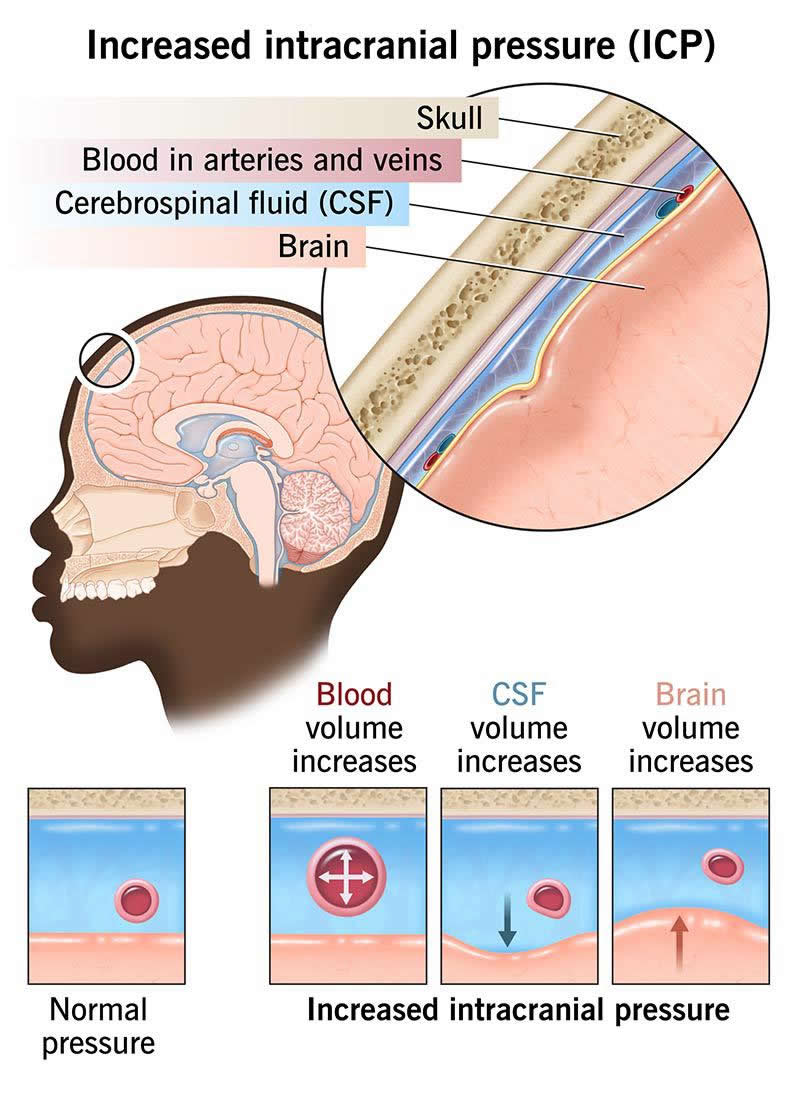
Increased intracranial pressure (ICP) happens when there’s a rise in the pressure within your cranial vault. It can be sudden (acute) or develop slowly over time (chronic) and has several possible causes.
Your cranial vault is a rigid compartment for:
- Your brain.
- Cerebrospinal fluid (CSF). This is the fluid that cushions your brain and spinal cord.
- Blood.
Any increase in the volume of one of these three components will increase the overall pressure within your cranial vault.
Increased intracranial pressure typically leads to a decrease in blood flow in your brain, or to brain herniation (when brain tissue moves). Both of these are serious, life-threatening conditions.
Symptoms and Causes
What are the symptoms of increased intracranial pressure?
Signs and symptoms of increased intracranial pressure in children and adults include:
- Headaches. They’re typically worse in the morning or when you’re lying down.
- Nausea and vomiting.
- Altered mental status, which can range from drowsiness to coma.
- Vision changes, like blurred vision, double vision and/or sensitivity to light (photophobia).
- Eye movement problems.
- Muscle weakness.
- Numbness.
- Seizures.
Signs of ICP in infants include:
- Drowsiness.
- Bulging of the soft spot (fontanelle) on the top of their head.
- Vomiting.
Increased intracranial pressure is a medical emergency. Go to the nearest hospital if you or your child have these symptoms.
Late signs of increased intracranial pressure
Cushing’s reflex — a collection of three conditions that happen together — is a late sign of increased intracranial pressure. It includes:
- High blood pressure (hypertension).
- Slow heart rate — fewer than 60 beats per minute (bradycardia).
- Irregular breathing — mainly, gasping for air (agonal breathing).
These signs mean that brain herniation is about to happen. Go to the emergency room immediately if you have these symptoms.
What causes increased intracranial pressure?
There are several possible causes of increased intracranial pressure. To understand why it happens, it helps to know how intracranial pressure works.
There’s a fixed amount of space in your cranial vault, meaning it doesn’t change. The amount of brain tissue, brain blood and CSF you have must remain in balance to have healthy intracranial pressure, which is normally less than 20 millimeters of mercury (mm Hg).
If there’s an increase in the volume of one component of your cranial vault (like brain tissue), it will result in a decrease in volume in one or two of the other components (like CSF and/or blood). But the overall intracranial pressure increases. Because all the cranial vault components are crucial, an imbalance leads to significant health issues.
Healthcare providers categorize the causes of ICP based on which component is causing elevated pressures.
Causes of an increase in brain volume
Generalized (all over) brain swelling (cerebral edema) can happen from:
- Traumatic brain injury.
- Blood flow issues in your brain (ischemia).
- High levels of ammonia in your blood (hyperammonemia).
- Decreased brain function due to a buildup of toxins in your blood from decreased kidney function (uremic encephalopathy).
- Low sodium levels in your blood (hyponatremia).
Swelling can also develop in specific parts of your brain from:
- Intracerebral or subdural hematomas (types of brain bleeds).
- Brain tumor.
- Brain abscess.
- Stroke.
Causes of an increase in cerebrospinal fluid
The amount of CSF in your brain can increase due to:
- Hydrocephalus.
- Choroid plexus tumor (a rare type of brain tumor).
- Meningitis.
- Granulomas on your meninges.
Causes of an increase in brain blood volume
You can develop increased brain blood volume from:
- Ruptured brain aneurysms or hypercapnia (increased blood carbon dioxide levels).
- Cerebral venous sinus thrombosis.
- Heart failure.
Other causes of increased intracranial pressure
Other causes of ICP include:
- Benign or idiopathic intracranial hypertension.
- Skull deformities, like craniosynostosis.
- Too much vitamin A in your body.
- Tetracycline (an antibiotic) use.
Diagnosis and Tests
How is increased intracranial pressure diagnosed?
A healthcare provider will assess your symptoms and ask about your medical history. They’ll also do a physical exam and a neurological exam.
Tests that can help confirm an ICP diagnosis and/or the underlying cause include:
- CT scan or MRI of your brain: These imaging tests can show issues like brain swelling, enlarged ventricles and brain herniation. They may also reveal the underlying cause of ICP.
- Funduscopic exam: This is a type of eye exam. It can reveal swelling of your optic discs (papilledema), which is a sign of ICP.
- Lumbar puncture (spinal tap): This procedure measures your cerebrospinal fluid pressure and can help diagnose certain causes of ICP.
A provider can also measure your CSF pressure by drilling a small hole in your skull and placing a special device or tube (catheter) in your cranium.
Management and Treatment
What is the treatment for increased intracranial pressure?
If you have sudden increased intracranial pressure, you’ll receive treatment in the intensive care unit (ICU) of a hospital. Your healthcare team will closely monitor your neurological and vital signs.
Treatment depends on the severity and underlying cause. It may include:
- Elevating your head.
- Draining cerebrospinal fluid to lower pressure in your brain.
- Breathing support, like intubation and mechanical ventilation.
- Medications (like barbiturates) to decrease brain swelling.
- Antiseizure medications to prevent seizures, which can worsen ICP.
- Removal of part of your skull (decompressive craniectomy) to allow your brain to swell without compression. This is a last-resort treatment if all other methods haven’t helped enough.
Your healthcare team will also treat the underlying cause.
Outlook / Prognosis
What is the prognosis for someone with increased intracranial pressure?
The prognosis (outlook) for someone with increased intracranial pressure varies based on:
- The severity.
- The underlying cause and how treatable it is.
- How quickly you receive treatment.
- If ICP is sudden or chronic.
Sudden ICP is often life-threatening. Prompt treatment typically results in a better prognosis. If the increased pressure pushes on crucial brain structures and blood vessels, it can lead to permanent brain damage or even death.
While chronic ICP (like from idiopathic intracranial hypertension) is typically less severe, without treatment, it can lead to blindness.
Additional Common Questions
What is the first sign of increased intracranial pressure?
The first sign of increased intracranial pressure is often a headache that’s worse in the morning or when you’re lying down. This is the most common symptom of ICP.
A note from Wockr
Your brain is a vital organ that does so much. When it experiences damage, it can lead to serious problems. That’s why it’s essential to get medical help for increased intracranial pressure (ICP) as soon as possible. If you or your child develop a headache, vomiting and vision issues, don’t hesitate to go to the hospital. Quick treatment of ICP often leads to a better outcome.