
Is It OK for Kids To Have Imaginary Friends?
 October 01, 2024
Creating a pal in their mind can help children learn social skills, overcome fears and build creativity
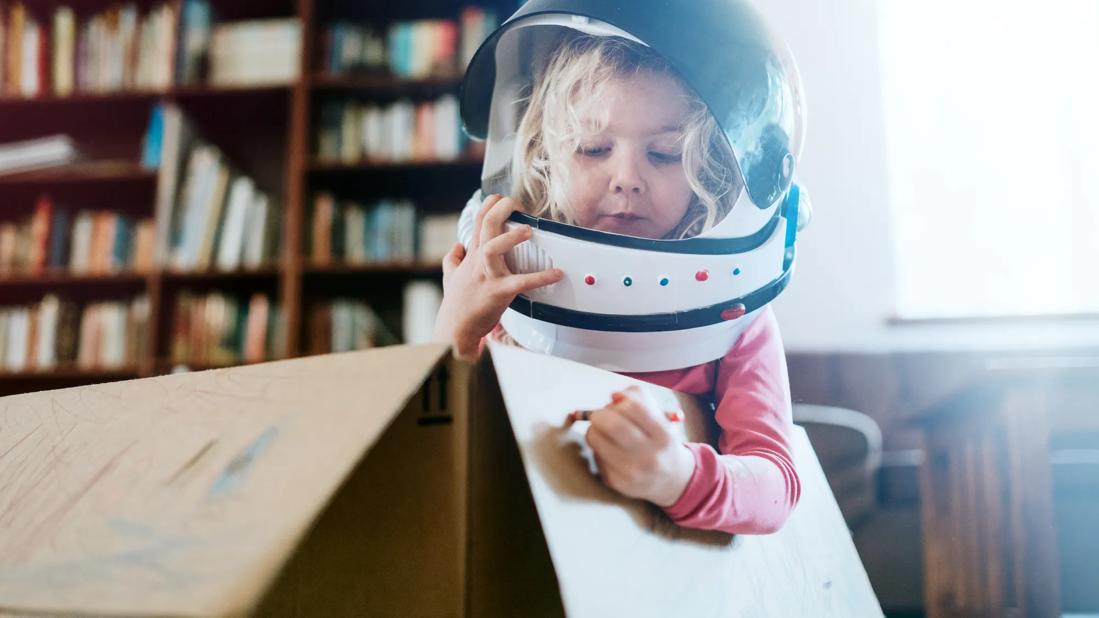
Learning how to make friends is part of childhood — and for some kids, it involves a bit of imagination.
According to some estimates, nearly 2 out of 3 children hang out with an imaginary friend while growing up. It’s not unheard of for some kids to even carry on that relationship approaching their teen years.
It’s all perfectly normal … but that doesn’t mean you don’t have questions about this unseen household member. So, let’s learn a little more about imaginary friends from pediatric psychologist Kate Eshleman, PsyD.
Why do children make imaginary friends?
As kids learn how to use their imagination, it’s not unusual for them to apply that developing mental process to generate a buddy. “It’s a way for them to express newfound creativity,” says Dr. Eshleman.
This imaginary friend (IF) can become your child’s co-pilot as they go about learning social skills and exploring concepts and ideas. (It’s why a kid might set a table to share a meal and conversation with their IF.)
“Imaginary friends allow children to practice different scenarios — and they get to try things out through a lens of their own creation in a situation they can control,” she explains.
It should be emphasized, too, that it’s OK for a child not to have an IF. Constructing a make-believe character isn’t a critical developmental step. “Every kid is different,” she reassures. “Some have imaginary friends and some don’t. It’s that simple.”
What might be an imaginary friend?
Imaginary friends come in many forms. The pal may be a person or animal that’s invisible to the world. It might be a doll, toy or stuffed animal (like Hobbes from the “Calvin and Hobbes” comic strip).
The friend could even be a balloon, rock or other random item that your child somehow adopts.
“Imaginary friends can take any shape,” says Dr. Eshleman. “That’s the beauty of imagination.”
Benefits of imaginary friends
IFs might not be real, but they can deliver real benefits for your child. The list of perks includes:
- Companionship. An IF is never too busy to hang out when your kid is lonely or having a tough day. They’re always available for sleepovers and riding out a thunderstorm, too. “An imaginary friend can be very good company,” says Dr. Eshleman.
- Learning to share.It might be difficult for your child to let someone else play with their favorite toy. Sharing with an imaginary friend can help them understand and embrace the concept.
- Problem-solving.Kids often talk through issues with their imaginary pal to find the best solution. The interactions can also help children develop an emotional understanding of situations.
- Making decisions.Children spend most of their day being told what to do. They don’t get to decide much. “But with an imaginary friend, they get an opportunity to fully be in charge of what’s happening,” notes Dr. Eshleman. “That’s big for them.”
Is an imaginary friend a sign of loneliness or stress?
Parents worry about a lot of things, but the presence of an imaginary friend usually shouldn’t be high on the list. (More on that in a moment.)
“An imaginary friend is more likely to demonstrate positive attributes of a child — creativity and resilience, for example — than anything that parents should be concerned about,” says Dr. Eshleman.
Can imaginary friends become a problem?
It might be time to take a closer look at your child’s relationship with an imaginary friend if your child:
- Seems afraid of their imaginary friend.
- Says their imaginary friend is telling them to do unsafe things or make bad choices.
- Has a change in eating or sleeping habits (though this can be a normal part of development).
- Displays any major changes in their attitude or behavior.
“These aren’t things that are automatically problematic, but they deserve a closer look,” states Dr. Eshleman. “Talk to your pediatrician about any concerns. It never hurts to ask questions.”
How to handle your child’s imaginary friend
If your child has an imaginary friend, try to be accepting and curious about the relationship.
“It’s a great opportunity to engage your child and get them to talk,” says Dr. Eshleman. “Ask questions about the imaginary friend as if they were real. Talk to them about what they did with their friend today.”
Treat it the same as if you entered the world of make-believe that often comes with playing with dolls or cars. “Embrace it as a positive thing,” she encourages.