
What Is a Kola Nut?
 July 01, 2025
This bitter fruit provides a kick of caffeine
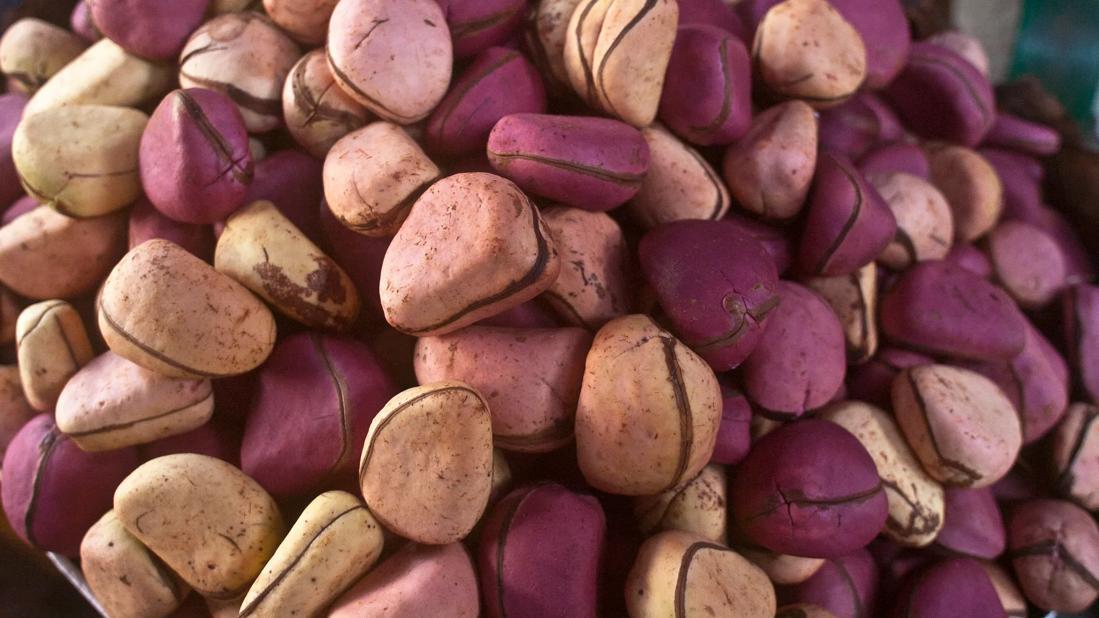
Known for its high caffeine content, the kola nut is as popular in some West African countries as a cup of coffee is elsewhere. Kola nuts and products that contain them are uncommon in the U.S., but they’re widely used in other parts of the world. Kola nuts may help to boost your energy levels, circulation, digestion and metabolism.
What is the kola nut?
The kola nut is technically a fruit. It grows on the kola tree, which is native to tropical rainforests in Africa. Traditionally, in West African cultures, kola was essential to spiritual rituals, ceremonies, medicinal practices and everyday life.
While you won’t see kola nuts much in the U.S., they’re still very popular in Africa.
“In African countries, people chew kola nuts because of their high caffeine content, which can increase energy to provide a boost during the workday,” says registered dietitian Julia Zumpano, RD, LD. “People also chew kola while socializing.”
What does the kola nut taste like?
Kola nuts have a bitter, astringent flavor when they’re fresh. They’re dense and chewy, with a fibrous texture.
“In the U.S., we typically aren’t raised eating bitter foods, so we generally don’t enjoy bitter flavors,” notes Zumpano. “People in other parts of the world don’t mind chewing kola nut every day, but it may not be appealing to your palate.”
But the flavor mellows a bit if you dry or roast kola nuts.
How much caffeine is in a kola nut?
A kola nut is about 2% to 3% caffeine. And a single nut typically contains up to twice as much of the stimulant as a standard cup of coffee, which is on average about 100 milligrams of caffeine. The U.S. Food and Drug Administration (FDA) recommends that adults limit their caffeine intake to 400 milligrams per day.
If you chew kola nuts, you don’t get the caffeine all at once because they’re dense. It takes some time — and a good jaw workout — to thoroughly chew up one kola nut.
What products contain kola nut?
Here’s where the familiar word “kola” (or “cola”) comes in. In the past, Europeans created kola chocolate and kola alcohol preparations for medicinal uses. People in the U.S. also took kola for various ailments, and in 1886, a doctor created a “brain tonic” known as Coca-Cola®. Its kola-containing competitor, Pepsi-Cola®, came along a few years later.
But today, the popular soda brands no longer contain kola nut extract.
“Your local health food store might be the only place you can find kola nut,” says Zumpano. “You’ll find it in the form of extract or capsules.”
Health benefits of kola nuts
People have made many claims about the curative properties of kola nuts. But there’s no research to back up most of them, such as treating asthma, eye problems or digestive diseases.
“The well-known benefits of kola nuts are essentially the benefits of the caffeine they contain,” clarifies Zumpano. “But there are more readily available products than kola nuts that provide caffeine.”
If you can get your hands on kola nuts or a bottle of kola nut extract, it may help boost your:
- Circulation
- Digestion
- Energy level
- Metabolism
The stimulant properties of caffeine in kola nuts may also suppress your appetite and help relieve headaches. Research suggests that kola nut extract may have antibacterial properties, notably against bacteria that cause dental problems.
Are there any side effects of consuming kola nuts?
“Caffeine is a stimulant, and kola nuts contain a high concentration of this buzzy substance,” says Zumpano. “Too much kola nut will make you feel like you’ve had one too many espressos.”
Potential downsides of too much kola nut include:
- Anxiety and jitters
- Dizziness
- Elevated blood pressure
- Heartburn from increased stomach acid production
- Increased urination and dehydration
- Insomnia
- Rapid heart rate
The FDA classifies kola nut and its extract as “generally safe.” But if you try kola nut products, be aware of stacking too much caffeine in your day because caffeine stays in your system for several hours. You might regret having that afternoon kola nut on top of your morning triple-shot latte.