
Myths Explained: Breast Cancer Symptoms
 October 04, 2023
Lumps may move and you may feel pain, but breast discharge typically isn’t a sign of cancer
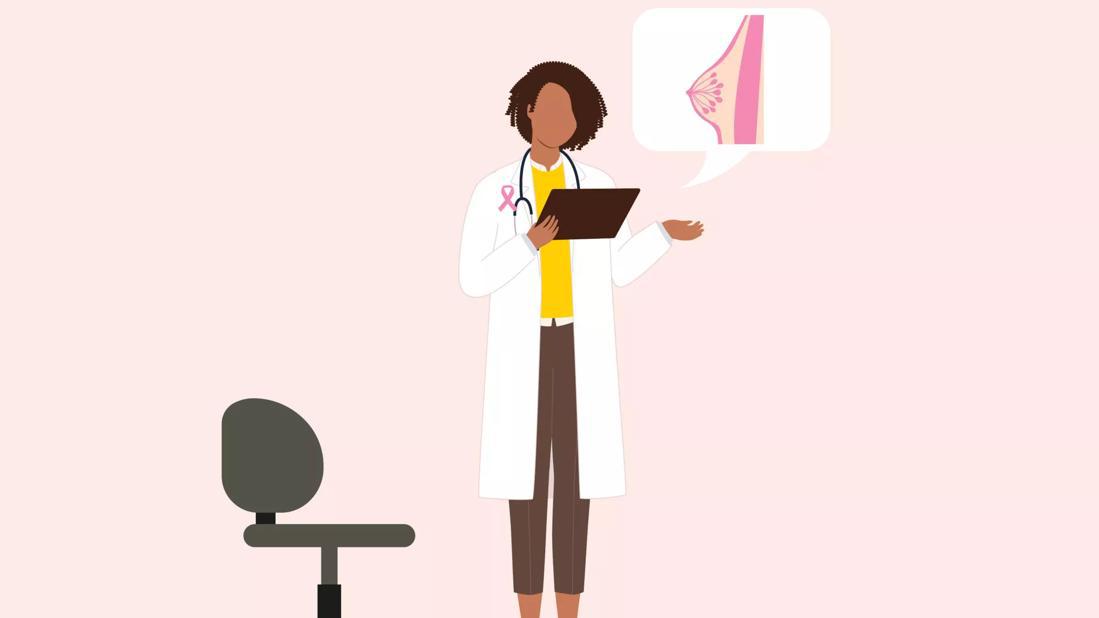
You can never be too safe when it comes to breast cancer. Doing self-exams, having mammograms and watching for warning signs can save your life.
Raised awareness and more candidness about breast health is a good thing. But it also has fueled some common misperceptions.
Oncologist Megan Kruse, MD, explains the common breast cancer symptoms and the truth behind five false signs of breast cancer.
Common breast cancer symptoms
Breast cancer is the second-leading cause of cancer death in women. And while there are different types of breast cancer, symptoms typically include:
- A change in the size, shape or contour of your breast.
- A mass or lump
- A lump or thickening in or near your breast or in your underarm that’s present during your menstrual cycle
- A change in the look or feel of your skin on your breast or nipple. This includes a dimpled, puckered, scaly or inflamed appearance
- Redness of your skin on your breast or nipple
- An area that’s distinctly different from other areas on either of your breasts
- A marble-like hardened area under your skin
- A blood-stained or clear fluid discharge from your nipple
It’s important to note that symptoms can vary from person to person — and that some people might not even notice any symptoms.
Common myths
While you should speak to a healthcare provider if you have any concerns, there are some common myths out there. Dr. Kruse sets the record straight.
Myth 1: If a breast lump is movable, it’s not cancer
“Actually, most breast cancers begin in a movable state,” Dr. Kruse says. “It’s often not until they grow larger that they attach to something and stop moving.”
You should tell your healthcare provider about any lump you feel in your breast.
When doing a self-exam, feel around your breasts for something hard that doesn’t belong there, Dr. Kruse advises. It may feel like a frozen pea or lima bean, or be smooth and very firm, like a marble.
Myth 2: Breast cancer doesn’t cause pain
That’s not entirely true. Breast cancers can be painful depending on where they occur in a breast, especially if growing quickly. Breast pain in one consistent particular spot is a warning sign.
Can dense breast tissue cause pain? Tenderness or pain in your breast isn’t generally related to breast density.
“Most people experience general breast pain or soreness that comes and goes,” Dr. Kruse says. “That’s not a sign of cancer, but usually due to hormone fluctuations or too much caffeine.”
Myth 3: Lumpy breast tissue means dense breasts
False. “Lumpy breast tissue has nothing to do with breast density,” Dr. Kruse clarifies. “Your breasts can feel lumpy but not appear dense on a mammogram.”
Nearly 1 in 2 women has dense breast tissue, indicated by the amount of milk glands and ducts and supportive tissue, which appear solid white on a mammogram.
Because cancer can appear the same way, anyone with dense breasts may choose to have 3D mammography for better cancer detection and fewer false positives. If you're at especially high risk, you may qualify for MRI screening.
Myth 4: Doctors can tell if a lump is cancer just be feeling it
Wrong. Neither you nor your healthcare provider — no matter how good they are — can tell whether a lump is cancer without diagnostic imaging.
“Providers who say, ‘It’s probably OK,’ without investigating further may cause a delay in diagnosing breast cancer,” Dr. Kruse cautions. “Don’t let your doctor guess. Get imaging.”
So what happens if you have a lump of concern? If you're over age 30, you'll have a diagnostic mammogram and ultrasound. An ultrasound helps evaluate a mass by assessing whether it is solid or fluid filled. If you're over 30, you'll have only an ultrasound because younger, denser breasts are difficult to evaluate by mammogram.
Suspicious lumps should be biopsied. Typically, a sample of tissue is drawn through a needle. Then, the tissue is studied under a microscope.
Myth 5: Nipple discharge is usually a sign of cancer
Is there such a thing as breast cancer discharge? In most cases, no. It could be due to leftover milk in your ducts after breastfeeding, or debris could be causing greenish or even black discharge that can be squeezed out of the ducts, Dr. Kruse explains.
“What’s more concerning is bloody or clear discharge that leaks out when you’re not squeezing,” she says. “This type of discharge can be a sign of breast cancer about 10% of the time. Even with bloody nipple discharge, the cause is usually a benign condition inside the milk duct.”
The importance of talking to a doctor
Lumps, pain and other breast abnormalities affect almost all of us at some point. Usually, they aren’t cancer but getting them checked out is a must. Most of the time, you can’t safely rule out cancer without a proper evaluation.
“Many of my patients with breast cancer note that they had the lump for a number of months before bringing it to medical attention. The sooner a lump is evaluated, the better the chances of cure if it’s found to be cancer and the sooner a patient will receive reassurance if the lump is not cancerous,” says Dr. Kruse.
“Many types of medical providers can help to evaluate a breast lump, including primary care providers, Ob/Gyn providers and other breast specialists. The more familiar you’re with your own breasts, the better you will be able to help your provider act appropriately when a change is found.”