
Myokymia
 February 14, 2025
Eyelid myokymia makes your eyelids twitch, and if you don't know why, it's natural to feel confused or concerned. This condition is extremely common, especially under certain circumstances. But fortunately, it’s also usually nothing to worry about. And even when it’s due to more serious conditions, the twitching is usually very treatable.
What is myokymia?
Eyelid myokymia is a slow, uncontrollable eye twitching that causes wavelike muscle contractions in your eyelids. It’s a specific form of myoclonus (uncontrolled muscle movement) that anyone can experience under the right circumstances. It’s extremely common and usually harmless, but rarely, it can be a warning sign of more serious issues.
The term “myokymia” can apply to other muscles in your body but is most commonly used for this specific type of eyelid twitching.
Symptoms and Causes
Symptoms of myokymia
The main symptom of eyelid myokymia is a twitching you can feel (and you can probably see it if you look in a mirror while it happens). Myokymia twitches usually last only seconds to minutes, but they can last hours for some people. In rare cases, they can become constant.
The twitches are usually:
- Slow
- Constant
- Gentle
- Rippling (almost like waves on water)
Myokymia usually affects just one eye at a time, but it can affect both. You can have it in your upper or lower eyelids, but lower is more common. In rare cases, it will affect both the upper and lower eyelids of the same eye. Myokymia can sometimes also cause nystagmus (when the eyelid twitching also makes your eyeball move).
Eyelid myokymia causes
Eyelid myokymia happens because of malfunctions somewhere in your nervous system. Your eyelids have a direct connection to your brain via your facial nerve, the seventh of 12 cranial nerves. Malfunctions or disruptions in either your brain or the facial nerve itself can cause the kind of faulty signaling that leads to myokymia.
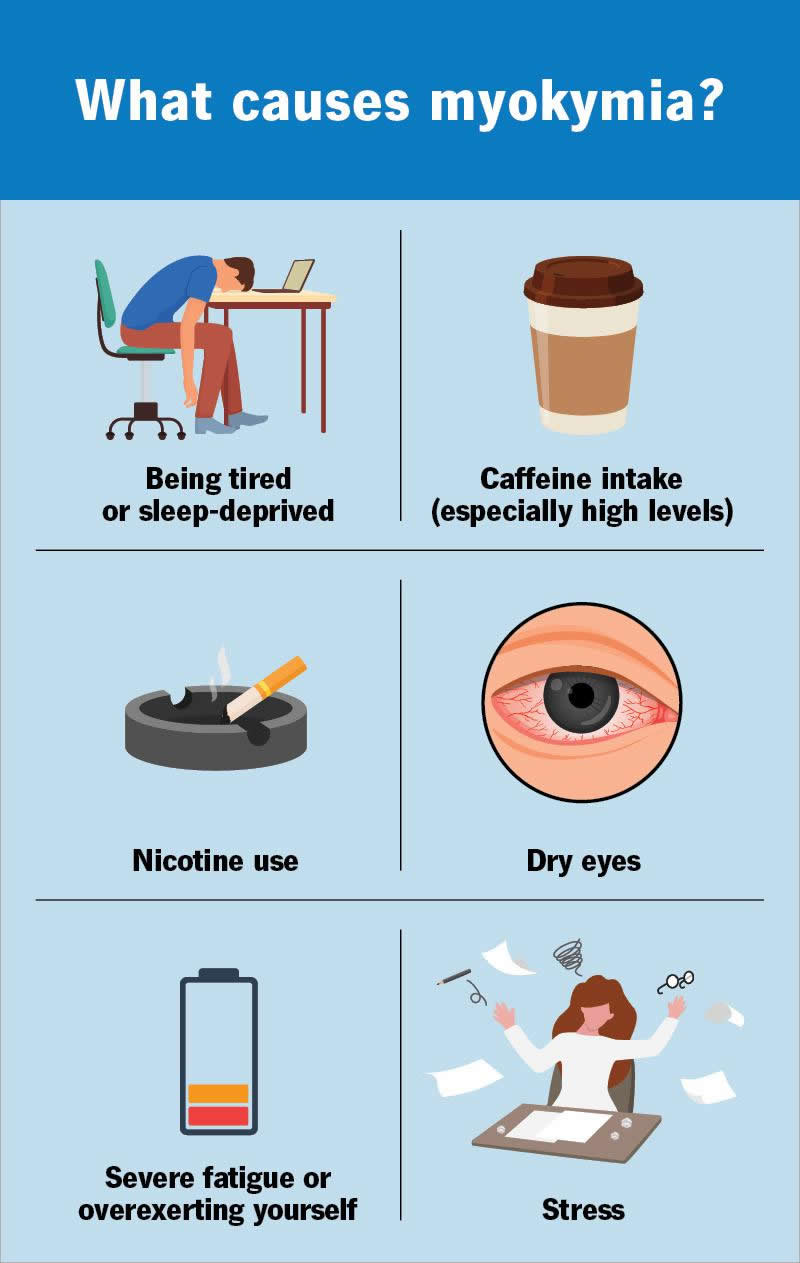
Some of the most common causes of myokymia include:
- Being tired or sleep-deprived
- Caffeine intake (especially if you have too much)
- Nicotine use
- Dry eyes
- Severe fatigue or overexerting yourself
- Stress
Other causes of eyelid myokymia include:
- Medications that affect your nervous system
- Nerve and brain injuries
- Nervous system diseases, including demyelinating diseases like multiple sclerosis (MS)
- Tumors and growths
Complications of myokymia
Eyelid myokymia usually doesn’t have any complications, but in some cases, the twitching episodes last longer or even become constant. Twitching episodes can also become more frequent.
If the twitching spreads from your eyelids to other parts of your face, myokymia may lead to:
Diagnosis and Tests
How doctors diagnose myokymia
An eye care specialist or other provider can usually diagnose eyelid myokymia with a simple physical exam and a neurological exam. These exams let your provider watch the twitching happen and diagnose it or rule out other causes based on what they see.
When myokymia is longer-lasting, more disruptive or starts spreading and getting worse, your eye specialist or other provider will likely recommend other tests. These are usually imaging tests like CT scans or MRIs.
Management and Treatment
How is eyelid myokymia treated?
Myokymia is usually a minor, temporary concern. Most cases go away within days or weeks without any treatment. But sometimes, eyelid myokymia becomes more than just an annoyance and starts interfering with your work or other parts of your daily routine. Treatment may also be an option if you have myokymia that happens consistently for at least three months.
If myokymia lasts longer or is affecting your usual activities, it’s a good idea to see an eye specialist or another healthcare provider. They can determine if it’s a cause for concern, offer treatment options or refer you to another specialist who can help.
Myokymia treatment options
The most common treatment approaches include:
- Changing things that could cause or contribute to your myokymia. Some simple examples include limiting how much caffeine you consume, managing your stress or making sure to get enough quality sleep. Limiting alcohol intake and reducing or quitting nicotine (including smoking and vaping, or smokeless forms like chewing tobacco or snuff) may also help. These can also reduce your risk of developing myokymia in the first place.
- Medication changes. If you’re having myokymia because of a medication, your provider may recommend changing to another.
- Medication injections. The most common medication treatments for myokymia are neurotoxins like onabotulinumtoxinA (Botox®). They temporarily block nerve signals traveling to your eyelids. The injection points are all around your eye, just underneath your skin, and this doesn’t involve any injections into your eye itself. These medications paralyze the related muscles, keeping the twitching from happening entirely until the effect wears off.
Treatment approaches can vary much more when there’s a more serious condition behind your myokymia. In those cases, your provider can tell you more about the treatment options available to you and help you choose one that’s most likely to help you.
Recovery time
Paralyzing treatments like onabotulinumtoxinA usually start working within a few days. Most people will notice an effect about a week after the injection. The average effective time before onabotulinumtoxinA wears off is about 79 days (though that can vary by a few weeks, either longer or shorter, for some people).
Outlook / Prognosis
What can I expect if I have myokymia?
Eyelid myokymia is usually nothing to worry about. For most people, it’s a minor condition and isn’t enough to affect their usual routines and activities. The twitching from myokymia often lasts only a few seconds to minutes, and it’ll probably go away if you resolve the potential causes or contributing factors like lack of sleep or caffeine intake.
But if eyelid myokymia doesn’t go away after a few weeks or it’s disrupting your life, it’s a good idea to talk to an eye care specialist or your primary care provider. They can help figure out what might be causing your myokymia or refer you to a provider who can diagnose and treat it.
A note from Wockr
Eyelid myokymia is so common that even cartoon characters can have those telltale eyelid twitches. But if you’re having it and aren’t sure why, you might not think it’s as funny. Most of the time, myokymia means you’re tired or wired (either from caffeine, anxiety, stress or a combination of these), and it’ll go away once you address those issues.
But if the twitching from myokymia starts to spread, last longer, happen more often or otherwise interfere with your life, it’s a good idea to talk to an eye care specialist or other medical provider. It’s not a trivial concern if it’s disruptive. Your eye specialist can help you find a solution that will ease the twitching — and your concerns — so you can focus on other things.