
Recipe: Zesty Bean Salad
 December 14, 2023
Filling, flavorful and beneficial
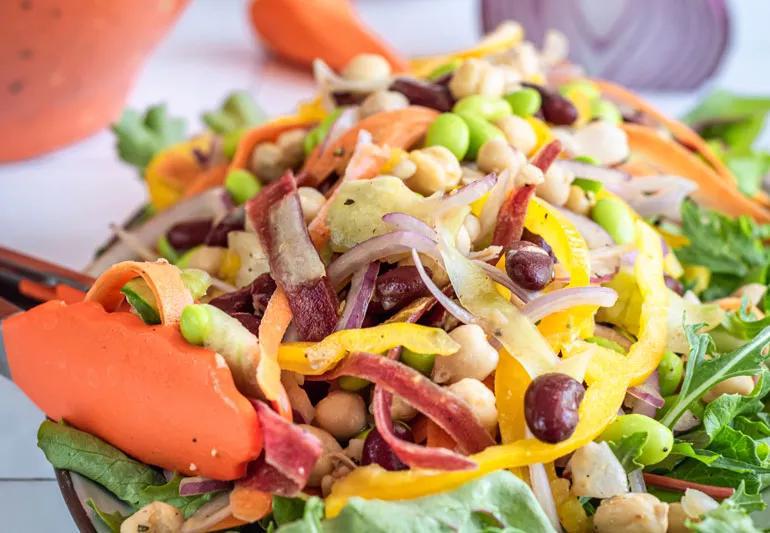
Eating plenty of fruits and vegetables, including beans, is linked with a lower risk of lung, oral, esophageal, stomach and colon cancer. It’s unclear yet which components protect the most against cancer, so enjoy a variety of whole foods naturally rich in nutrients. Fill at least two-thirds of your plate with vegetables, fruits, whole grains and beans.
Ingredients
- 1 15-ounce can kidney beans, drained and rinsed (or your favorite beans)
- 1 15-ounce can chickpeas, drained and rinsed
- 1 cup fresh or frozen edamame
- 2 tablespoons extra virgin olive oil (or your favorite flavor-infused oil – try garlic or ginger!)
- 2 teaspoons apple cider vinegar
- 1/2 cup chopped shallots or red onion
- 1 tablespoon fresh chopped garlic (or more to taste)
- 1 cup grated carrots
- 1 cup grated cucumbers
- 1 cup thinly sliced bell peppers (choose a variety of colors)
- Handful of chopped flat-leaf Italian parsley
- Salt and pepper to taste
Directions
- Mix all ingredients together and refrigerate for at least 2 hours or overnight. The longer it sits, the better it will taste!
- Serve as-is or over field greens.
Ingredient health benefits
- Chickpeas: These round, little legumes have a wealth of nutrients. Aside from being a complete protein, chickpeas are full of vitamins and minerals, like vitamin A and potassium. They’re also high in fiber, which promotes a healthy gut and keeps you fuller longer.
- Edamame: Soybeans are a good source of fiber and rich in plant protein. In fact, like chickpeas, edamame is also one of the few sources of plant protein that’s considered a complete protein — meaning it has all the amino acids your body needs and can’t make by itself. Talk about a package deal!
- Extra virgin olive oil (EVOO): You may be aware of some of extra virgin olive oil’s many health benefits. Or you may not be, but EVOO is a good cooking oil to have around. It has lots of vitamins, like vitamin E, and it can help lower your “bad” (LDL) cholesterol and raise your “good” (HDL) cholesterol.
- Apple cider vinegar: Though research into the benefits of this common pantry item is ongoing, apple cider vinegar may have its own perks to bring to the table. Raw apple cider vinegar has probiotics, which boost your gut health, and antioxidants that protect your cells and help them thrive.
- Onions: When you think of nutritious foods, onions probably aren’t top of mind like some of the more glamorous (and less pungent) options out there. But they have plenty of benefits to go around, like vitamin C for a happy immune system and flavonoids to fight inflammation and free radicals. Onions also have prebiotics to feed the good bacteria in your gut.
- Carrots: They’re not just rabbit food, you know. These colorful taproots are an excellent source of carotenoids — especially beta-carotene, which your body turns into vitamin A as it’s moving through your stomach. Beta-carotene suppresses inflammation and supports your eye health and vision.
- Cucumbers: Though they may not look it, cucumbers are green machines. For starters, they’re full of vitamin K, which supports strong bones, and fiber to help your gut smooth things over. Cucumbers also have a compound called cucurbitacin B (CuB) that supports your heart and may fight cancer.
Nutrition information (per serving)
Makes 8 servings
Calories: 206
Total fat: 6 g
Saturated fat: 0.8 g
Fiber: 7 g
Sugar: 5.6 g
Protein: 10 g
Sodium: 154.8 mg
Calcium:: 68 mg
Magnesium 61.3mg
Potassium: 519 mg