
Retrognathia
 January 16, 2025
Retrognathia is the medical term for a receding chin. It’s when your lower jaw sits further back than it should. While not harmful on its own, a receding chin can cause issues like TMJ disorder and obstructive sleep apnea. In babies, retrognathia can interfere with feeding. Severe cases may require treatment with orthodontics, jaw surgery or both.
Overview
What is retrognathia?
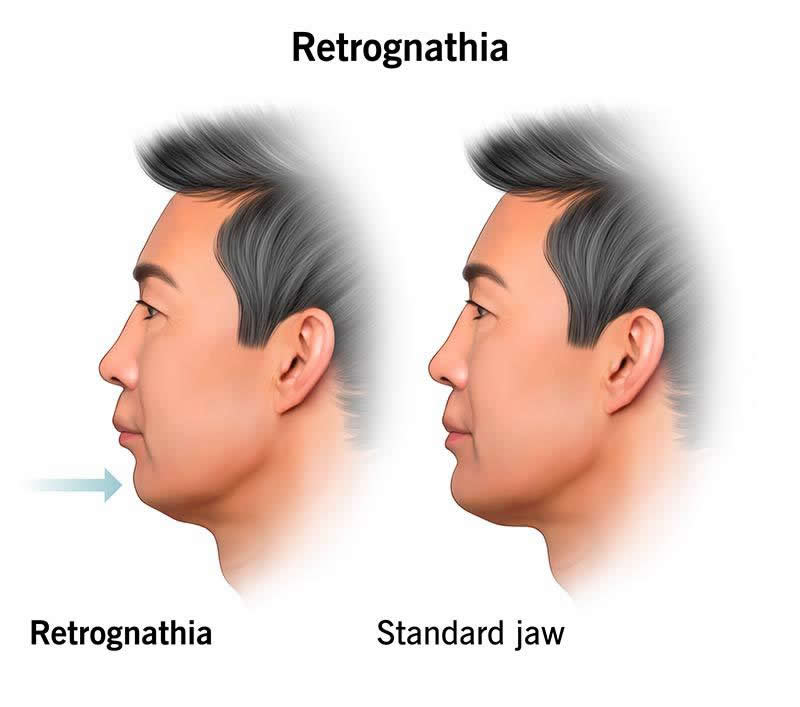
Retrognathia (reh-trow-NA-thee-uh) refers to a receding chin where your lower jaw sits much further back than your upper jaw. It’s a common type of malocclusion where your upper and lower teeth don’t fit together the way they should. It’s like when you try to fit two puzzle pieces together, but they don’t match up. It can make your chin look smaller, and it might cause issues with biting and chewing.
Other names for this condition include mandibular retrognathia and retrognathism.
Types of retrognathia
There are two types of retrognathia:
- Congenital. Most people who have retrognathia were born with it. Sometimes, it’s passed down through families. Or it can be a symptom of another condition.
- Acquired. Some people develop retrognathia later in life. This might happen because of things like injury (trauma) surgery or childhood habits like thumb sucking.
Symptoms and Causes
What are the symptoms of retrognathia?
Retrognathia symptoms include:
- Difficulty chewing, biting or swallowing
- Feeding difficulties (infants)
- Jaw pain
- Mouth breathing
- Snoring
- Speech disorders
- Trouble closing your lips together
If you have mild retrognathia, you may not have noticeable symptoms.
What causes retrognathia?
Causes of retrognathism include:
- Hemifacial microsomia, a condition where one side of your face doesn’t develop as expected
- Facial trauma like surgery, cuts, broken facial bones or other injuries
- Nager syndrome, a genetic condition that affects development of your hands, arms and face
- Pierre-Robin syndrome, a condition that affects your jaw and facial development
- Treacher Collins syndrome, a rare inherited group of conditions that affects your eyes, ears, cheekbones or jaw
Complications of this condition
Untreated retrognathism can lead to complications like:
Diagnosis and Tests
How is retrognathia diagnosed?
Healthcare providers usually diagnose retrognathia during a physical exam. They may also want to take a cephalometric X-ray (a type of dental X-ray). It shows a side view of your entire head. Your healthcare provider can use this imaging test to see how your upper and lower jaws fit together.
Your baby’s pediatrician might notice retrognathia. But it’s not diagnosed until childhood or adolescence in many cases.
Management and Treatment
How is retrognathia treated?
It depends on the severity of your symptoms and whether retrognathia causes any additional health issues. From least to most invasive, retrognathia treatments include:
- Orthodontics. For kids and teens with mild retrognathia, braces, headgear and other orthodontic treatments can correct the position of their jaws as they grow. They may or may not need surgery once their jawbones stop growing.
- Jaw surgery. If you have severe retrognathia — and fully developed jaws — corrective surgery may be the best option. It’s the only way to change your skeletal structure once your jaws stop growing (usually between the ages of 14 and 18).
Many people with retrognathia need a combination of jaw surgery and orthodontics. Ask your healthcare provider what’s best for your situation.
The following treatments don’t address retrognathia directly. But they may help manage complications like sleep apnea and speech difficulties:
Outlook / Prognosis
What can I expect if I have this condition?
Retrognathia isn’t a dangerous or life-threatening condition. But it can cause pain, breathing difficulties and other complications in some cases.
If you have mild retrognathia, you might not need treatment. More severe cases require orthodontics or surgery. Your healthcare provider can tell you what to expect in your situation.
Prevention
Can retrognathia be prevented?
You usually can’t prevent retrognathia — especially if genetics caused it. But early treatment can lessen its severity and reduce your risk for worsening symptoms.
If your child sucks their thumb or thrusts their tongue, try to reverse those habits sooner rather than later. If you need suggestions on how to do this, talk to your child’s dentist or pediatrician.
Living With
When should I see my healthcare provider?
Let your healthcare provider know if you develop:
These things may point to retrognathia or a similar condition.
What questions should I ask my doctor?
Here are some questions you might want to ask your healthcare provider:
- How severe is my retrognathia?
- Do I need treatment?
- What are my treatment options?
- What are the pros and cons of jaw surgery?
- How can I manage my symptoms?
Additional Common Questions
What’s the difference between retrognathia, micrognathia and overbite?
Retrognathia is different from micrognathia. A person with micrognathia has a small chin. Someone with retrognathia has an average-sized chin, but their jaw is in the wrong position. Retrognathia is also different from an overbite, where your upper teeth overlap your lower teeth more than they should.
A note from Wockr
You might think of your receding chin as strictly a cosmetic issue. While that may feel true to you, it’s important to know that it can cause health issues in some cases. Treatment may bring your jaw back into alignment so your teeth fit together the way they should. If you’re worried you might have retrognathia, don’t hesitate to talk to your healthcare provider. They’re here to help you understand exactly what’s happening and explore the best options with you.