
Virus vs. Bacteria: What’s Causing My Kid’s Cold?
 October 30, 2019
Similar symptoms, different treatments
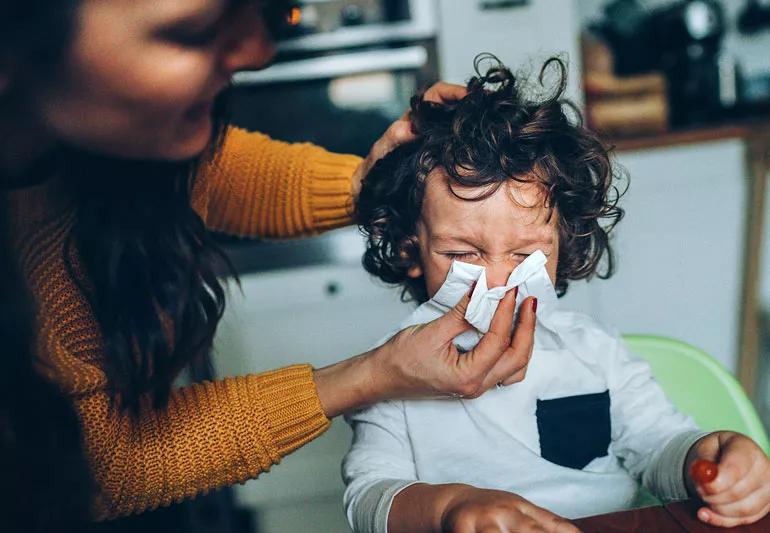
Welcome to cold and flu season. (Reminder: It’s not too late to get your flu shot!)
If your little one is already sniffling, coughing and sneezing, you might wonder whether it was a virus or bacteria that got them sick, and what you can do to help.
Sometimes the symptoms of viral and bacterial infections seem the same, but there’s a big difference between the two, and they’re treated differently, explains Frank Esper, MD, a pediatric infectious disease specialist.
Most often, it’s a virus that’s to blame for a child’s cough, sore throat or mild fever, he says. And the best thing to do is to let the illness run its course.
“For the most part, viruses go away on their own, as your immune system is more than enough to take them out,” he says.
But when a fever gets especially high, suspicion might shift to a bacterial infection. “With bacteria, a lot of times we use antibiotics for those, because bacterial infections can be more severe,” Dr. Esper explains.
Avoiding antibiotic overuse
While it can be frustrating for parents to learn that an antibiotic won’t help their child with a viral infection feel better, Dr. Esper says that overusing antibiotics, especially when they’re not useful, is problematic.
When we overuse antibiotics, the bacteria that they are meant to treat become more resistant, and those antibiotics are no longer useful.
Plus, Dr. Esper says, antibiotics can also destroy “good” bacteria in the gut, which can cause stomach and gastrointestinal upset.
“Your gut is full of bacteria — but, antibiotics do not know friend from foe,” he explains.
“It will kill the bad bacteria that’s causing a sinus infection, but it will also kill the good bacteria that’s in your gut that’s there to help you digest.”
If you’re unsure whether a child has a viral or bacterial infection, Dr. Esper said the best thing to do is to call their pediatrician.
He also reminds parents that any time a baby younger than 2 months old develops a temperature above 100.4, they should be seen by a physician.