
Alagille Syndrome
 August 29, 2023
Alagille syndrome is a condition you’re born with that causes malformed, narrowed or missing bile ducts. This can make bile back up and collect in your liver. It can lead to liver damage and vitamin deficiencies. It can also affect your heart and other organs. Some symptoms include dark pee, pale poop, itching and yellowish skin or eyes.
What Is Alagille Syndrome?
Alagille syndrome is a genetic condition that causes narrowed, malformed or missing bile ducts. Bile ducts are the tubes that carry bile (fluid that helps break down fats) from your liver to your gallbladder and intestines. Malformed, narrowed or missing bile ducts can make bile to back up into your liver, damaging it. It can also lead to low levels of vitamin A, vitamin D, vitamin E and vitamin K in your body.
Alagille syndrome can affect other parts of your body, too. It can cause:
- Narrowed blood vessels between your heart and lungs
- Congenital heart diseases — most commonly, tetralogy of Fallot
- Narrowed blood vessels in your brain, spinal cord or kidneys
- Eye conditions, like a thickened corneal lining
- Butterfly-shaped vertebrae and other skeletal issues
- Specific facial features, like deep-set eyes, a pointed chin and a broad forehead
Symptoms and Causes
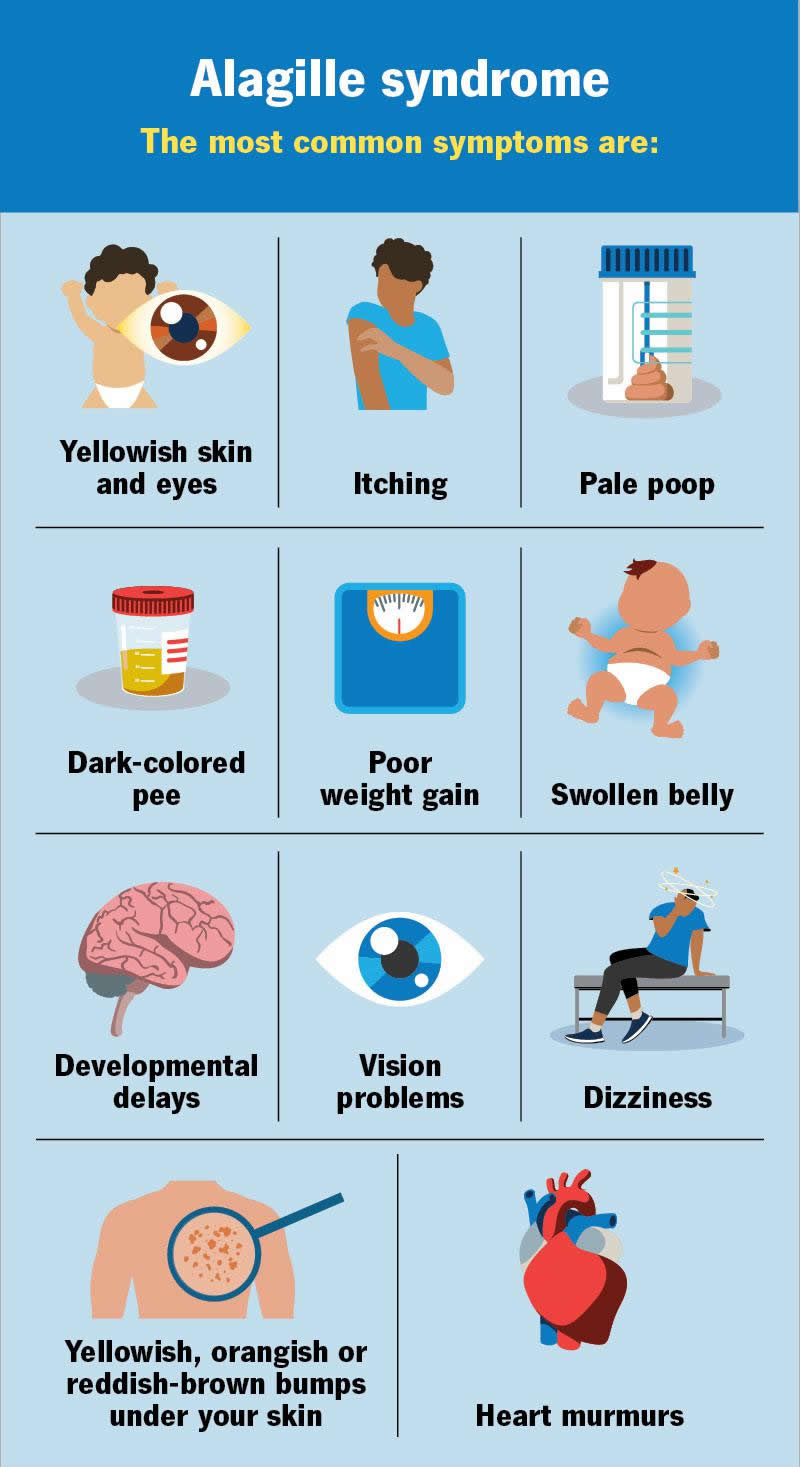
Symptoms of Alagille syndrome
Symptoms could include:
- Yellowish skin and eyes (jaundice)
- Itching
- Pale poop
- Yellowish, orangish or reddish-brown bumps under your skin
- Dark-colored pee
- Slow growth
- Swollen belly
- Vision problems
- Kidney symptoms — birth defects and trouble with kidney function
- Developmental delays
Some kids may also have symptoms of heart conditions, like heart murmur, dizziness, shortness of breath, chest pains and bluish or grayish skin, lips or nails.
Symptoms of Alagille syndrome can be different for each person. They might be mild or severe, and some people might just have one or two of the features. It even affects members of the same family differently. The first symptoms you might notice of Alagille syndrome in infants are dark pee, light poop, a swollen belly and jaundice (that lasts several weeks after birth).
Alagille syndrome causes
A harmful change in the DNA that makes up one of two genes causes Alagille syndrome. You or your child might have inherited this change from a biological parent. Or it might happen without any family history due to a new change in the person with Alagille (60% of the time). Most people (97%) with Alagille syndrome have a change in either the JAG1 or NOTCH2 gene.
These gene changes affect how organs and bones form. It can cause bile ducts that are too narrow or don’t form like they should. Or one or more bile ducts could be missing. This means that bile can back up and collect in your liver, damaging it. The lack of bile in your digestive tract means you aren’t able to absorb fats and certain vitamins.
Your heart valves and blood vessels can also narrow. This can keep blood and oxygen from getting to your tissues and organs.
Complications
Complications of Alagille syndrome include:
- Blood clots
- Liver failure
- Liver scarring
- Kidney disease
- Stroke
- Weakened bones (rickets)
Diagnosis and Tests
How doctors diagnose Alagille syndrome
Alagille syndrome can be difficult to diagnose because the symptoms vary from person to person. Sometimes, people are diagnosed as adults, but this usually happens in childhood.
A healthcare provider will start by asking about your child’s symptoms. They might suspect your child has Alagille syndrome if they have bile duct differences and at least three other signs of the condition (like bone, blood vessel or eye differences).
Your child’s provider will need to do some procedures and tests to confirm the diagnosis. These could include:
- Abdominal ultrasound
- Blood tests, including kidney function tests and pancreas function tests
- Eye exam
- Genetic testing
- Heart ultrasound
- Liver biopsy
- Spine X-ray
Management and Treatment
How is Alagille syndrome treated?
There’s no cure for Alagille syndrome. But you can treat the symptoms and reduce your risk or your child’s risk of complications. Treatment could include:
- Vitamin supplements
- A feeding tube in your stomach (gastrostomy tube) or a tube in your nose to your stomach (nasogastric tube)
- Ursodeoxycholic acid to treat liver disease
- Medicines, moisturizers and lotions to relieve itching (antihistamines, cholestyramine, naltrexone or rifampin)
- Formula that contains medium-chain triglycerides for babies, to help them absorb nutrients
- Surgery to redirect bile between your liver and small intestine
- Surgery to treat heart, blood vessel or kidney conditions
- Liver transplant for severe liver disease or liver failure
When should I see my healthcare provider?
Talk to a healthcare provider if you or your child has Alagille syndrome and:
- You notice signs of liver damage, like yellowish skin or eyes, dark pee, bumps under your skin or unexplained itching
- Symptoms prevent you or your child from completing daily tasks
- You think your child has growth delays or is missing developmental milestones
When should I go to ER?
Some complications of Alagille syndrome can be life-threatening. Call 911 (or your local emergency number) or go to an emergency room right away if you or your child has:
- An irregular heartbeat
- Difficulty breathing
- Chest pain
- Bluish or grayish skin, lips or nails
- Numb feeling on one side of your body
- Trouble speaking or slurred speech
- Sudden vision problems
- Dizziness or loss of balance or coordination
- Severe headache
Outlook / Prognosis
What can I expect if my child has Alagille syndrome?
Everyone’s a little bit different. Some people with Alagille will have mild symptoms, and some are at high risk for serious complications. Some children might take longer to crawl or walk. A small percentage will have intellectual delays or disabilities.
What is the life expectancy for a person diagnosed with Alagille syndrome?
People with mild symptoms have a life expectancy similar to people without Alagille syndrome. People with more severe symptoms are at a higher risk for complications and might have a shorter life expectancy. Your healthcare provider can let you know what to expect for yourself or your child.
Prevention
Can Alagille syndrome be prevented?
Since you’re born with Alagille syndrome, there’s no way to prevent it. If you or someone in your family has Alagille syndrome, you can talk to a genetic counselor before getting pregnant about the chances of your child inheriting it.
A note from Wockr
If your child is diagnosed with a lifelong condition, the future may feel uncertain. While there’s no cure for Alagille syndrome, you and your child’s provider can work together to manage symptoms. With these adjustments, many people with Alagille syndrome can lead active lives for as long as those without the condition.