
Angiomyolipoma of the Kidney
 February 23, 2022
An angiomyolipoma is a benign (noncancerous) tumor that forms in your kidney. Most people who have it don’t have any symptoms. But it can cause anemia, fever, pain and high blood pressure. If it grows, you may need treatment such as embolization or surgery to reduce your risk of bleeding.
What Is an Angiomyolipoma?
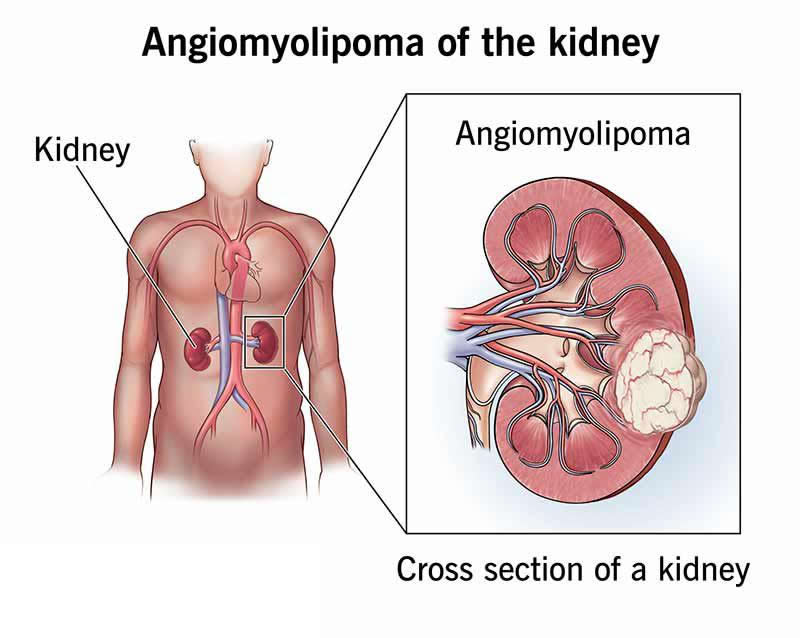
An angiomyolipoma (an-jee-oh-mahy-OH-li-POH-muh) is a type of tumor (neoplasm) in your kidney. It’s the most common kind of benign (not cancerous) kidney tumor — affecting less than 1 in 100 people in the general population. But in rare cases, it may transform into cancer (malignancy). The tumors consist of:
- Fat (adipose tissue)
- Smooth muscle
- Blood vessels
Other names for angiomyolipoma include:
- AML
- Renal angiomyolipoma
- Renal AML
- RAML
Types of angiomyolipoma
There are three types of angiomyolipoma. The types depend on the kinds of cells and tissue that make up the tumor. These include:
- Classic (triphasic) AMLs. Most AMLs contain three types of tissue: blood vessels, fat and smooth muscle tissue.
- Monophasic AMLs. Some AMLs contain almost all of one type of tissue, such as smooth muscle or fat.
- Epithelioid AMLs. These AMLs mostly consist of the cells that line your kidney’s blood vessels (epithelioid cells). These types may be more likely to become cancer.
Symptoms and Causes
Symptoms of angiomyolipoma
Many people with angiomyolipomas don’t have any symptoms. But if the lump (mass) gets too big, it may cause symptoms like:
- Bleeding (hemorrhage)
- Fever
- Flank pain or kidney pain
- High blood pressure (hypertension)
- Low red blood cell levels (anemia)
- A lump you can feel
- Nausea and vomiting
- Urinary tract infection (UTI)
What does an angiomyolipoma look like?
In most cases, an angiomyolipoma is golden yellow because of its fat content. It can also range in size, from about half an inch to about 8 inches (1-20 centimeters) — about the size of a nail head to half the size of a golf ball.
Angiomyolipoma causes
Experts aren’t sure what causes angiomyolipomas to form. But they think certain genetic variations to your TSC1 or TSC2 genes (tumor suppressor genes) may play a role. These genes are responsible for producing tuberin. Tuberin is a protein that helps control the size and growth of cells. When the TSC genes change, it affects the production of tuberin, and cells may grow out of control.
How fast does an angiomyolipoma grow?
Many classic angiomyolipomas don’t grow at all. If they do, the growth rate tends to be slow — on average, about one-sixteenth of an inch (0.19 centimeters) each year. But they can grow more rapidly during pregnancy. If you have an angiomyolipoma and are considering having children, you may need treatment before getting pregnant.
Risk factors
Anyone can get an angiomyolipoma. But they’re more common in females, especially between the ages of 40 and 60.
You also may be more likely to get an angiomyolipoma if you have certain health conditions, including:
- Lymphangioleiomyomatosis (LAM)
- Tuberous sclerosis complex (TSC)
- Neurofibromatosis type 1 (NF1)
- von Hippel-Lindau disease (VHL)
If you have any of these conditions, you should get regular imaging tests to try to catch AML early.
Can angiomyolipoma be cancerous?
In rare cases, epithelioid angiomyolipoma can sometimes develop into cancer. If you have epithelioid angiomyolipoma, healthcare providers will monitor you closely. If cancer develops, they’ll discuss the next steps in your care with you.
Is angiomyolipoma in the kidney serious?
Many people with an angiomyolipoma don’t even know they have it. But even though an angiomyolipoma isn’t cancerous, it can cause problems that require treatment if it gets too large — usually larger than the size of a walnut (about 1.5 inches, or 4 centimeters).
Diagnosis and Tests
How doctors diagnose angiomyolipomas
In many cases, a healthcare provider notices a tumor during imaging tests for another health condition. If you have symptoms, they may order tests to learn more about the cause.
Less often, providers discover an angiomyolipoma because of retroperitoneal hemorrhage. This is when part of the tumor bursts (ruptures) and blood enters your abdomen (belly). Retroperitoneal bleeding is a serious, potentially life-threatening problem.
Tests that are used
Healthcare providers may recommend the following imaging tests:
- CT scan
- MRI
- Ultrasound
Some types of angiomyolipomas can look like kidney cancer during imaging tests. A provider may recommend a kidney biopsy to be sure.
Management and Treatment
How is it treated?
If your tumor is smaller than 1.5 inches (4 centimeters), your healthcare provider may suggest “watchful waiting” as the top option. That means you’ll get yearly (annual) imaging tests to monitor the tumor. But they won’t recommend treatment unless the tumor gets bigger or causes symptoms.
If your tumor is larger than 1.5 inches, your provider may recommend treatment to stop the tumor from growing or to remove it. Treatment options include:
- Ablation therapy: Providers use energy (radiofrequency waves), heat or cold gas to destroy angiomyolipomas.
- Arterial embolization: A provider makes a small cut (incision) in your inner thigh and uses a thin tube (catheter) to insert tiny beads. The beads block blood flow to the angiomyolipoma. This shrinks it and reduces the risk that the tumor bleeds.
- Partial nephrectomy: A surgeon removes part of your affected kidney, but not your entire kidney.
- Radical nephrectomy: A surgeon removes your entire affected kidney.
Tumors may also respond to medications.
What medications are used to treat angiomyolipoma?
Healthcare providers recommend mechanistic target of rapamycin (mTOR) inhibitors to treat angiomyolipoma. These are a type of immunosuppressant that addresses the genetic variation in angiomyolipomas. They can stop the tumor from growing or shrink it.
Should a benign kidney tumor be removed?
Some people with an angiomyolipoma don’t need any treatment. Your care plan depends on:
- The size of the tumor
- Whether you have any symptoms
- Whether you plan to become pregnant
If you’re not at risk of complications, they’ll likely recommend a watchful waiting approach.
Are there complications or side effects of angiomyolipoma treatment?
Angiomyolipoma treatments have some risks, including:
- Bleeding
- Infection
- Scarring
In some instances, kidney failure can occur after treatment. Providers will discuss these risks with you before treatment and recommend ways to reduce complications. If kidney failure occurs, they’ll develop a care plan to manage your symptoms and help you feel your best.
Recovery time
Your recovery time depends on the type of treatment you receive. After ablation therapy or arterial embolization, you may need to stay in the hospital for a few hours or even overnight.
If a surgeon takes out part of or all of your kidney, you may need to stay in the hospital for a few days. A full recovery may take up to six weeks. Your care team will give you a better idea of your recovery timeline.
Reach out to a healthcare provider if you have any new symptoms that may indicate something is wrong with your kidney. These may include:
- Abdominal pain
- Back pain
- Blood in your pee (hematuria)
- Fever
- Nausea and vomiting
- Pain in your upper legs
- Signs of obstructive shock, including confusion, rapid heart rate (tachycardia), dizziness, shallow breathing (tachypnea) and pale skin (pallor)
Outlook / Prognosis
What can I expect if I have an angiomyolipoma?
If you have an angiomyolipoma and don’t have any symptoms, healthcare providers should still monitor it. They’ll talk to you about how often you should get imaging tests to see if the tumor is growing.
Are there long-term effects from angiomyolipoma?
If angiomyolipomas get larger, there’s a risk they could bleed or burst. Healthcare providers will check the size of the tumor and recommend treatment if you’re at risk.
Can I get an angiomyolipoma more than once?
Yes, an angiomyolipoma can regrow, even after treatment. It’s also possible to have multiple angiomyolipomas at the same time or to develop them in both kidneys.
Additional Common Questions
What should I avoid with angiomyolipoma?
If you have an angiomyolipoma, a healthcare provider may recommend:
- Drinking lots of water
- Eating balanced meals and snacks
- Managing your blood pressure
- Quitting smoking
A note from Wockr
It can be scary to learn that you have a tumor on your kidney, and “angiomyolipoma” is a long, complicated name that sounds intimidating. But this type of kidney tumor isn’t cancerous and rarely develops into cancer. It may not even cause any symptoms. Still, it can make you feel anxious about your kidney and your overall health.
Healthcare providers understand your feelings. They’ll recommend regular checkups to monitor its size and, if necessary, explain your treatment options so you can feel confident in your choices. Don’t hesitate to share any of your feelings or concerns.