
Anuria
 August 03, 2023
Anuria is the lack of urine (pee) production. It can happen as a result of shock, severe blood loss, or heart or kidney failure. It can also occur from medications or toxins. Anuria is an emergency and can be life-threatening. Get immediate treatment if you have anuria.
Overview
What is anuria?
Anuria is a condition in which your kidneys are producing no or a small amount of urine (pee) or you aren’t peeing because of a blockage. It’s the most severe form of oliguria.
Measuring and testing your pee can tell a healthcare provider a lot about your health. In adults, your kidneys typically make more than 500 milliliters (17 ounces) of pee per day — roughly one pint. Children make less pee than adults, and the amount they make depends on their age and size. Adults with anuria make 0 to 100 mL (3.3 ounces) of pee per day.
Anuria is a medical emergency. Contact a healthcare provider immediately if you’re not creating as much pee as you should. It’s important to get help as quickly as possible.
Is anuria serious?
Yes, anuria is serious. It’s a medical emergency. Your kidneys are responsible for removing wastes and extra fluid from your body. The buildup of wastes and fluids in your body can be fatal.
Symptoms and Causes
What are the symptoms of anuria?
The most obvious sign of anuria is that you’re anuric — you’re not peeing enough. You may have other signs and symptoms of conditions that relate to anuria.
For example, kidney disease, liver disease and heart failure can cause:
- Swelling (edema), especially in your legs and feet.
- Weakness.
- Dizziness.
- Feeling like you might faint (presyncope).
Diabetes can also damage your kidneys.
Seek immediate care if you can’t pee or pee very little and have any of these other symptoms.
What causes anuria?
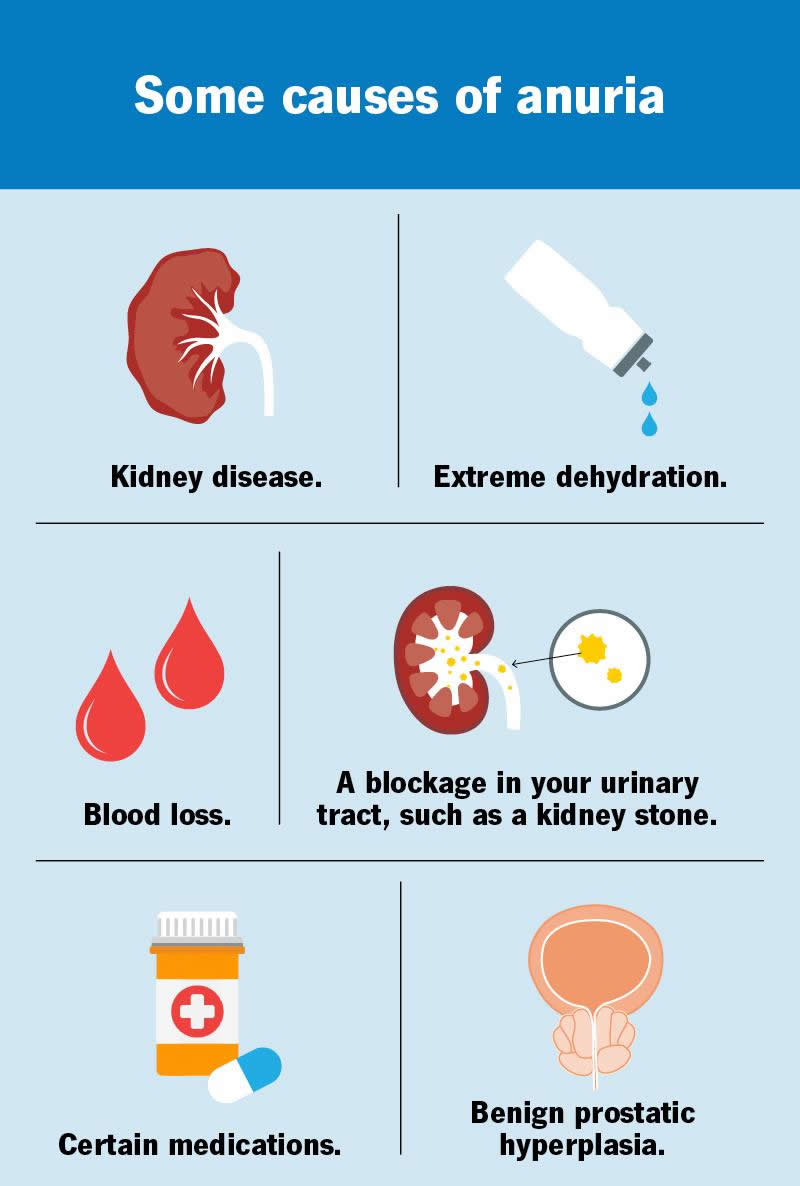
Anuria happens when your kidneys don’t have enough blood or fluid. Conditions that may affect your blood or fluid levels include:
- Extreme dehydration.
- Blood loss.
- Severe bacterial infection.
- Hypovolemic shock.
- Acute heart failure.
- Congestive heart failure.
- Liver failure.
Anuria can also develop when something affects how well your kidneys filter your blood, such as:
- Shock.
- Infections, especially if they cause sepsis.
- Some medications, including nonsteroidal anti-inflammatory drugs (NSAIDs), certain antibiotics, ACE inhibitors, ARBs and some chemotherapy drugs.
- Chemical intoxication, such as breathing in a lot of gasoline, turpentine or mineral spirits.
- Autoimmune diseases.
Another common anuria cause is when something blocks (obstructs) how pee flows through your urinary system after your kidneys make pee. These causes may include:
- Bladder outlet obstruction.
- Kidney stones.
- Enlarged prostate gland (benign prostatic hyperplasia).
- Certain types of gynecologic malignancies (cancers) and lymphoma.
Who does anuria affect?
Anyone can get anuria. But you may be more likely to have it if you have an acute kidney injury (AKI). AKI is a sudden decrease in kidney function. Another name for AKI is acute kidney failure.
What are the complications of anuria?
Anuria is life-threatening without treating the cause. Untreated anuria can permanently damage your kidneys and lead to death.
What is the lowest kidney function before death?
Healthcare providers use your estimated glomerular filtration rate (eGFR) to determine how well your kidneys work. You have chronic kidney disease (CKD) if your kidneys can’t filter out waste and fluid from your blood as expected.
There are five stages of CKD. Stage 1 (eGFR of 90 or higher) means your kidneys still work well, but you have some kidney damage. Stage 5 (eGFR of less than 15) means your kidneys are very close to failing or don’t work at all.
If you’re at stage 5, you may die without dialysis or a kidney transplant.
Diagnosis and Tests
How is anuria diagnosed?
A healthcare provider will review your health history and ask you questions about your symptoms. Questions may include:
- What fluids have you had to drink today and how much?
- When was the last time you peed?
- Are you peeing less than you’d expect?
- Have you had any trouble peeing before?
- Have you had any swelling in your legs or feet?
- Have you noticed any blood in your pee (hematuria)?
- Have you felt very tired (fatigue) lately?
A provider may also order tests to help diagnose anuria and determine the overall health of your kidneys.
What tests will be done to diagnose anuria?
A healthcare provider may order the following tests to help diagnose anuria:
- Kidney function tests, which may include blood tests and pee tests (urinalysis).
- Imaging tests, including a CT scan or MRI.
- Kidney biopsy.
- Kidney (renal) scan.
Management and Treatment
How is anuria treated?
You can’t treat anuria at home. A healthcare provider must treat it. See a healthcare provider as soon as possible if you have decreased urine output.
Anuria treatment depends on the cause. If the cause is heart failure, sepsis, shock or another emergency medical condition, the first priority for a provider is to treat that condition. If you have severe kidney disease, you may need dialysis to clean your blood or a kidney transplant.
If you have a blockage, a provider may use a catheter to quickly drain pee from your bladder, such as a Foley catheter or a suprapubic catheter. They may also use ureteral stents to open up the tubes in which pee flows from your kidneys into your bladder.
In some cases, your healthcare team may need to get your fluid levels up (rehydrate you). They may give you water to drink or use a needle and tube to give you intravenous (IV) fluids directly into a vein.
Outlook / Prognosis
What can I expect if I have anuria?
It depends on what causes anuria. Some anuria causes are more easily treatable than others. The best action you can take is to see a healthcare provider as soon as possible if you’re peeing less than you should. Your outlook is better if a provider can see you quickly.
Prevention
Can anuria be prevented?
Follow your healthcare provider’s instructions on how to take care of yourself if you have any long-lasting (chronic) conditions that may cause anuria, like diabetes or heart failure. Their instructions may include:
- What you eat and drink.
- How much you eat and drink.
- Tracking your weight.
- Recognizing signs of swelling or water retention.
- Taking medications as prescribed.
It’s also a good idea to drink plenty of fluids if you have conditions that may cause dehydration, such as vomiting or diarrhea.
Living With
When should I see a healthcare provider?
If you have a condition that affects your kidneys or heart, call a healthcare provider right away if you aren’t peeing as much as you usually do, especially if you’re drinking more fluids. It’s also a good idea to be aware of changes to your pee, like a darker color.
What questions should I ask a healthcare provider?
- What’s causing anuria?
- How serious is the cause?
- What tests will you order?
- What other symptoms should I look out for?
Additional Common Questions
What is the difference between oliguria and anuria?
Anuria is a severe form of oliguria. Oliguria is decreased urine output. Anuria is very little or no urine output.
What is polyuria?
Polyuria is when you make more pee than expected. In adults, you may create nearly more than 3,000 mL (96 ounces) of pee or more each day. Polyuria is a common sign of diabetes.
What are the stages of AKI?
Acute kidney injury has four stages:
- Stage 1 (Initiation). Your kidney function starts to decline, but you may not have any symptoms.
- Stage 2 (Oligo-anuria). Kidney dysfunction symptoms start to appear. This includes peeing less than you expect.
- Stage 3 (Polyuria). Your kidney function starts to come back, but you may lose a lot of water and the electrolytes sodium and potassium.
- Stage 4 (Restitution). Your kidneys start to work as they should again.
Is AKI stage 3 serious?
Stage 3 acute kidney injury means your kidney function is slowly improving. But you may lose a lot of water, sodium and potassium.
Low sodium (hyponatremia) levels may cause:
Low potassium (hypokalemia) levels may cause:
- Muscle weakness or spasms.
- Tingling and numbness.
- Low blood pressure.
- Paralysis.
- Heart palpitations.
- Abnormal heart rhythms (arrhythmia).
Low sodium and potassium levels may also be fatal.
A note from Wockr
You may not discuss your peeing habits on a day-to-day basis. But peeing is an important aspect of your overall health. And it’s important to be aware of any changes to your habits, including peeing less than usual. If you’re drinking plenty of fluids and aren’t peeing as much as you should — or at all — get in touch with a healthcare provider right away. Anuria is dangerous. But the earlier a provider can treat the cause of anuria, the better your chances of reducing severe damage.