
Arachnodactyly
 October 30, 2024
Arachnodactyly is having long, spidery fingers. “Arachno-” means spider, and “-dactyly” is the arrangement of your digits (like fingers, and sometimes toes). Arachnodactyly isn’t a medical condition, but it can be a sign of one. When this is the case, you’ll usually have other signs and symptoms.
Overview
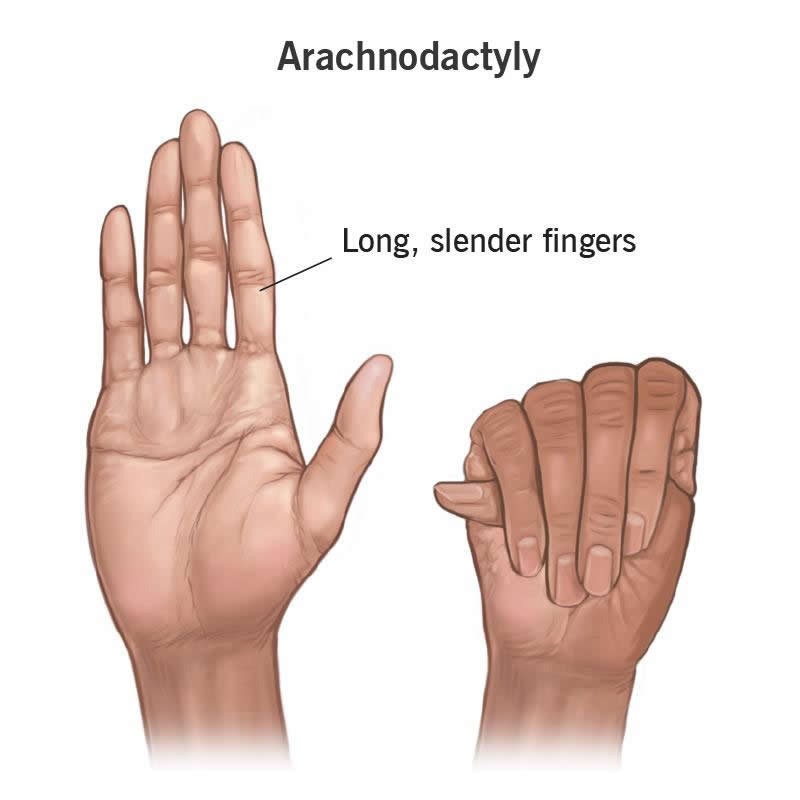
What is arachnodactyly?
Arachnodactyly means “spider fingers.” It’s a term healthcare providers use to identify unusually long, slender fingers that resemble spiders’ legs.
Hand anatomy differences like arachnodactyly can sometimes be a sign of genetic disorders. But they’re not always. You may just have naturally long and slender fingers, without any underlying medical condition.
Possible Causes
What causes arachnodactyly?
Your genes determine your physical features, like long and slender fingers. Most of the time, physical features are just that. But sometimes, your genes carry a variation that changes something important about how your body develops. Sometimes, arachnodactyly comes from this sort of variation.
The genetic disorders that can cause arachnodactyly are connective tissue disorders. They affect how the connective tissues in your body develop — tissues like your bones, skin, cartilage, tendons and ligaments. They can affect not only your physical appearance but also how well these tissues function.
Some of these conditions include:
- Congenital contractual arachnodactyly (Beals syndrome):Causes long and slender limbs and digits (congenital hand difference) along with low muscle mass and multiple joint contractures.
- Homocystinuria:Causes long limbs and digits along with slow weight gain in children, vision problems, knock knees and chest malformations (pectus carinatum or pectus excavatum).
- Marfan syndrome:Causes a tall, thin build with extra-long limbs and digits and extra-flexible joints. Can also cause scoliosis, chest malformations, vision problems and heart problems.
- Ehlers-Danlos syndrome:Most typically causes loose, unstable joints and stretchy, fragile skin that tears easily. May also cause joint pain and muscle pain, and sometimes arachnodactyly.
- Loeys-Dietz syndrome:Affects your heart and circulatory system as well as your musculoskeletal system. Signs may include chest malformations, scoliosis or arachnodactyly.
- Shprintzen-Goldberg syndrome: Most typically affects how your skull forms, which may cause facial abnormalities or eye movement disorders. May also affect your skeleton and fingers.
Care and Treatment
How do healthcare providers treat arachnodactyly?
Long, spiderlike fingers on their own shouldn’t cause you any trouble or need any treatment. But if your healthcare provider spots arachnodactyly, they might want to check for other signs and symptoms of genetic connective tissue disorders. These conditions will usually cause other recognizable features.
Your healthcare provider might ask when you first noticed arachnodactyly, and if you have any known family history of connective tissue disease. If they suspect a genetic disorder, they might suggest genetic testing for it. These disorders aren’t curable, but treatment can help you manage their effects.
When To Call the Doctor
How do you know if you have arachnodactyly?
If you have long and slender fingers and you think they resemble spider legs, you might wonder if they fit the medical description of arachnodactyly. You might even wonder if they’re a sign of an undiagnosed medical condition. If you’re worried, you can always ask a healthcare provider for their opinion.
In general, if you or your child has a connective tissue disease, you’ll probably notice other signs and symptoms beyond arachnodactyly. Signs and symptoms can be mild to severe, and sometimes they’re slow to appear in babies. If you think you’re noticing skeletal changes, see your healthcare provider.
A note from Wockr
Having long, spidery fingers isn’t a disease in itself. But sometimes, arachnodactyly is a sign of an underlying disease. The types of diseases that can cause it will also cause other signs and symptoms. If you suspect you or your child might have one of them, a healthcare provider can diagnose it.