
Cardiorenal Syndrome
 September 12, 2023
Cardiorenal syndrome is a disorder that involves an issue in your heart that harms your kidneys or the other way around. This can happen suddenly or over a longer time period. Many medical problems can trigger a complex chain of events leading to trouble with how well your heart and kidneys work.
What Is Cardiorenal Syndrome?
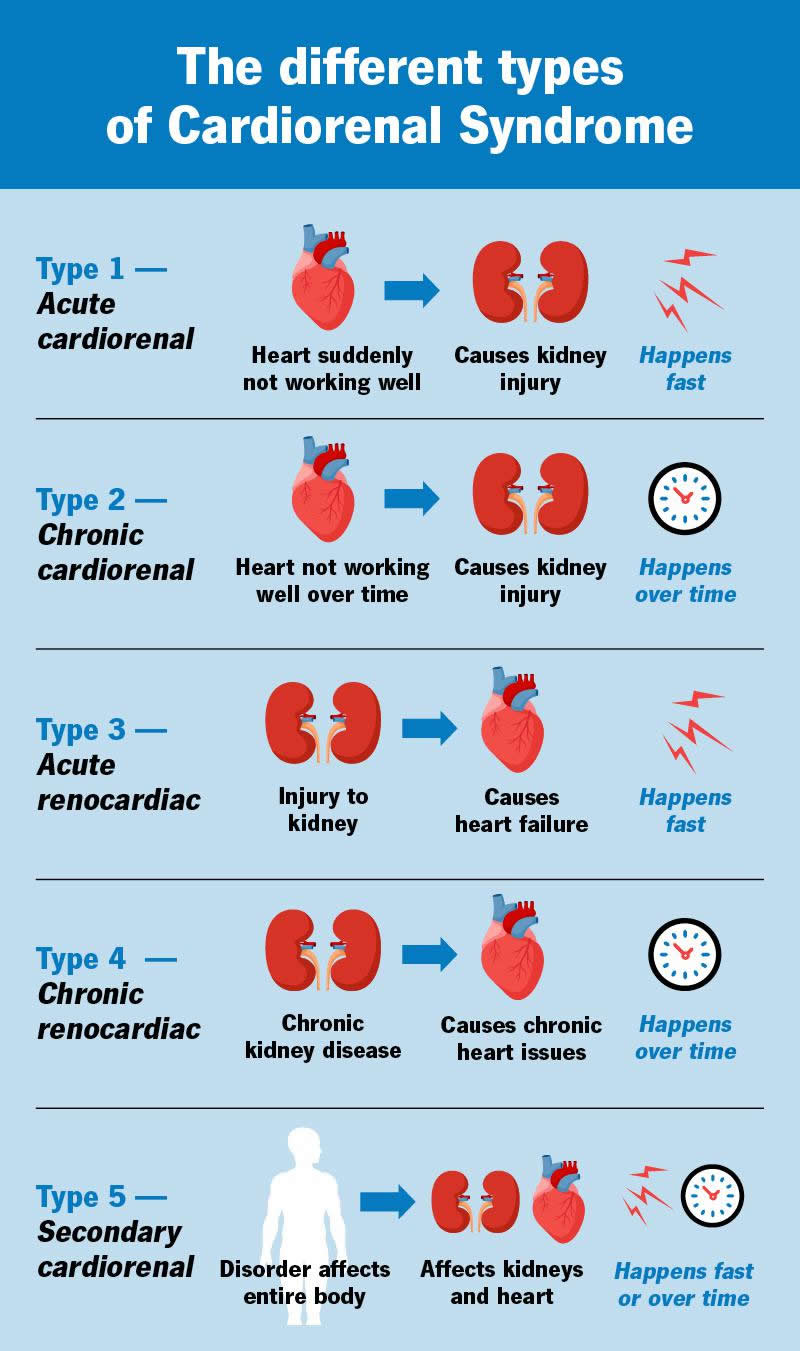
Cardiorenal syndrome is a disorder of your heart and kidneys where an issue with one organ causes a problem in the other. These problems can be acute (happening now) or chronic (long-term).
Your kidneys and heart both handle your blood. Your heart keeps blood moving through your body, and your kidneys clean waste from your blood. But your kidneys also control how much salt and water leave your body through pee. This affects your blood pressure and how much fluid your body holds onto.
Cardiorenal syndrome involves a complex process with many different factors affecting your kidneys and heart. Some factors involved may include:
- Higher blood pressure in the large veins that bring blood to your heart
- Lower cardiac output or heart failure
- Reduced blood flow to your kidneys, causing injury to them
It’s very common for people to have issues with their hearts and kidneys at the same time. About 64 million people in the world have heart failure. Healthcare providers have seen kidney disease in up to 6 out of 10 people with chronic heart failure. Sometimes, it’s difficult for providers to know which organ had issues first. It’s best to seek treatment early, as this syndrome doesn’t have a good prognosis (outlook).
Symptoms and Causes
Symptoms of cardiorenal syndrome
Cardiorenal syndrome symptoms may differ depending on the organ it started in and when. They include:
- Chronic pain
- Confusion
- Depression
- Fatigue
- A feeling of your heart skipping a beat
- Low pee output
- Shortness of breath
- Swelling of your legs and belly
Cardiorenal syndrome causes
Causes of cardiorenal syndrome may include:
- Electrolyte disorders
- Heart surgery complications
- Heart valve disease
- Inflammation in your kidneys, heart or blood vessels
- Kidney disease or injury
- Low blood flow (heart attack, heart failure or shock)
- Pulmonary embolism (PE)
- Sepsis
Types of cardiorenal syndrome
When healthcare providers talk about this condition, they assign it a type based on the organ that started it and how long ago it began.
Cardiorenal syndrome types are:
- Type 1 (Acute cardiorenal): Your heart suddenly isn’t working well, which leads to injury to your kidneys. This makes your kidneys unable to do their job well. This is an acute problem for all organs involved.
- Type 2 (Chronic cardiorenal): Chronic issues with how well your heart works harm your kidneys over time.
- Type 3 (Acute renocardiac): Acute kidney injury causes acute heart failure.
- Type 4 (Chronic renocardiac): Chronic kidney disease causes long-term issues with your heart, like abnormal heart rhythms, heart failure or coronary artery disease (CAD).
- Type 5 (Secondary cardiorenal): A disorder that affects your whole body makes your heart and kidneys unable to work well.
Risk factors
Cardiorenal syndrome risk factors include:
- A body mass index (BMI) greater than 30
- Blood vessel disorders
- Diabetes
- Hardening of your arteries
- Heart failure
- High blood pressure
- Kidney disease
You may be able to lower your risk of cardiorenal disease by treating these conditions. Taking the right medications for these conditions at the right dose is important. Otherwise, they can make your kidney function worse.
Complications of this condition
With cardiorenal syndrome, you don’t have a normal amount of blood and fluids in your body. When you have heart failure, your heart can’t pump as well as it should. This allows fluid to collect in parts of your body. Your kidneys play a role in moving fluid out of your body to maintain the right fluid level. It can be challenging to achieve this when you have issues with your heart and kidneys at the same time.
Cardiorenal disease can lead to:
- Cardiogenic shock
- Hardening of your arteries
- Inflammation
- Liver failure
- Respiratory failure
- Worsening kidney disease
Diagnosis and Tests
How doctors diagnose this condition
Cardiorenal syndrome doesn’t have one “gold standard” test a healthcare provider can use to diagnose it. A provider may get information by examining the amount of fluid in your body. They do this by assessing your heart, lungs, belly, legs and blood vessels. Also, they may order various tests.
Healthcare providers can diagnose cardiorenal syndrome with:
- Blood tests
- Chest X-ray
- Echocardiogram
- Right heart catheterization
- Ultrasound of your kidneys and/or chest
- Urinalysis (a set of tests on your pee)
Management and Treatment
How is it treated?
Cardiorenal syndrome treatments range from medicines to devices to transplants.
Medicines for this condition include:
- ACE inhibitors
- ARBs
- ARNI (angiotensin receptor/neprilysin inhibitors)
- Beta-blockers
- Diuretics
- Inotropes
- Mineralocorticoid receptor antagonists
- Renin angiotensin system blockers
Procedures and devices for cardiorenal syndrome include:
- Ultrafiltration or dialysis
- Cardiac resynchronization therapy (CRT)
- Implantable cardioverter defibrillator (ICD)
- Left ventricular assist device (LVAD)
- Heart transplant
- Kidney transplant
When should I see my healthcare provider?
Tell your provider about any symptoms you have that are new or get worse. Keep your scheduled appointments with your provider. Get immediate help if you’re not producing pee or you can’t catch your breath.
Questions to ask your provider include:
- What’s the best treatment for me?
- Can you treat me with medications?
- Is there a support group for people with cardiorenal disease?
- How advanced is my condition?
Outlook / Prognosis
What can I expect if I have this condition?
Getting an early diagnosis for cardiorenal syndrome is important. Having the right treatment when you need it can improve your quality of life.
The prognosis for cardiorenal syndrome is poor. Your risk of death is higher with this condition than if you only had a kidney issue or a heart issue. Palliative care can help you if you have advanced cardiorenal syndrome. It can help you avoid trips to the hospital.
A note from Wockr
Having cardiorenal syndrome is difficult because it means that three important organs — your heart and two kidneys — aren’t working right. Follow your provider’s instructions as closely as you can for the best results. Informing your loved ones about your wishes can give you peace of mind. If your condition worsens quickly and you have a living will, it can guide your family in deciding what care you want.