
Friedreich’s Ataxia (FA)
 May 25, 2022
Friedreich’s ataxia (FA or FRDA) is a rare genetic disorder that affects how you move and keep your balance. It usually starts in childhood and gets worse over time. Complications may affect your heart. While there’s no cure, new treatments and therapies can help manage symptoms and improve your quality of life for as long as possible.
What Is Friedreich’s Ataxia?
Friedreich's ataxia (FA or FRDA) is a rare genetic condition that causes progressive nervous system damage. It may impact your heart function over time. It affects your movement, balance and coordination (ataxia). Symptoms usually start in childhood and get worse.
FA affects approximately 1 in every 50,000 people in the United States. Globally, it affects 1 in every 40,000 people.
If you’re a parent or caregiver, it can be alarming to see your child struggle with movement or coordination. You may worry about how it will affect their life. The best option is to see a specialist who can answer your questions and guide you through what to expect.
Types of Friedreich’s ataxia
Most cases of FA are known as “typical” when they develop before age 25. There are also two, less common, atypical types:
- Late-onset Friedreich’s ataxia (LOFA): You develop symptoms after 25
- Very late-onset Friedreich’s ataxia (VLOFA): Signs and symptoms start after 40
LOFA and VLOFA usually progress more slowly than typical FA.
Symptoms and Causes
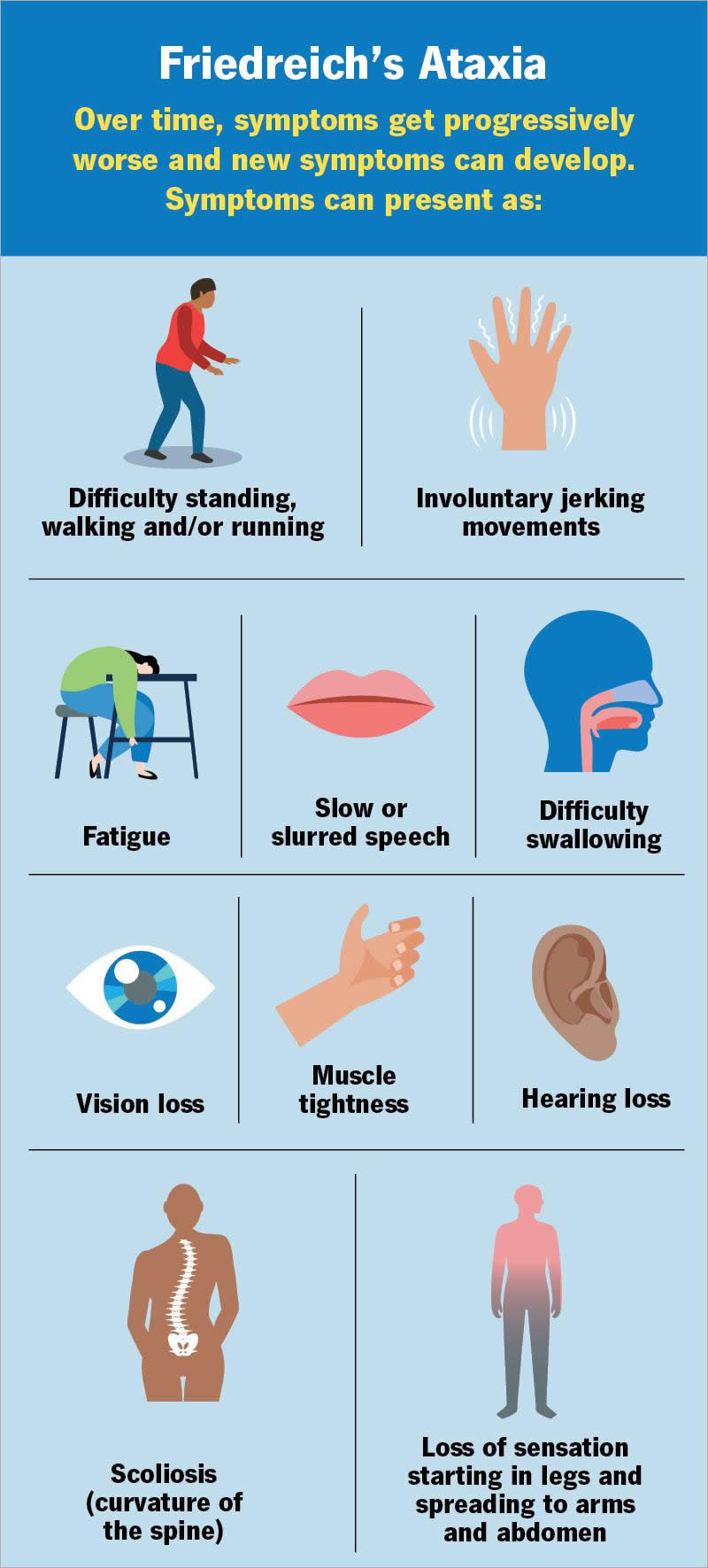
Friedreich’s ataxia symptoms
Symptoms of FA usually begin between the ages of 5 and 15. But some people experience symptoms starting at age 2 or age 50. Symptoms may include:
- Muscle weakness, tightness or involuntary jerking
- Loss of balance and coordination
- Loss of touch or feeling in your legs, arms and/or abdomen
- Decreased reflexes
- Fatigue
- Slow or slurred speech and difficulty swallowing
- Loss of the ability to sense your body’s position and movements
- Vision and hearing loss
- Scoliosis
- Foot deformities like inward turning and high arches
The first signs are usually difficulty standing, walking and balance issues (gait ataxia). Over time, these get worse and new symptoms may develop.
Friedreich’s ataxia causes
Friedreich’s ataxia is a genetic condition — a change (variant) in the FXN gene causes the disease. This gene carries the code for frataxin.
Frataxin is a protein in the energy-producing parts of cells called mitochondria. Although scientists don’t fully understand its role, frataxin helps mitochondria do their job. The gene change that causes FA disrupts the production of frataxin.
Without the expected level of frataxin, certain cells in your body produce less energy. This creates a buildup of toxic byproducts called oxidative stress. It damages your cells and causes symptoms.
Friedreich’s ataxia inheritance pattern
Friedreich’s ataxia develops when you inherit two changed copies of the FXN gene. You get one from each biological parent. Healthcare providers call this an autosomal recessive inheritance pattern.
The biological parents of a person with an autosomal recessive condition each carry one copy of the changed gene. But they typically don’t show signs and symptoms of the condition.
As this is a genetic condition, you can’t prevent it.
Complications of Friedreich’s ataxia
Many people with FA develop heart issues. The most common ones include:
- Damage to nerves that control your heart
- Enlarged heart muscle
- Irregular heartbeat
Other heart complications may include:
- Heart muscle changes (myocarditis, myocardial fibrosis)
- Heart gets bigger
- Difficulty pumping blood to supply the body
- Abnormal heartbeat rhythms (tachycardia, atrial fibrillation, heart block)
About 3 out of 10 people with FRDA develop diabetes. This is due to damage that affects insulin production in your pancreas, which leads to high blood sugar.
Diagnosis and Tests
How doctors diagnose Friedreich’s ataxia
A healthcare provider will ask about your symptoms and medical history. They’ll then do a thorough physical exam and neurological exam.
Your provider will likely recommend a variety of tests. Genetic testing is the main test that can confirm FRDA. Your provider may offer more tests to see which parts of your body the condition affects. These include:
- MRI or CT scans: These tests provide images of your brain and spinal cord. They help rule out other neurological conditions.
- Electromyogram (EMG) and nerve conduction studies: These tests show how well your muscles and nerves work.
- Electrocardiogram (EKG): This test shows the electrical activity, or beat pattern, of your heart.
- Echocardiogram: This test provides images of your heart’s movement.
- Blood tests: Certain blood tests check for high blood glucose (sugar) levels and vitamin E levels.
Management and Treatment
How is Friedreich’s ataxia treated?
In 2023, the U.S. Food and Drug Administration (FDA) approved the first medication specifically for Friedreich’s ataxia — omaveloxolone (SKYCLARYS™) — for people aged 16 and older. Studies show this medication can help improve neurological function and ataxia. Research is ongoing to understand the possible long-term effects of this medication. Omaveloxolone isn’t a cure for FA.
The main goal of treatment is to manage symptoms and complications. This helps your body work as well as possible for as long as possible. Treatment may include:
- Physical therapy to help with muscle strength, balance and coordination
- Speech therapy to improve speech and swallowing
- Braces or surgery to treat foot problems or scoliosis
- Medicine for heart conditions, if needed
- Medicine for diabetes, if needed
- Therapies to manage pain
- Antibiotics to treat or prevent infections
- Mobility aids like special shoes, canes or wheelchairs
- Heart transplant for serious heart complications
FRDA affects everyone differently and at different rates. Your care team will develop an individualized therapy plan that will change as you grow.
Outlook / Prognosis
Friedreich’s ataxia life expectancy
As Friedreich’s ataxia is a degenerative condition and worsens over time, people with this condition tend to have a shorter life expectancy than the average population.
FA affects everyone differently. Many people with FRDA live until at least their 30s, and some live into their 60s or beyond.
What is the cause of death of Friedreich’s ataxia?
The most common cause of death in people with FA is hypertrophic cardiomyopathy. This causes thickening of your heart muscle. It may make your heart not pump as well as it should (heart failure), beat dangerously fast (ventricular tachycardia) or lose function (sudden cardiac arrest).
Friedreich’s ataxia prognosis
FA affects each person differently. No one can predict you or your child’s outlook with certainty. The best way you can prepare for the future is to talk to your healthcare providers or other specialists who research and treat this condition.
A note from Wockr
Living with Friedreich’s ataxia can be tough, both in daily life and emotionally. It’s natural to wonder what the future holds or how to make the right choices for you or your child’s health.
Your care team can help you understand what’s happening and create a treatment plan that fits your needs. New treatments and therapies continue to bring hope for better day-to-day living.
As you manage your or your child’s health, don’t forget to care for your emotional well-being, too. Support groups and mental health professionals can help if you’re feeling stressed or overwhelmed.