
Incisional Hernia
 March 24, 2025
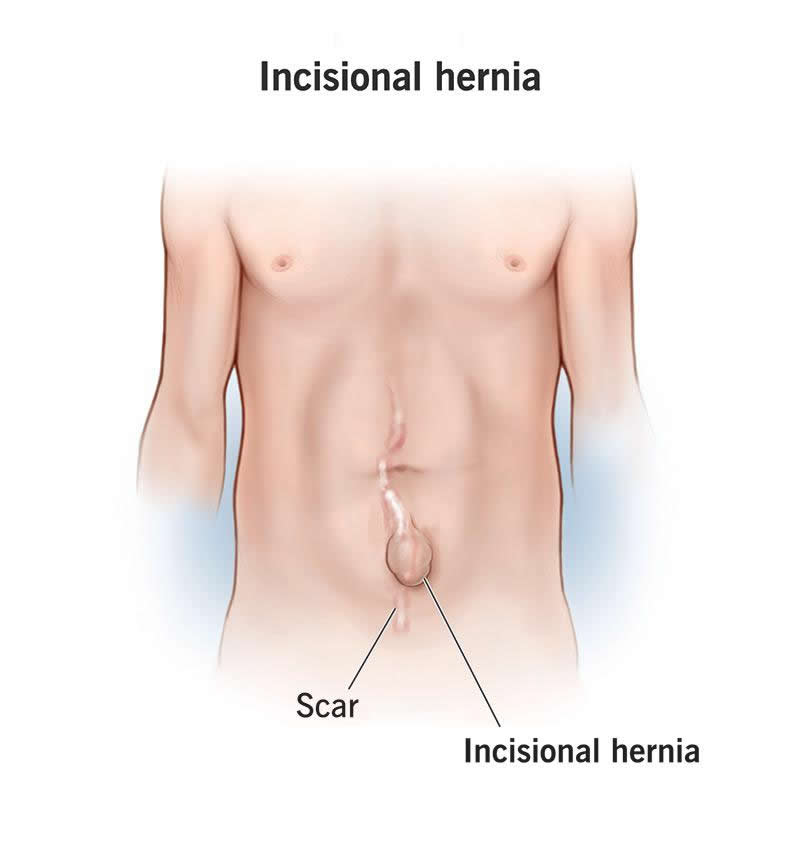
An incisional hernia happens when a section of intestine or tissue pushes through weak abdominal muscles at a surgical site. It’s a common complication of open abdominal surgery. The hernia It may cause a painful bulge near your surgery scar. Treatment is surgery to repair the hernia.
Overview
What is an incisional hernia?
An incisional hernia can happen after you have a laparotomy (open abdominal surgery) or minimally invasive surgery. The surgery weakens your abdominal muscles. That makes it easy for sections of your intestine or abdominal fat to push through and make a hernia. The hernia makes a bulge or lump near the laparotomy scar.
Incisional hernias are common. Experts estimate up to 20% of people who have a laparotomy develop one. This hernia type can appear months or years after you have surgery.
Most incisional hernias aren’t serious medical issues. But a large incisional hernia can cause serious complications. Treatment is surgery to repair the hernia and reinforce weak spots in your abdominal muscles.
Symptoms and Causes
Symptoms of incisional hernia
A small incisional hernia may not cause symptoms. A small hernia is about 2 inches (5 centimeters) wide or long. A large incisional hernia — one that measures more than 4 inches (10 cm) — may cause pain. It may make a bulge or lump near your surgery scar.
The pain may be sharp, but it can also be a dull ache. You may have more pain when you lift heavy things, cough or sneeze.
The bulge may be more noticeable when you stand up or put strain on your abdominal muscles. For example, you may notice a bulge if you’re constipated and have bear down to poop.
Incisional hernia causes
Abdominal surgery can weaken your abdominal muscles. It’s more likely to happen if you have a laparotomy. But you may have an incisional hernia after minimally invasive surgery like laparoscopic or robotic surgery. These muscles need time to heal. Some activities and conditions slow healing time and increase your risk of an incisional hernia. Things that can slow healing include:
- Being very active soon after surgery
- Diabetes
- Having obesity
- Lung diseases like chronic obstructive pulmonary disease (COPD) that cause chronic cough
- Long-term use of immunosuppressants or corticosteroids
- Surgical site infections
How to lower your risk
Giving your body time to heal is the best thing you can to do reduce your risk. Now’s the time to take it easy. You may need to hold off on strenuous activities. Ask your surgeon when you can start being more active.
Complications of incisional hernia
Rarely, you can have an incarcerated incisional hernia. This happens when the intestine inside the hernia gets stuck in your abdominal wall. A strangulated incisional hernia is another complication. It happens when pressure on the hernia cuts off blood supply to the intestine in the hernia. The intestine can start to die (necrosis).
An incarcerated and strangulated hernia are serious medical issues that cause symptoms like sudden, severe pain or changes in the color of the skin around the bulge. Your skin may become paler than usual and then turn darker than usual. You should go to the emergency room if you have these symptoms.
Diagnosis and Tests
How doctors diagnose an incisional hernia
A healthcare provider will do a physical examination. They may ask you to sit down and then stand up so they can see if the bulge in your abdomen comes and goes. They’ll ask about other symptoms to rule out the chance that you have an incarcerated incisional hernia. They may also do a CT scan.
Management and Treatment
How is an incisional hernia treated?
Treatment depends on your symptoms. For example, you may not need treatment if you have a small incisional hernia that doesn’t hurt or bother you. But incisional hernias may get bigger over time. Having a large hernia increases your risk of complications. If you have a large hernia or it causes symptoms, a surgeon will do hernia repair surgery.
They may do open hernia repair or laparoscopic hernia repair surgery. Both procedures involve placing the intestine or tissue in the hernia back into your abdomen. A surgeon may use mesh to strengthen weak abdominal muscles.
Recovery time
Recovery time varies, but most people can return to their daily routine within a few days. Everyone’s situation is different, though, so you should ask your surgeon what you can expect.
When should I see my healthcare provider?
There’s a chance of complications when you have surgery to repair an incisional hernia. You should contact your surgeon if you experience:
Outlook / Prognosis
What can I expect if I have an incisional hernia?
Surgery to repair a large incisional hernia often cures the condition. But incisional hernias can come back.
Additional Common Questions
How long can I live with an incisional hernia?
You can live a long time with an incisional hernia if it isn’t stuck (incarcerated). But an incarcerated hernia can become strangulated, and a strangulated hernia can lead to very serious medical conditions that can be life-threatening.
A note from Wockr
An incisional hernia may be a late and unexpected complication of abdominal surgery. It can be frustrating to learn that surgery to solve one medical issue is causing another one. You may not need more surgery for this new development. But a large incisional hernia can lead to serious complications. Talk to a healthcare provider if there’s a bulge or lump where you have a scar from surgery. They’ll recommend next steps.