
Left Anterior Fascicular Block
 June 13, 2022
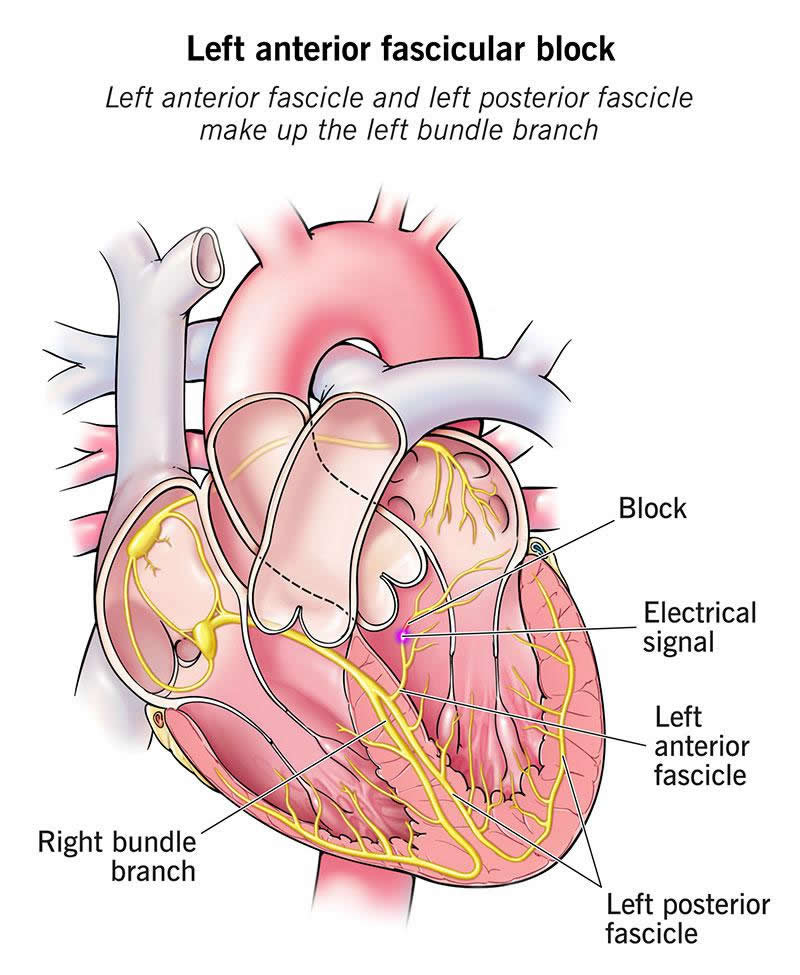
With a left anterior fascicular block, the left ventricle in your heart contracts later than normal because your heart’s electrical signal can’t get through when it should. Although people with this issue don’t usually have symptoms or need treatment, they are likely to have other heart issues in the future.
Overview
What is left anterior fascicular block?
A left anterior fascicular block is the term for something interfering with your heartbeat’s signal when it gets to the left anterior fascicle of your heart’s left bundle branch. This makes your heart’s left ventricle contract later than your heart’s right ventricle.
How common is left anterior fascicular block?
An estimated 1% to 6% of the population has left anterior fascicular block. Most are senior adults.
Symptoms and Causes
What are the symptoms of left anterior fascicular block?
Left anterior fascicular block usually has no symptoms. If your case is severe, you may experience:
What causes left anterior fascicular block?
Researchers think some people may have an inherited tendency to have abnormal electrical signals in their heart’s lower chambers. More established causes include:
- Complication of transcatheter aortic valve replacement (TAVR).
- Complication of surgical septal myectomy, a treatment for hypertrophic obstructive cardiomyopathy.
- Dilated cardiomyopathy.
- Structural heart disease (fibrosis or scarring).
- Sclerodegenerative disease of the bundle branch.
- Possibly myocarditis (heart muscle inflammation).
- Coronary artery disease (CAD)
Diagnosis and Tests
What tests will be done to diagnose left anterior fascicular block?
Your healthcare provider will use an electrocardiogram (EKG) to diagnose left anterior fascicular block.
Other tests can include:
Management and Treatment
How is left anterior fascicular block treated?
There’s no specific treatment for left anterior fascicular block, but you’ll most likely need treatment for what caused the block — heart disease.
Outlook / Prognosis
What is the outlook for left anterior fascicular block?
The outlook is good for young people with left anterior fascicular block, but they rarely have it. A left anterior fascicular block diagnosis may be benign, but researchers found that people with left anterior fascicular block have a higher risk of congestive heart failure, atrial fibrillation and death.
Some studies say left bundle branch block can be a predictor of heart failure, heart attack and sudden cardiac death, especially for people older than 50.
Living With
How do I take care of myself?
Since left anterior fascicular block can be an indicator or predictor of multiple heart problems, it’s best to take care of your heart to prevent these issues.
You can:
- Eat foods low in saturated fat.
- Get regular exercise.
- Keep your stress level down.
- Manage high blood pressure and high cholesterol.
When should I see my healthcare provider?
Go to your regular checkups to make sure your healthcare provider can monitor any chronic issues, such as high blood pressure and high cholesterol. Contact your provider if you notice changes in how you feel, especially if you’re out of breath when you walk.
When should I go to the ER?
Call 911 if you have these signs of a heart attack:
- Chest pain, discomfort or pressure.
- Shortness of breath.
- Other upper body pain.
- Feeling sick to your stomach.
- Feeling lightheaded.
What questions should I ask my doctor?
- Should I get checked for coronary artery disease?
- Can you estimate my heart attack risk?
- What else can I do to keep my heart healthy?
A note from Wockr
Although left anterior fascicular block doesn’t need treatment, you should be aware that researchers have seen connections between it and other heart issues. Take care of your heart to protect it from coronary artery disease and heart failure. Keep your checkup appointments with your healthcare provider and be sure to take the medicines your provider prescribed for you.