
What’s the Difference Between Psychopathy and Sociopathy?
 May 13, 2025
Psychopathy informs how you develop emotional and psychological connections, while sociopathy is rooted in breaking social rules
In general, most of us are familiar with the terms “psychopath” or “sociopath” being used to describe someone who seems manipulative, cold or even dangerous. While these labels show up in everyday conversation and pop culture, we don’t always acknowledge how harmful and stigmatizing they can actually be.
Psychopathy and sociopathy aren’t medical diagnoses. But they’re often used to categorize behaviors and traits associated with antisocial personality disorder (ASPD). Psychologist Ramone Ford, PhD, explains how this condition affects different people in different ways. Understanding these differences helps ensure everyone has access to better care.
The connection between psychopathy vs. sociopathy
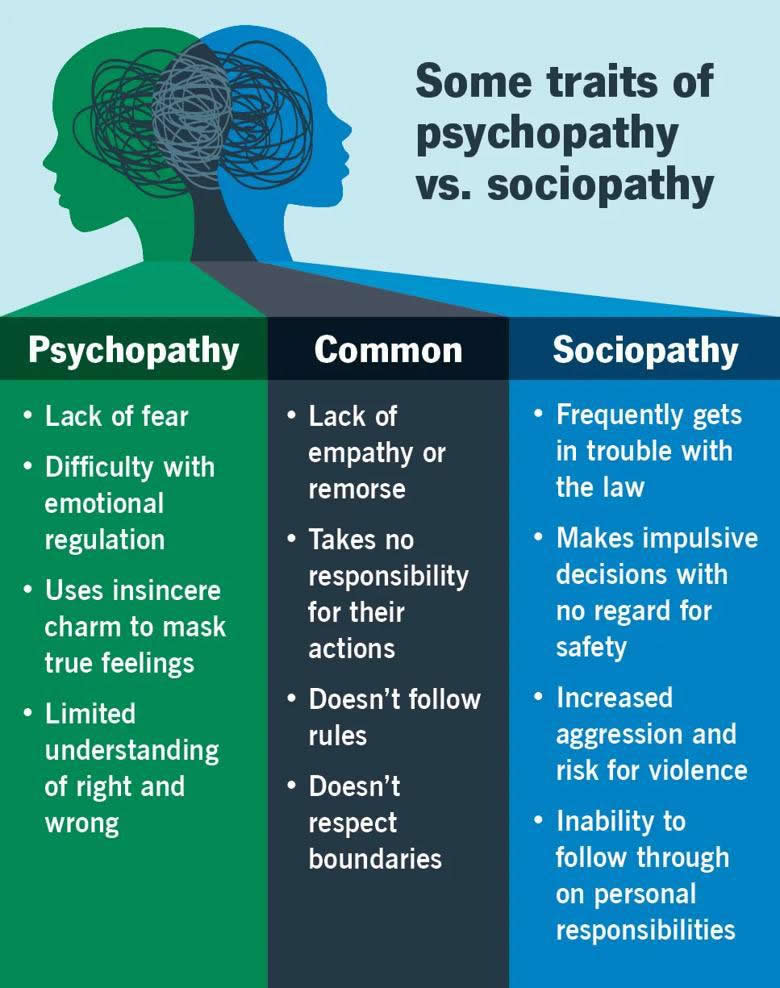
You can think of psychopathy and sociopathy as being two sides of the same coin: Psychopathy is potentially more dangerous with a closer tie to genetics, while sociopathy can be genetic or environmental, resulting in impulsivity and lack of empathy.
Doctors don’t diagnose people as a psychopath or a sociopath. But they may diagnose someone with ASPD if they exhibit specific, persistent and repetitive psychopathic or sociopathic traits and behaviors.
People with these traits may not be able to:
- Follow social rules and respect boundaries
- Understand or care how others feel
- Take responsibility for the impact of their actions
- Build and maintain close, healthy relationships
“With this condition, there’s a deficiency in emotional regulation and response,” says Dr. Ford. “Because of this, both psychopathic and sociopathic traits tend to increase your risk for self-harm and engaging in behaviors that could harm other people.”
You may develop these traits for several reasons. Studies show that people with psychopathic traits may process fear, emotions and decision-making differently because of how certain areas of the brain develop and function.
But environmental factors can also influence your ability to develop psychopathic or sociopathic worldviews. How you were treated as a child, the kind of home you grew up in and the experiences you’ve had — traumatic and otherwise — all play a part in the development of these distinct personality traits and behaviors.
“Isolation, neglect, PTSD and abuse can all have an impact on the development of ASPD,” says Dr. Ford. “If a child is isolated or neglected and they never develop a real connectedness to others and what they’re feeling, it becomes more and more difficult to internalize and process those experiences later in life.”
What is psychopathy?
Psychopathy has traditionally been viewed as a more severe form of ASPD that carries an increased risk of violence. Today, the Diagnostic and Statistical Manual of Mental Disorders (DSM-5-TR) categorizes psychopathy as a variant of ASPD based on the following traits:
- Lack of fear
- Low levels of anxiousness and isolation
- High levels of attention seeking
- Difficulty recognizing or connecting with emotions in yourself or others
- Limited understanding of the differences between right and wrong
- Lack of empathy or remorse
- Inflated sense of self-worth or superiority
- Using insincere charm to hide or mask your true feelings or thoughts
What is sociopathy?
Sociopathic traits often include manipulative behavior, like gaslighting, that’s usually tied to poor emotional control or a lack of social awareness. “Sociopathy is tied to the violation of social norms and a rejection of publicly acceptable behaviors,” explains Dr. Ford.
Sociopathic specific traits may include, but aren’t limited to:
- Frequently getting into trouble with the law (like vandalizing property or shoplifting)
- Making impulsive decisions, like quitting jobs, moving or ending relationships without a plan
- Increased aggression and risk for physical assault or violence
- Taking risks without thinking about the safety of yourself or others
- Failing to follow through on responsibilities, like work or personal commitments
How to get help and what to expect
As ASPD is rooted in long-standing patterns of thinking and behavior, it’s often hard to know when you should ask for help. If you feel you’ve got traits and behaviors that are negatively impacting your life, or if you’re concerned for your safety or the safety of others, you should talk with a therapist who can help you sort through your thoughts and feelings.
You can’t treat personality traits in the same way you treat a disease. But therapy can help you manage your ability to cope with negative or uncomfortable thoughts and feelings, and learn how to embrace healthier behaviors that aren’t psychopathic or sociopathic.
Some of the things you can expect from therapy include:
- Learning how to use healthier coping mechanisms
- Developing empathy and building emotional intelligence
- Addressing past trauma and PTSD
- Exploring or reframing how you view yourself and the world around you
- Building trust and stronger relationships
- Replacing negative thinking patterns with healthier ones
- Letting go of unhealthy behaviors
“A person learns a lot about how they feel about the world and how they should act in the world based on their childhood experiences,” says Dr. Ford. “In talk therapy, we try to resolve negative or isolated thinking patterns by helping you learn new, healthier truths about the world you live in.”