
Psychosomatic Disorder
 May 03, 2021
A psychosomatic disorder is any physical condition that stress can help cause or make worse. Stress impacts our bodies in many ways and can affect several physical conditions, from heart disease to eczema. Stress management can go a long way to help manage psychosomatic disorders.
Overview
What is a psychosomatic disorder?
A psychosomatic disorder happens when mental stress and distress cause or make a physical condition — and its symptoms — worse.
“Psycho” means “relating to the mind.” “Somatic” means “relating to the body.”
Types of psychosomatic disorders
In modern medicine, researchers debate the number of physical conditions — if any — that are truly the result of only stress and distress. This is because the majority of conditions have several factors that cause them — our bodies are very complex.
In the past, healthcare providers thought that stress caused conditions like tuberculosis and stomach ulcers. But advances in scientific research have shown that this isn’t true. (The bacterium Mycobacterium tuberculosis causes tuberculosis, and H. pylori infection causes stomach ulcers.)
Providers do recognize that many physical diseases involve psychosomatic factors, and that stress often makes them worse. Some of these conditions include:
- Arthritis and other inflammatory disorders.
- Diabetes.
- Fibromyalgia.
- Heart disease.
- High blood pressure (hypertension).
- Irritable bowel syndrome (IBS) and other digestive issues.
- Obesity.
- Tension-type headaches.
- Various types of skin issues like psoriasis and eczema.
- Seizures.
- Sleep disorders.
What’s the difference between a psychosomatic disorder and somatic symptom disorder?
Psychosomatic disorder and somatic symptom disorder both involve a combination of psychological issues and physical symptoms or conditions. But their cause-and-effect relationships are different.
Somatic symptom disorder happens when you have an extreme focus on physical symptoms, like pain, that causes major distress or problems with daily functioning. A psychosomatic disorder happens when stress makes physical conditions worse.
The American Psychiatric Association (APA)’s Diagnostic and Statistical Manual of Mental Disorders (DSM-5) recognizes somatic symptom disorder as a condition. It doesn’t recognize psychosomatic disorder as a condition.
Symptoms and Causes
What are the symptoms of a psychosomatic disorder?
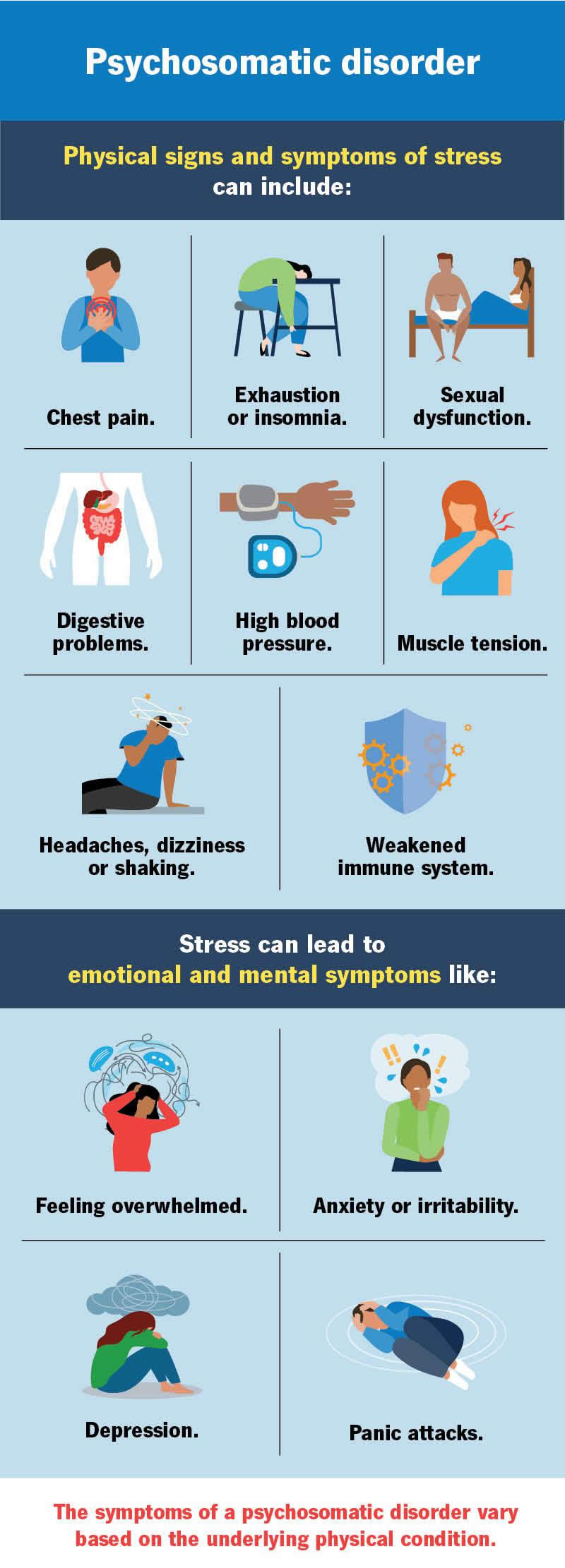
The symptoms of a psychosomatic disorder vary based on the underlying physical condition.
For example, if you have diabetes, stress may raise your blood sugar levels or make them more difficult to manage. Stress and anxiety can cause flare-ups if you have digestive issues, leading to diarrhea, bloating, constipation or abdominal discomfort.
Physical signs and symptoms of stress specifically include:
- Chest pain or a feeling like your heart is racing.
- Exhaustion or trouble sleeping (insomnia).
- Headaches and dizziness.
- Shaking or tremor.
- High blood pressure.
- Muscle tension or jaw clenching.
- Stomach or digestive problems, including changes in appetite.
- Sexual dysfunction.
- Weakened immune system.
Stress can lead to emotional and mental symptoms like:
- Feeling overwhelmed.
- Anxiety or irritability.
- Depression.
What causes psychosomatic disorders?
Some people are more emotionally and physiologically sensitive to stress. They may be more likely to have psychosomatic disorders. When you experience stress, it causes the following changes in your body:
- A shift in your autonomic nervous system balance from parasympathetic (“rest-and-digest”) control to sympathetic (“fight-or-flight”) control.
- Changes in the hypothalamic-pituitary-adrenal (HPA) axis. This is how your endocrine system adjusts your balance of hormones in response to stress.
- Increased blood pressure, heart rate and breathing.
- Increased blood glucose (sugar) levels.
- Increased blood flow to skeletal muscles (the muscles that make you move).
- Inflammation.
- Decreased bodily regenerative (recovery) activity.
- Changes in digestive activity.
- Decreased blood flow to your prefrontal cortex. This is a part of your brain that’s responsible for executive functions like focus, impulse control and emotional regulation.
Most people can physically and mentally tolerate brief episodes of stress. But chronic or severe stress causes wear and tear on your body and mind if you’re naturally more reactive to stress. These bodily changes happen frequently and/or last longer than they should and damage body systems.
Researchers think many factors make a person more vulnerable to psychosomatic disorders and the effects of stress, including:
- Genetics.
- Personality traits.
- Environmental and biological factors.
Diagnosis and Tests
How is a psychosomatic disorder diagnosed?
There are no specific criteria that healthcare providers use to diagnose a psychosomatic disorder. If you have a physical condition that stress can affect, like heart disease or gastrointestinal issues, your provider may ask you about your stress level to see if it could be affecting your physical health.
Stress is subjective. Only you can determine whether it’s present and how severe it feels. Your provider may use questionnaires to understand your stress and how it affects your life. They may recommend strategies for managing stress to try to lessen its effect on your symptoms.
Management and Treatment
How is a psychosomatic disorder treated?
Each physical condition that stress may contribute to or worsen has its own treatment. But your healthcare provider may recommend therapies to manage your stress specifically. These include:
- Psychotherapy (talk therapy), like cognitive behavioral therapy.
- Mindfulness-based therapy.
- Medications, like antidepressants or anxiolytics.
They may give you a referral to a specialist in mental health (like a psychiatrist or psychologist) and recommend regular checkups with your primary care provider.
Outlook / Prognosis
What is the outlook for people with psychosomatic disorder?
Many people learn to manage and lessen somatic pain symptoms over time. However, even with treatment, psychosomatic symptoms may come and go throughout life.
Prevention
Can I prevent psychosomatic disorder?
Some people are genetically more sensitive to stress. There’s nothing you can do to prevent psychosomatic effects in that regard.
But there are strategies to reduce and manage stress, which may help you prevent or lessen physical symptoms of a condition. Examples include:
- Be realistic about what you can and can’t control.
- Exercise regularly.
- Get enough sleep.
- Journal to increase awareness of your thoughts and feelings.
- Limit alcohol and avoid smoking and other substance use.
- Eat healthy foods.
- Maintain a weight that’s healthy for you.
- Meditate or practice progressive muscle relaxation.
- Seek support from loved ones.
- Set limits and boundaries to reduce pressure on yourself.
Living With
When should I see my healthcare provider about a psychosomatic disorder?
Stress can affect your body in many ways. So, it’s important to see your healthcare provider if you’re experiencing chronic or severe stress, especially if you have a chronic physical condition, like heart disease or diabetes.
What questions should I ask my healthcare provider?
If you’re experiencing a lot of stress and have a physical condition, it may be helpful to ask your provider the following questions:
- How is stress affecting my condition?
- Does chronic stress put me at risk for other conditions?
- How can I manage my stress?
- Do you have a referral for a psychiatrist, psychologist or therapist?
- How can I better manage my physical condition?
Additional Common Questions
What’s the difference between psychosomatic disorder and hypochondria?
Illness anxiety disorder (hypochondria) happens when you have an unrealistic fear that you have a serious medical condition or that you’re at high risk of becoming ill. You may misinterpret typical body functions as signs of illness.
A psychosomatic disorder happens when stress — which may or may not be related to physical ailments — makes a physical condition worse.
A note from Wockr
If you’re experiencing chronic or severe stress, it’s always a good idea to see your healthcare provider. Stress can affect your physical — and mental — health in several ways. While it’s unlikely that stress is the sole cause of a physical condition, there’s no doubt that it can contribute to or worsen many conditions. Talk to your provider about ways to manage your stress and improve your physical health. They’re available to help.