
Recipe: Baked Boneless Buffalo Chicken Strips
 September 23, 2024
A healthier way to snack during the big game!
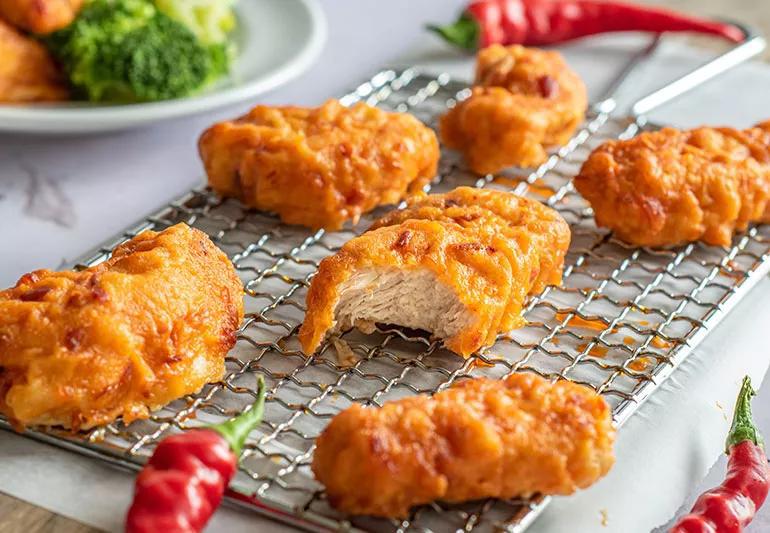
Make these spicy chicken “wings” lower in fat by using skinless chicken and olive oil. Use hot red pepper sauce instead of traditional barbeque sauce to eliminate the extra sugar.
Ingredients
- 2 pounds skinless boneless chicken (dark or white)
- 3/4 cup flour (all-purpose or white whole wheat)
- 1/2 tsp ground cayenne pepper
- 1/2 tsp garlic powder
- 1/2 tsp salt
- 1/2 cup olive oil
- 1/2 cup hot red pepper sauce
- Cooking spray
Directions
- Cut chicken into “wing-sized” pieces (about 1” x 3”). This is easier to do if the chicken is semi-frozen.
- Line a baking sheet with foil and lightly grease with a cooking spray.
- Place flour and spices into a gallon-size plastic storage bag, seal and shake to mix.
- Add chicken, seal and toss until well coated with flour mixture.
- Place chicken onto the prepared baking sheet and place into the refrigerator. Refrigerate at least 1 hour.
- Preheat oven to 400 F.
- Whisk together the oil and hot sauce in a small bowl. Dip the wings into the hot sauce mixture and place back onto the baking sheet.
- Bake in the preheated oven for about 20 minutes, or until the chicken is no longer pink in the center and is crispy on the outside (turn over halfway during cooking).
Ingredient health benefits
- Chicken: It’s easy to overlook this humble bird, but it’s definitely worth a mention. Chicken is loaded withB vitamins, an essential group that helps regulate vital functions like your metabolism and DNA repair. Vitamin B6 and vitamin B12 may even improve your mood and energy levels while supporting your brain health. Eating chicken is also a delicious way to get some important minerals like iron, phosphorus and selenium. These nutrients help keep your bones and blood cells in peak condition and promote hormonal balance. And what’s more, chicken is a high-quality source of protein. It’s also known as a complete protein because it contains all the amino acids your body needs to thrive but can’t produce by itself.
- Olive oil: Since ancient times, olive oil has been a kitchen staple in many parts of the world, and for good reason! It’s full of fat-soluble vitamins like vitamin A and vitamin K, which help protect your vision, boost your immune system, strengthen your bones and allow for healthy blood cells. Olive oil is also high in antioxidants that suppress inflammation and harmful free radicals. And last but definitely not least, unsaturated fats that help your heart by lowering your “bad” (LDL) cholesterol while raising your “good” (HDL) cholesterol. Something to note: Not all olive oils are created equal! They’re all nutritious, but for maximum benefits, consider picking up some extra virgin olive oil (EVOO) on your next grocery run (if your wallet has some wiggle room).
Nutrition information (per serving)
Servings = 8
Calories: 250
Total fat: 12 g
Saturated fat: 1.5 g
Trans fat: 0 g
Cholesterol: 75 mg
Sodium: 410 mg
Total carbohydrate: 9 g
Fiber: 2 g
Sugars: 0 g
Protein: 28 g
— Recipe provided by Digestive Disease Health Team Dietitians.