
Recipe: Veggie Stir-Fry in Sweet Ginger Sauce
 November 13, 2024
Vegan recipe with tofu and soba noodles
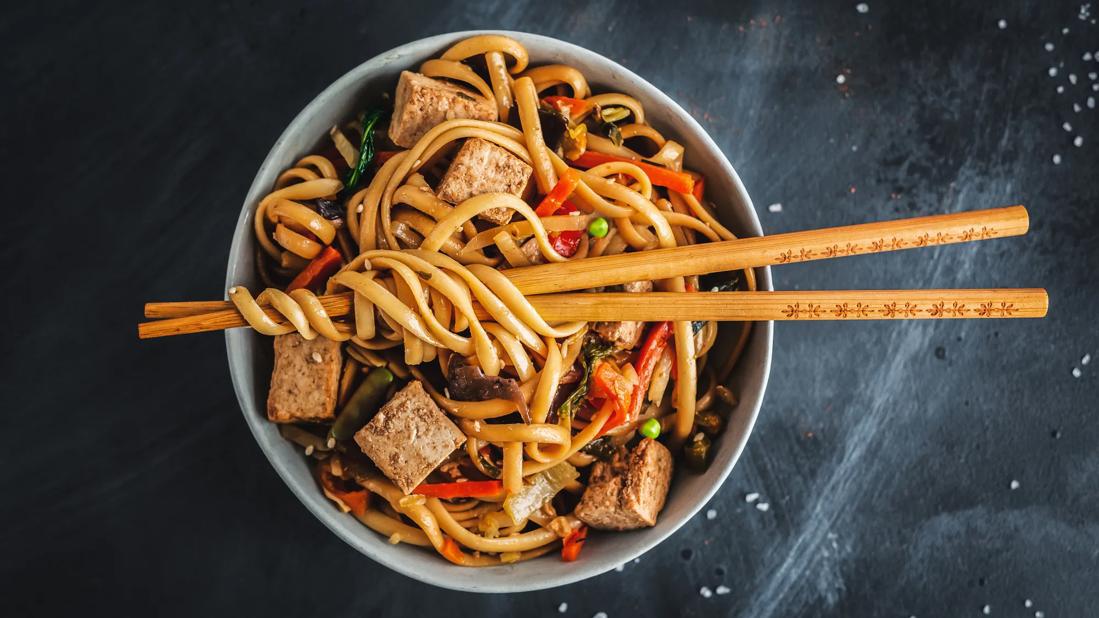
Like most stir-fries, this can be made in minutes if you have all the ingredients chopped and ready to go. Purchase soba noodles that are low in sodium, or substitute wide whole-wheat noodles, which also are low in salt. You can find hoisin, a sweet sauce made from soybeans and spices, and Thai chili sauce in most supermarkets.
Ingredients
Main ingredients
- 3 ounces buckwheat soba noodles
- 1 teaspoon sesame oil
- 1 teaspoon peanut oil
- 6 ounces water-packed light extra firm tofu, frozen, prepared for cooking* and cut into 1/2-inch cubes
- 4 scallions, white parts and 3 inches of the green, sliced on the diagonal in 1/2-inch slices
- 2 garlic cloves, thinly sliced on the diagonal
2 carrots, grated - 1/4 pound snow peas, sliced lengthwise into thirds
- 1/2 red bell pepper, seeded and thinly sliced
- 6 ounces mushrooms, sliced
- 4 ounces baby spinach (about 2 cups)
- 8 ounces mung bean sprouts
- 1/4 cup chopped fresh cilantro
- Lime wedges
Sweet ginger sauce
- 1/2 cup fresh orange juice
- 2 tablespoons hoisin sauce
- 2 teaspoons reduced-sodium soy sauce
- 2 tablespoons minced fresh ginger
- 1/2 to 1 teaspoon Thai chili sauce
Directions
- Combine all sweet ginger sauce ingredients in a small pan, using chili sauce to taste. Heat to a simmer and cook for 1 minute. Set aside. Cook the soba noodles 1 minute less than directed on the package, drain and set aside.
- Heat the sesame and peanut oils in a nonstick skillet or wok over high heat until hot.
- Stir in the tofu, scallions, garlic, carrots, snow peas, bell peppers and mushrooms. Stir-fry for 2 minutes.
- Lower the heat to medium; add the sweet ginger sauce. Stir in the spinach, bean sprouts and reserved soba noodles. Cook just until the spinach wilts, then add the cilantro.
- Serve immediately, garnished with lime wedges.
*Prepare tofu for cooking by thawing at room temperature or by immersing (wrapped) in boiling water. Be sure to squeeze as much moisture out as possible.
Ingredient health benefits
- Buckwheat: Contrary to popular belief, buckwheat isn’t technically a whole grain, but it shares a lot of the same benefits. It’s a vegan-friendly complete protein, meaning it contains all the amino acids your body needs to function properly and can’t make by itself. Buckwheat also has manganese, phosphorus and magnesium — important minerals that maintain sturdy bones and teeth, as well as a healthy metabolism. And last but not least, it’s gluten-free and has fiber to promote your gut while lowering your risk of heart disease and colon cancer.
- Tofu: Like buckwheat, tofu is a complete protein that vegans can enjoy, and its high protein content helps build strong muscles. It’s a good source of calcium and manganese to promote your bone health, while iron helps keep your blood cells in peak condition. Vitamin B5 (pantothenic acid) plays an important role in turning fats into usable energy and may help regulate your cholesterol. And anti-inflammatory flavonoids might decrease your blood pressure, as well as your risk of heart disease and certain cancers.
- Garlic: When you think of a superfood, this allium probably isn’t on your radar. But garlic’s as nutritious as it is pungent. It may help lower your blood pressure and boost your immune system as part of a nutritious eating plan. Garlic also has natural compounds that may be able to kill germs in your food.
- Carrots: Bugs Bunny doesn’t have to be the only one who benefits from these crunchy root veggies. Carrots are rich in beta-carotene and other carotenoids that preserve your vision and eye health. Carotenoids may also protect against certain cancers, and eating more carrots, in general, might help lower your cholesterol levels over time. But that’s not all, folks! Different colors of carrots have slightly different properties. For instance, yellow carrots have lutein, while purple carrots are home to anti-inflammatory anthocyanins.
- Red bell peppers: Chopped, diced or julienned, these savory fruits are a tasty addition to any veggie dish. Red bell peppers get their color from anthocyanins, natural substances that promote the health of your heart and brain. There’s fiber, vitamin B6, vitamin C, vitamin E and vitamin A to support your immune system, skin and eyes. But wait, there’s more! Bell peppers are also a surprising source of manganese, an essential mineral that builds bones and helps your body heal wounds.
- Mushrooms: They may be in a kingdom all their own, but mushrooms are packed with perks. These fungi are full of immunity-supporting nutrients like selenium, zinc and vitamin B6. There are other B vitamins as well, like vitamins B3 (niacin) and B5 to ensure that your blood pressure and cholesterol levels stay in a healthy range. And speaking of heart-helpful, mushrooms are loaded with potassium and have natural properties that may keep plaque from building up in your arteries.
- Spinach: This leafy green may not have the same star quality as other superfoods, but it’s as nutritious as it is versatile. Spinach is a great source of vitamin K and iron, which help your blood cells clot and carry oxygen throughout your body. It also has vitamin B9 (folate), which is vital for turning your food into fuel, while manganese and magnesium strengthen your bones. Your eyes and immune system will appreciate the vitamin C, vitamin B6, vitamin B2 (riboflavin) and vitamin A. And there’s insoluble fiber that promotes your digestion and helps prevent constipation.
- Ginger: A little root with a lot to offer, ginger has potent antioxidants like gingerol that suppress damaging inflammation. It’s probably no surprise that ginger can calm a turbulent stomach, given our tendency to reach for a bottle of ginger ale when we don’t feel well. But truth be told, there’s not a whole lot of ginger in that ale, and the carbonation may leave you feeling worse off. Next time, why not go straight for the source and eat a fresh slice?
Nutrition information (per serving)
Servings = 4
Calories: 220
Total fat: 3.5 g
Saturated fat: 0.5 g
Protein: 12 g
Carbohydrates: 40 g
Dietary fiber: 6 g
Cholesterol: 0 mg
Sodium: 590 mg
Potassium: 660 mg
— Wockr Healthy Heart Lifestyle Guide and Cookbook (© 2007 Broadway Books).