
Serratia marcescens
 April 08, 2025
Serratia marcescens is bacteria that sometimes causes infections, including UTIs and pneumonia. You’re at higher risk for infection if you’re in the hospital or at a long-term care facility, have a weakened immune system or a medical device in your body. S. marcescens can be hard to treat because it’s often resistant to many antibiotics.
What Is Serratia marcescens?
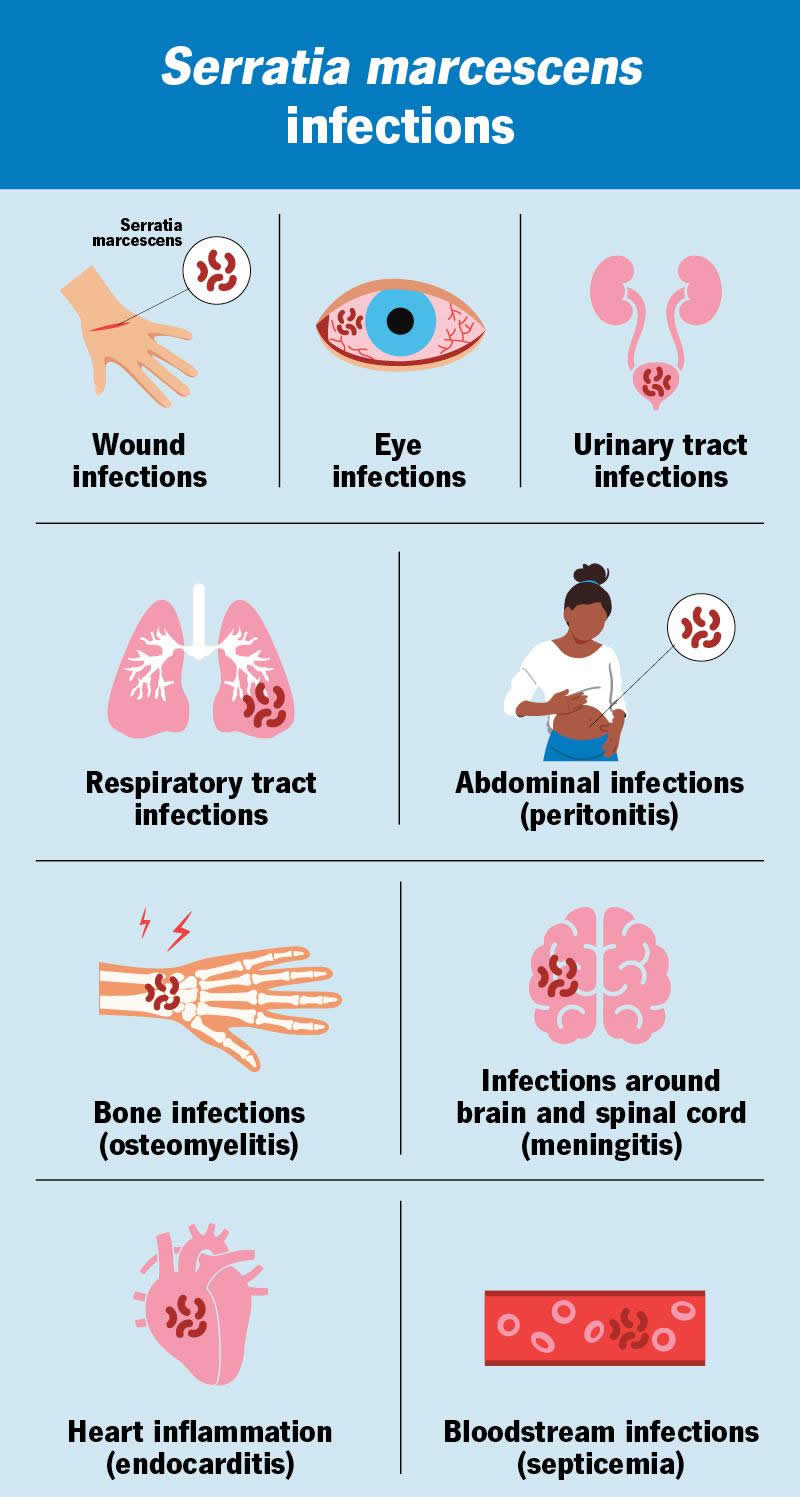
Serratia marcescens (S. marcescens) is a type of bacteria that’s found in the environment and can sometimes cause infections in people. Infections — when they happen — usually only spread in hospitals or long-term care facilities (nosocomial infections). These can be hard to treat because they can develop antibiotic resistance (when antibiotics don’t work to get rid of the infection).
S. marcescens can cause:
- Respiratory tract infections, like pneumonia
- Urinary tract infections (UTIs)
- Eye infections, like keratitis
- Wound infections
- Abdominal infections (peritonitis)
- Infections around your brain and spinal cord (meningitis)
- Bone infections (osteomyelitis)
- Heart inflammation (endocarditis)
- Bloodstream infections (septicemia)
You may even sometimes see S. marcescens around your house. It looks like a pink film and can grow in moist environments, like showers or toilet bowls. Fortunately, most people don’t get sick from S. marcescens growing in their homes or the environment.
Serratia marcescens is pronounced “sir-AY-shuh maar-SEH-senz.”
Symptoms and Causes
Symptoms of Serratia marcescens infection
Symptoms of an S. marcescens infection depend on where in your body you’re infected. Some symptoms could include:
Examples of specific symptoms based on infection site include:
- Shortness of breath, cough, pink-tinged mucus or chest pain (respiratory tract infections)
- Eye pain or redness (eye infections)
- Difficulty peeing, pink-tinged pee or pain when you pee (urinary tract infection)
- Headache, stiff neck or sensitivity to light (meningitis)
How do you get a Serratia marcescens infection?
Most of the time, people get S. marcescens infections in hospitals or long-term health facilities. The bacteria can spread:
- From person to person
- Through contaminated medical equipment
- Through a medical device in your body (like a Foley (bladder) catheter or breathing tube)
Sometimes, people get eye infections from contaminated contact lenses.
Risk factors
You might be at higher risk for an S. marcescens infection if you have:
- A weakened immune system
- Cancer
- Diabetes
- A medical device that goes into your body, like a breathing tube, feeding tube or Foley catheter
- Been in a hospital or other healthcare facility for a long time
- Been on antibiotics for a long time, or use them frequently
People who inject drugs into their veins are also at higher risk.
Complications
If S. marcescens spreads to your blood, it can cause serious complications, including:
Diagnosis and Tests
How do doctors diagnose an S. marcescens infection?
How a healthcare provider diagnoses an S. marcescens infection depends on your symptoms and where you’re infected. They may take samples from your body to try to grow (culture) S. marcescens, including:
- Sputum (mucus coughed up from your lungs)
- Blood
- Pee (urine)
- Fluid or tissue from a wound
- Fluid from around your brain and spine (cerebrospinal fluid)
Management and Treatment
How is Serratia marcescens treated?
Providers treat Serratia marcescens with antibiotics. Because the bacteria can have antibiotic resistance, a lab might test a sample of the bacteria to see which drug is most effective against it. It might take a combination of medications to get rid of the infection.
When should I see my healthcare provider?
Even when you’re in the hospital — or if you’ve just gone home — communication with your healthcare team is important. You know when something isn’t right with your body, even if it’s not immediately clear to someone else. Let them know if you’re experiencing symptoms of an infection, like pain, rapid heart rate, weakness or fever.
Outlook / Prognosis
What can I expect if I have an S. marcescens infection?
What to expect with an S. marcescens infection depends a lot on where in your body you’re infected and any existing health conditions (comorbidities). For example, urinary tract infections are often treatable. Bacteria in your bloodstream is more serious.
Make sure to take all of your medication as prescribed, even if you feel better.
Prevention
Can Serratia marcescens be prevented?
Healthcare providers follow safety and sterilization rules to prevent healthcare-acquired infections like S. marcescens. These include:
- Hand washing
- Disinfecting surfaces
- Ensuring that people only take antibiotics when they have bacterial infections
- Sterilizing medical devices
- Quarantining (isolating) people with S. marcescens infections so it doesn’t spread to other people
You can help prevent S. marcescens infections by washing your hands frequently, especially if you’re caring for someone with a weakened immune system or who’s spent a long time in a healthcare facility recently. You can also ask your provider how long you need to use invasive medical devices like catheters.
A note from Wockr
Healthcare providers work to keep hospitals and long-term care facilities safe. But sometimes, hospital-acquired infections with bacteria like Serratia marcescens still happen. While some infections are easily treatable, others can be serious. Don’t hesitate to speak up to a provider if you’re concerned about S. marcescens for you or a loved one in their care. They can answer any questions you have.