
Tarlov Cyst
 November 06, 2023
A Tarlov cyst is a fluid-filled sac that sits on spinal nerve roots. These usually occur at the base (bottom part) of your spine. While Tarlov cysts don’t always cause symptoms, you may experience pain, numbness and bladder or bowel issues. Treatment is available to relieve discomfort.
Overview
What is a Tarlov cyst?
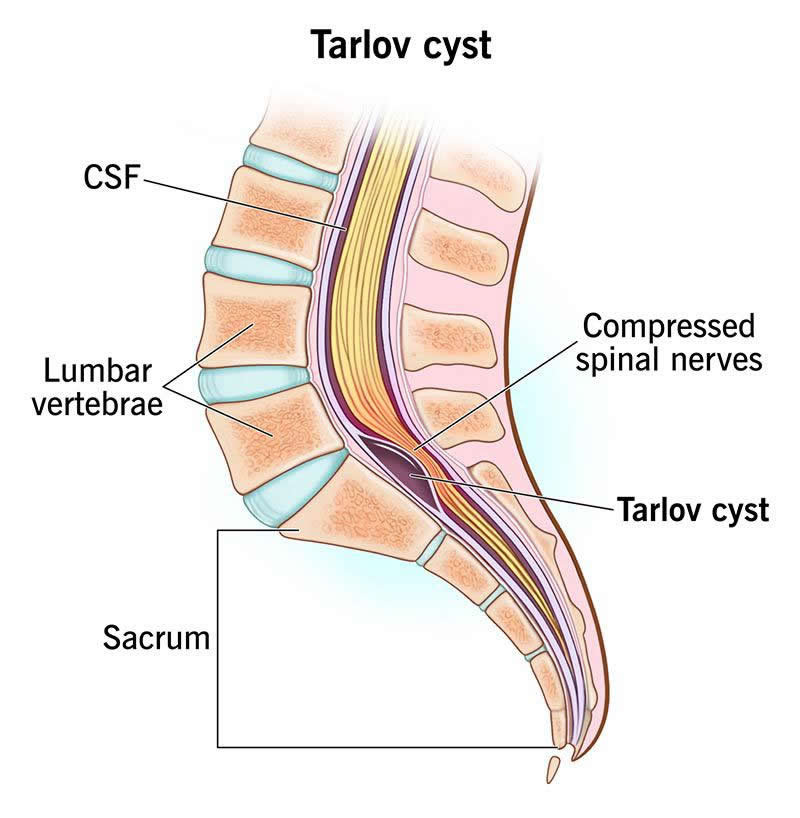
A Tarlov cyst is a fluid-filled sac that sits on the nerve roots that extend out from your spinal cord. The fluid inside the cyst is usually cerebrospinal fluid (CSF). CSF is a clear fluid that surrounds your brain and spinal cord.
The cysts are most common in your lower back (sacrum) and can form after an injury. You may have multiple Tarlov cysts at one time.
Tarlov cysts vary in size. Most cysts are completely asymptomatic and are found incidentally when working up a different spinal issue. Larger cysts may cause symptoms like pain, bowel and bladder problems, or numbness.
You might hear your healthcare provider refer to Tarlov cysts as meningeal cysts or perineural cysts.
How common are Tarlov cysts?
It’s difficult to determine how many people experience Tarlov cysts because they don’t all cause symptoms. One study estimates that just under 4% of people in the United States experience this type of cyst.
Symptoms and Causes
What are the symptoms of a Tarlov cyst?
Symptoms of a Tarlov cyst vary based on the size and location of the cyst. Studies show that only 5% to 8% of people diagnosed with a Tarlov cyst experience symptoms. Usually, larger cysts are more likely to cause symptoms, including:
- Lower back pain
- Shocking or burning sensation in your lower back through your legs
- Numbness, weakness or loss of feeling in legs
- Loss of bladder and bowel regulation or constipation
- Headaches
- Sexual dysfunction
What causes a Tarlov cyst?
Experts aren’t exactly sure what causes Tarlov cysts. Research suggests they may form as a result of:
- A cerebrospinal fluid (CSF) leak, usually caused by a traumatic spinal injury
- Inflammation of the protective cover (sheath) around a nerve root
CSF pressure can change the size of a Tarlov cyst. It’s normal for CSF pressure to fluctuate. When CSF pressure increases, the size of the cyst may increase. You might notice the change in pressure when you’re performing strenuous activities like lifting weights. This is when symptoms could get worse or become noticeable.
What are the risk factors for a Tarlov cyst?
Anyone can develop a Tarlov cyst. You may be more at risk if you:
- Experienced a spine injury
- Have a connective tissue condition like Marfan syndrome and Ehlers-Danlos syndrome
- Are female
- Are between ages 30 and 60
What problems can Tarlov cysts cause?
Tarlov cyst complications are rare but may include:
- Chronic pain
- Bone deterioration
- Permanent nerve damage
- Movement difficulties
- Cyst rupture and hemorrhage
You may need to make adjustments to your daily routine if you have complications, especially ones that affect your movement. Many people experience mental health challenges like depression due to how long-term (chronic) symptoms affect them.
Diagnosis and Tests
How is a Tarlov cyst diagnosed?
A healthcare provider will diagnose a Tarlov cyst after a physical exam and neurological exam. They’ll take a complete medical history and ask you questions about your symptoms, like when they started and if they get worse with activity.
An imaging test, like an MRI or CT scan, confirms a diagnosis. An imaging test gives your healthcare provider a picture of the cyst and the nerves it targets.
A healthcare provider may accidentally discover a Tarlov cyst while performing an imaging test, like an MRI for lower back pain.
Management and Treatment
How is a Tarlov cyst treated?
You don’t need treatment for a Tarlov cyst that doesn’t cause symptoms. Your healthcare provider may recommend regular exams to monitor the size of the cyst and whether or not symptoms appear as you age.
If you have a cyst that’s causing symptoms, your provider will focus on treating those symptoms. Treatment can vary from person to person and may include:
- Medications for pain, like paracetamol, gabapentin, nonsteroidal anti-inflammatory drugs or opiates
- Steroid injections in your lower back to reduce pain and inflammation
- Transcutaneous electrical nerve stimulation (TENS) for nerve pain
- Draining fluid from the cyst (aspiration) and filling the cyst with another substance (fibrin glue, fat or muscle) that won’t put pressure on your nerves
Your provider will weigh the benefits and risks of each treatment option to find one that fits your needs and is safest for your situation. None of these treatment options prevent the cyst from recurring (coming back).
Are there side effects of the treatment?
Each type of treatment comes with possible side effects. Talk to your healthcare provider about the side effects of the specific medication they prescribe to you. Some medications to treat pain can cause drowsiness, nausea and physical dependence.
If your healthcare provider drains cerebrospinal fluid from a cyst, it can fill back up with fluid. This can happen within an hour after draining it in some cases. Most providers use a technique to fill the cyst with another substance that won’t cause CSF to return and won’t put pressure on your nerves.
How soon after treatment will I feel better?
Depending on what type of treatment your healthcare provider recommends, you may feel relief from your symptoms immediately or shortly after taking a medication or getting a procedure. Sometimes, symptom relief can take weeks before you notice a change. Other people may not find relief, even after cyst decompression. Your provider will recommend regular check-ups during treatment to make sure you don’t experience any side effects and to monitor the size and location of the cyst(s).
Outlook / Prognosis
What can I expect if I have a Tarlov cyst?
Tarlov cysts don’t always cause symptoms, so you might not know you have one.
If you have a symptomatic cyst, treatment options are available to relieve pain and discomfort. Medications are usually the first step to treat a Tarlov cyst and relieve symptoms.
Prevention
Can a Tarlov cyst be prevented?
There’s no known way to prevent Tarlov cysts, as the cause isn’t well understood. You can take steps to protect yourself from physical injury to help reduce your risk.
Living With
When should I see a healthcare provider?
Visit a healthcare provider if you experience symptoms of a Tarlov cyst, like:
- Lower back pain with an unknown cause
- Incontinence or constipation
- Numbness or weakness in your legs
If you’re undergoing treatment for a Tarlov cyst and experience side effects like an infection (swelling, skin discoloration) or severe or worsening pain, let your provider know.
What questions should I ask my healthcare provider?
- Where is the cyst on my body?
- What type of treatment do you recommend?
- Are there side effects of treatment?
- Can the cyst return?
A note from Wockr
Most people diagnosed with a Tarlov cyst don’t have symptoms and don’t need treatment for the fluid-filled sac on their spinal nerves. For others, it can be a challenge to deal with Tarlov cyst symptoms. These cysts exist in sensitive areas of your body that regulate your movement, especially your lower body. You might not feel comfortable sitting in one place for a long time. You might have a difficult time going to the bathroom or going more frequently than what’s normal for you.
A healthcare provider can help you manage these symptoms or monitor the size of the cyst throughout your life. Asymptomatic cysts can turn into symptomatic ones, so let your provider know if you notice any changes in how you feel.