
Zinc Deficiency
 February 11, 2025
Zinc deficiency is a condition in which you don’t have enough zinc (a mineral) in your body. This might happen if you don’t eat enough zinc-rich foods or you have a medical condition that affects how your body absorbs or uses zinc. Symptoms can include diarrhea (typically in infants), hair loss, nail changes and skin rashes or lesions.
What Is Zinc Deficiency?
Zinc deficiency means you don’t have enough zinc in your body. Zinc is a mineral that does lots of important work in your body — from fighting germs and healing wounds to supporting a healthy pregnancy. Your body can’t make zinc, so you need to get it from foods (and sometimes, from supplements).
It’s possible to have a bit less zinc than your body needs. This is called zinc inadequacy. But zinc deficiency means your zinc levels are low enough to cause problems with how your body works and how you feel from day to day. Treatment can restore normal zinc levels and help you feel better.
Symptoms and Causes
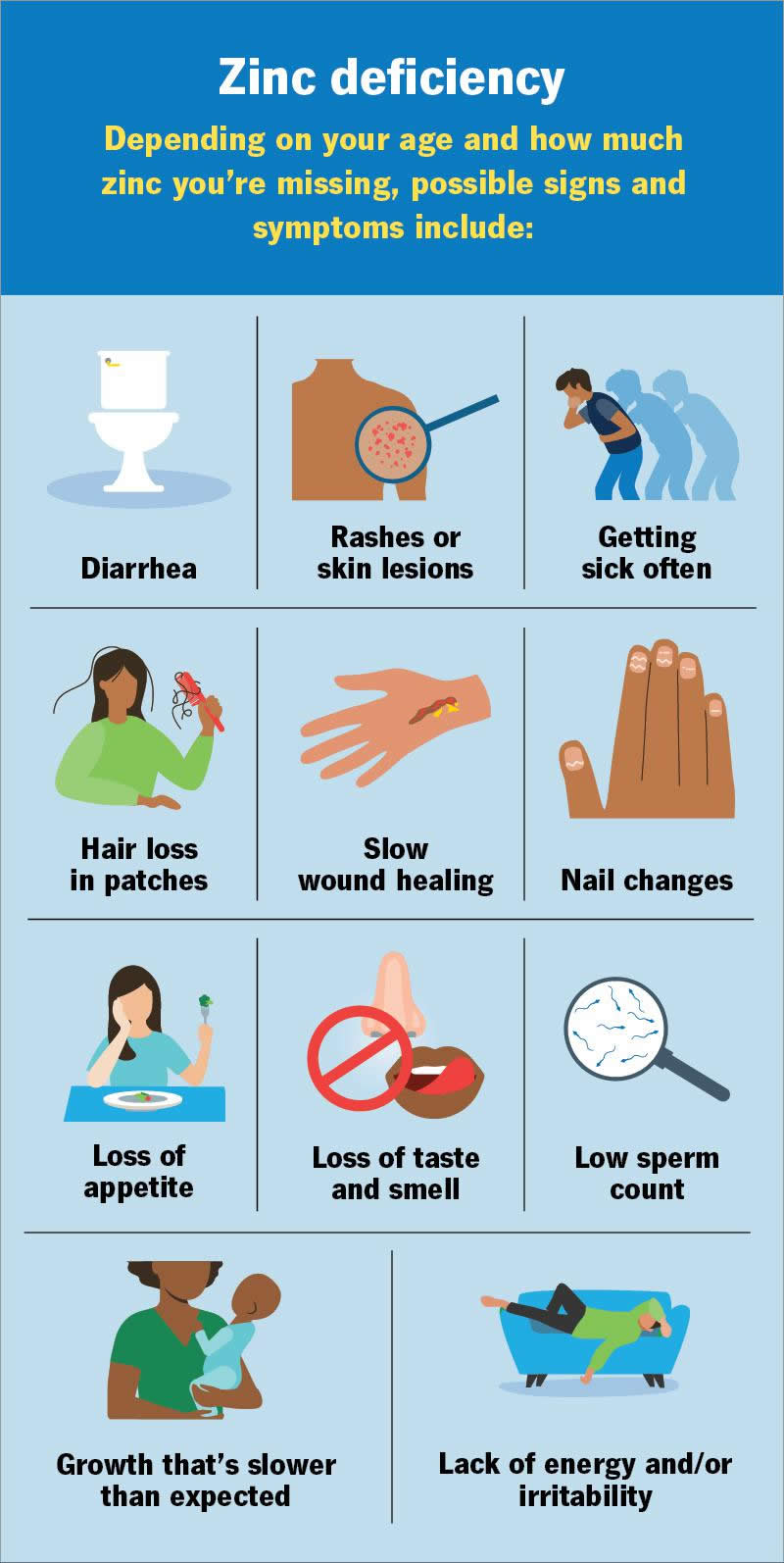
Symptoms of zinc deficiency
Zinc deficiency symptoms can vary depending on your age and how much zinc you’re missing. Possible signs and symptoms include:
- Diarrhea (typically in infants)
- Getting sick often
- Growth that’s slower than expected (in infants, children and adolescents)
- Hair loss in patches or thinning hair
- Nail changes, including discoloration and brittle texture
- Lack of energy and/or irritability
- Loss of appetite
- Loss of taste and smell
- Low sperm count
- Rashes or skin lesions
- Slow wound healing
Zinc deficiency causes
Zinc deficiency can happen if:
- The foods you eat aren’t providing enough zinc (nutritional causes)
- You have a medical condition that affects how your body uses zinc
- You’re receiving a treatment that affects how your body uses zinc
Nutritional causes of zinc deficiency
Certain foods — like meat, fish and eggs — are high in zinc. If you don’t eat enough of these foods, your body may not be getting enough zinc.
You might not eat many foods high in zinc if you follow a vegetarian or vegan diet. Instead, you might be eating foods high in phytates (like beans, whole grains and nuts). Phytates are substances that limit how much zinc your body can absorb and use. So, the zinc you’re getting from plant-based products may not stick around in your body.
Eating disorders like anorexia nervosa can also lead to zinc deficiency and other nutritional deficiencies (undernutrition).
Medical conditions that can cause zinc deficiency
Conditions that may cause zinc deficiency include:
- Alcohol use disorder
- Burns on your skin
- Celiac disease
- Crohn’s disease
- HIV
- Kidney disease
- Liver disease
- Pancreatic disorders
- Pregnancy
- Ulcerative colitis
- Short bowel syndrome
- Sepsis
- Type 2 diabetes
These conditions can:
- Prevent your digestive system from absorbing enough zinc
- Increase your body’s demand for zinc
- Cause your body to lose too much zinc
Treatments that can cause zinc deficiency
Sometimes, treatments for medical conditions can lead to zinc deficiency. Examples include:
- Bariatric surgery
- Chelation therapy
- Diuretics
- Hemodialysis
- Parenteral nutrition
- Some antibiotics
Can zinc deficiency be genetic?
Yes, but it’s rare. Acrodermatitis enteropathica is a genetic disorder that causes zinc deficiency. Healthcare providers diagnose this condition in about 1 in every 500,000 live births.
Diagnosis and Tests
How doctors diagnose this condition
Healthcare providers diagnose zinc deficiency by:
- Doing a physical exam
- Reviewing your medical history
- Talking to you about the foods you eat
- Asking about any dietary supplements you’re taking
Your provider may do blood and/or urine tests to identify or rule out other causes of your symptoms. A blood test can show levels of zinc in your blood. But on its own, this number isn’t enough to diagnose zinc deficiency. It’s not always an accurate measure of how much zinc you have in your body.
Your provider may want you to take zinc supplements to see how your body responds. If supplements improve your symptoms, then your provider can confirm the diagnosis.
Management and Treatment
How is it treated/is there a cure?
Healthcare providers treat zinc deficiency by giving you zinc supplements. These are a type of dietary supplement that you take by mouth. Your provider will tell you more about the supplements you should take, the proper doses and how long to take them. Don’t take supplements on your own without asking your provider first.
Your provider may also recommend ways to get more zinc through the foods you eat. They may also refer you to a dietitian, who can give nutritional advice tailored to your needs.
How can I naturally add more zinc to my diet?
Check with your healthcare provider before making changes to what you eat. In general, it may help to eat more:
- Baked beans
- Nuts (like almonds and cashews)
- Peas
- Poultry and red meat
- Seeds
- Wheat germ
- Wild rice
When should I see my healthcare provider?
Call a provider if you have signs or symptoms of zinc deficiency. Many of these signs and symptoms can point to lots of different causes other than zinc deficiency. Your provider will identify the cause and make sure you get any needed treatment.
Outlook / Prognosis
What can I expect if I have this condition?
Zinc deficiency is usually curable with treatment. Taking supplements as your provider directs can help your symptoms go away, typically within one to two weeks. Your provider will tell you if you need follow-up appointments or testing to check on your zinc levels or any related conditions.
Additional Common Questions
Can zinc deficiency affect my fingernails?
Yes. Zinc deficiency can cause changes to your nails that healthcare providers call nail dystrophy. Your nails might be brittle or have lines on them (Beau’s lines). Your nails might also grow more slowly than expected.
Many things besides zinc deficiency can affect how your nails look and feel. See a healthcare provider if you notice sudden changes to your nails.
Does zinc deficiency cause age-related macular degeneration?
Some research shows zinc deficiency might play a role in causing age-related macular degeneration. But we need more research on this topic to understand this relationship.
Does vaping cause zinc deficiency?
Vaping doesn’t cause zinc deficiency. It does the opposite. It exposes you to zinc and other heavy metals that may harm your health. Having too much zinc in your body may lead to an imbalance between antioxidants and free radicals (oxidative stress). This imbalance damages cells and tissues and can lead to a wide range of health problems.
A note from Wockr
Whether you have symptoms of zinc deficiency or have a recent diagnosis, you can take comfort in knowing this condition is treatable. With treatment, you’ll feel better soon. Your provider can also help you manage any medical conditions that might be causing low zinc levels in your body.